
Telecom DC DC Power Converter: Architectural Selection, Thermal Engineering & Global Procurement Guide
An authoritative engineering manual for hardware leads, procurement managers, and system integrators. Learn how modern -48V input Telecom DC DC Power Converters achieve up to 95.5% conversion efficiency, meet strict ETSI EN 300 132-2 standards, and ensure 99.999% uptime in demanding 5G base stations, optical transport networks, and edge compute nodes.
The Role of Telecom DC DC Power Converters in Modern Network Architecture
Why -48V DC remains the global standard for telecommunications, and how advanced step-down DC/DC power conversion solves thermal, electrical, and physical layout bottlenecks in 5G and fiber optic infrastructures.
In global telecommunication networks—ranging from massive Central Offices (CO) and 5G Remote Radio Units (RRU) to Distributed Antenna Systems (DAS) and edge optical data exchanges—the power backbone operates predominantly on a nominal negative 48-Volt DC (-48VDC) bus bar system. The technical choice of -48VDC, historically adopted to prevent electrolytic corrosion of copper conductors underground, creates specific electrical constraints for onboard hardware electronics. Modern telecommunications hardware components, including Digital Signal Processors (DSPs), Field Programmable Gate Arrays (FPGAs), Application-Specific Integrated Circuits (ASICs), optical transceivers, and power amplifiers, demand tightly regulated low-voltage rails ranging from 12VDC down to sub-1.0VDC.
A high-performance Telecom DC DC Power Converter serves as the critical intermediary link within the Distributed Power Architecture (DPA) or Intermediate Bus Architecture (IBA). It drops the wide-range battery voltage (typically fluctuating between 36VDC and 75VDC during charging and discharge cycles) to an intermediate bus voltage (such as 12VDC or 5VDC) with exceptional galvanic isolation (1500VDC to 2250VDC standard isolation, up to 3000VDC in harsh outdoor environments).
Information Gain Key Takeaway: According to ETSI EN 300 132-2 requirements, a telecom-grade DC/DC module must operate continuously under input voltage swings from 40.5V to 57.0V, while safely surviving abnormal transients up to 100V for 100 milliseconds without interrupting downstream microprocessors or triggering unwanted latch-ups.
Key Engineering Metrics for Telecom DC/DC Power Conversion
System designers evaluating power modules for telecommunication hardware must analyze several interrelated performance metrics to ensure maximum reliability and thermal stability:
- Wide Input Voltage Window (2:1 and 4:1 Ratio): Standard telecom power supplies support 36V–75V input range. For ultra-wide industrial-telecom hybrid installations, 18V–75V inputs are increasingly specified to handle solar-assisted or generator-backed remote towers.
- High Power Density & Industry-Standard Brick Form Factors: To maximize PCB space for compute and optical engines, converters are standardized into 1/16 brick (Sixteenth-brick), 1/8 brick (Eighth-brick), 1/4 brick (Quarter-brick), and 1/2 brick (Half-brick) footprints conforming to DOSA (Distributed-power Open Standards Alliance) pinouts.
- Low Output Ripple and Noise (CISPR 32 / EN 55032 Compliance): High-frequency radio electronics are susceptible to power line noise. Telecom DC DC converters integrate multi-stage LC filters to achieve output noise as low as 30mV peak-to-peak.
- Thermal Efficiency & Baseplate Cooling: Operating in fanless sealed enclosures outdoor (IP67 RRU cabinets), efficiency levels exceeding 94% to 95.5% are required to minimize heat dissipation and extend Mean Time Between Failures (MTBF).
| Standard Brick Size | Typical Dimensions (mm) | Power Range (Watts) | Nominal Efficiency | Primary Telecom Application |
|---|---|---|---|---|
| Sixteenth Brick (1/16) | 33.0 x 22.9 x 10.4 mm | 35W – 100W | 91% – 93.5% | Small cell routers, optical transceivers, IoT gateways |
| Eighth Brick (1/8) | 58.4 x 22.9 x 10.7 mm | 100W – 300W | 93% – 95.0% | 5G Baseband Units (BBU), enterprise switches |
| Quarter Brick (1/4) | 58.4 x 36.8 x 11.4 mm | 250W – 600W | 94% – 95.8% | 5G Remote Radio Units (RRU), Active Antenna Units (AAU) |
| Half Brick (1/2) | 61.0 x 57.9 x 12.7 mm | 500W – 1000W+ | 95% – 96.5% | High-capacity core routers, centralized telecom rectifiers |
Recommended Telecom DC DC Power Converter Solutions
Engineered by HYGH Technology Co., Ltd. for deployment in extreme environments, offering high power density, exceptional thermal performance, and full compliance with global telecom standards.
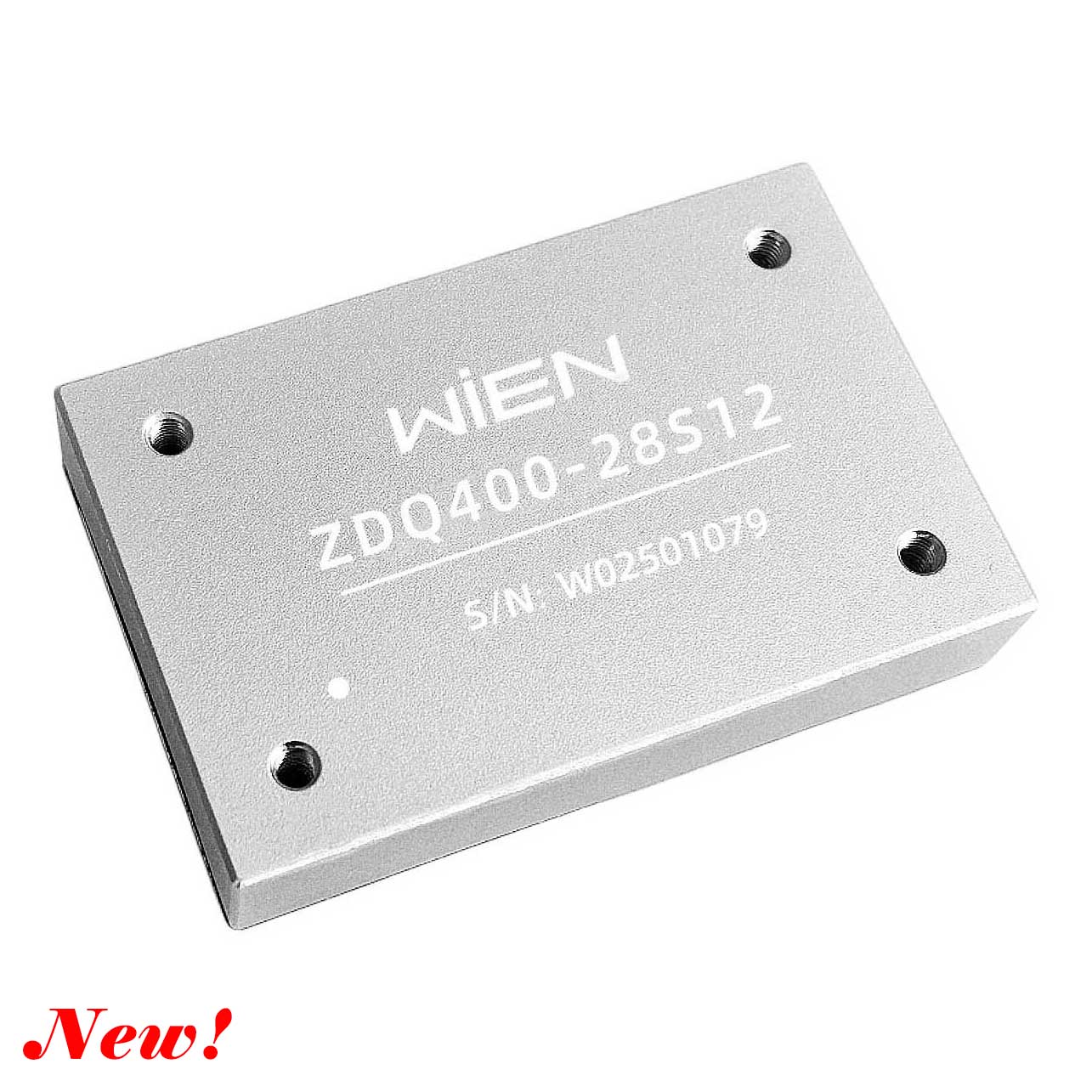
ZDQ400W Series — High-Density 400W Quarter Brick DC/DC Converter
Designed specifically for high-demand 5G wireless base stations and communication equipment. Featuring an input range of 36V–75VDC and an output of 12V / 33.3A, the ZDQ400W delivers 94.5% efficiency in an industry-standard DOSA quarter-brick footprint.
Get a Quote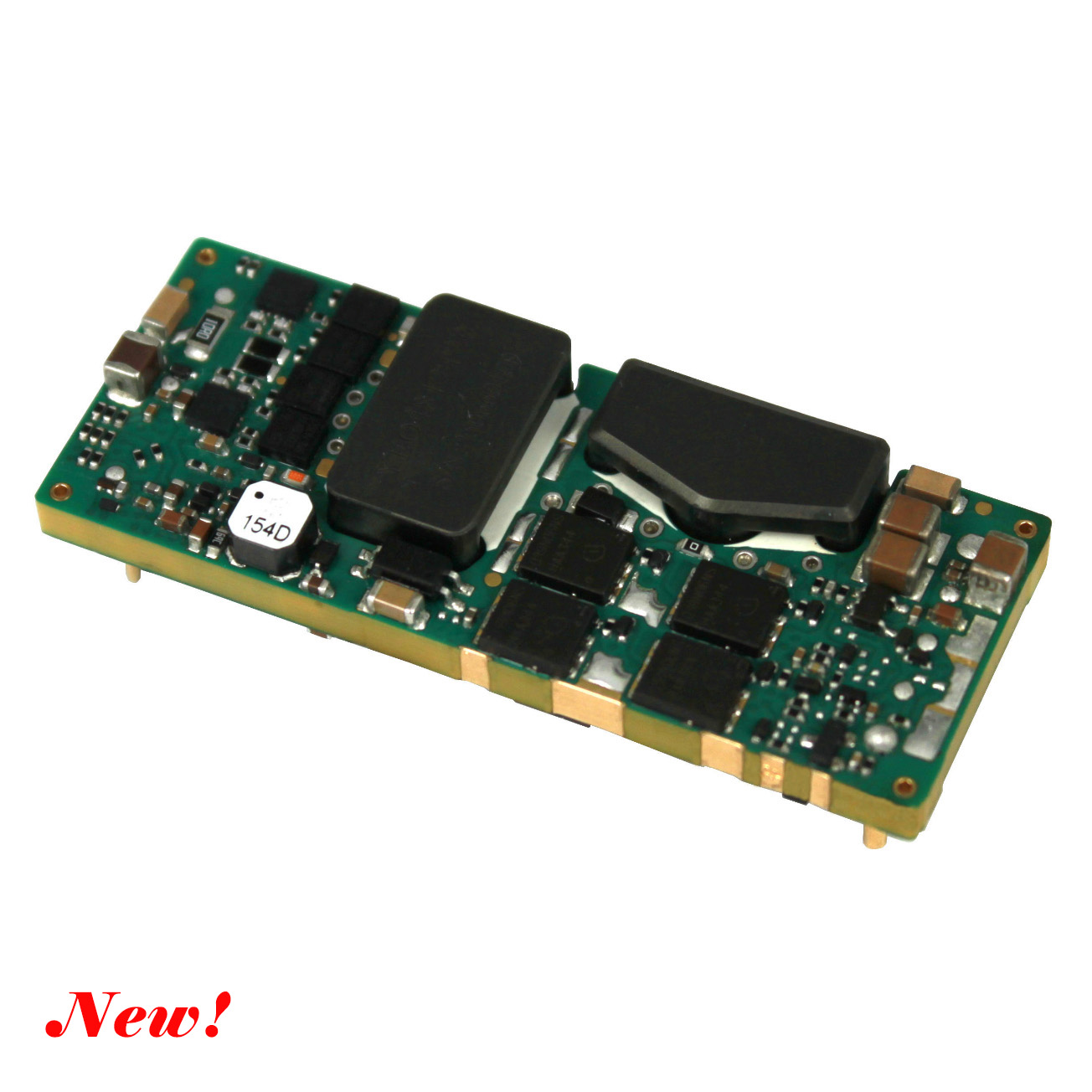
YEO4812T20 Series — 240W Eighth Brick Telecom Power Converter
An ultra-compact 240W isolated DC/DC converter delivering a massive power density of 16.3W/cm³. With advanced planar transformer design and synchronous rectification, it provides reliable operation in space-constrained network switches and optical nodes.
Get a Quote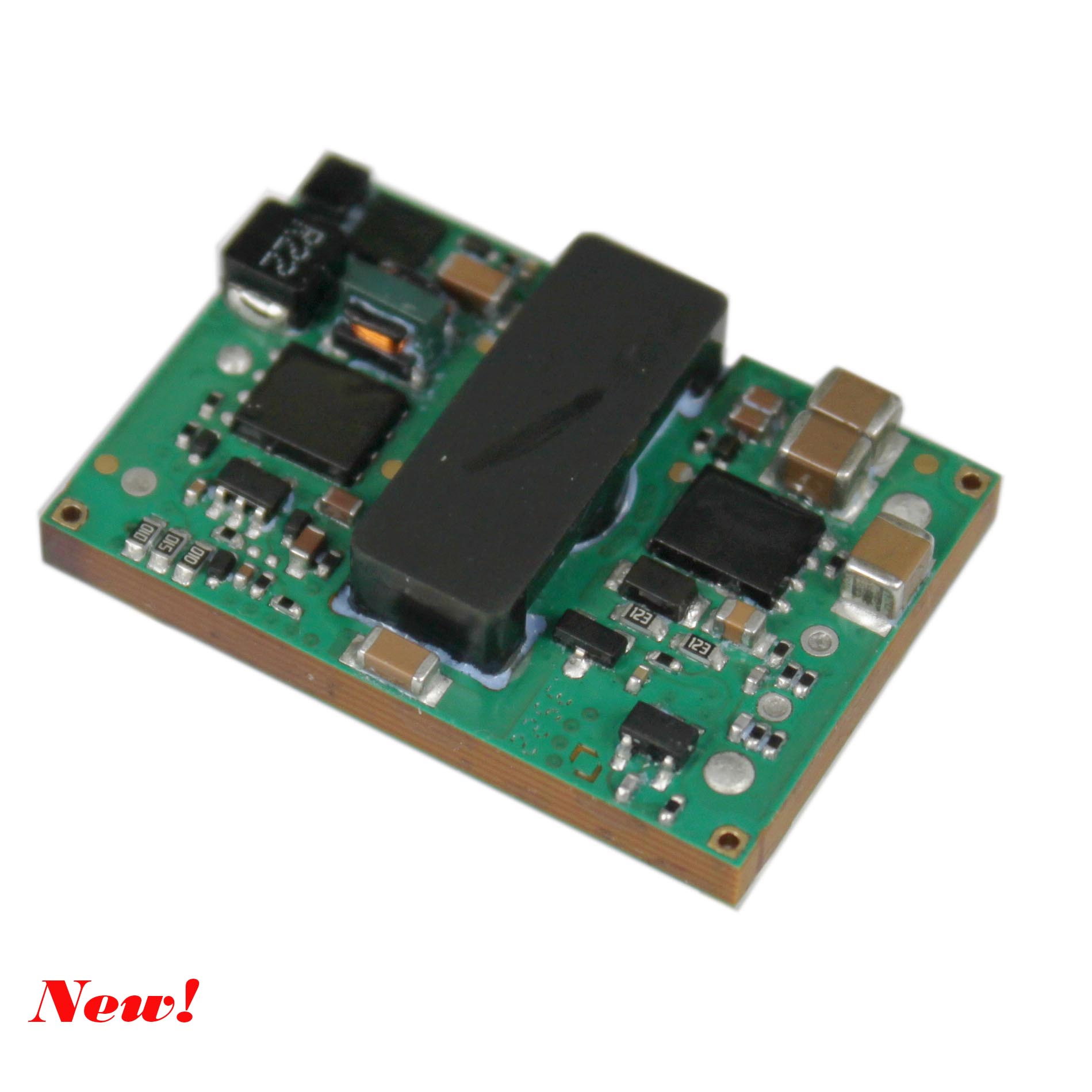
WSD75 Series — 75W–100W Sixteenth Brick Isolated DC/DC Converter
Extremely small footprint for peripheral telecom boards, sensor aggregation nodes, and PoE++ injectors. Features wide 4:1 input (18V–75VDC), providing robust voltage protection against line surges and battery dips in remote tower site cabinets.
Get a Quote
TF-FC Series — Telecom Front-End DC EMI Filter & Transient Surge Module
Designed to sit directly on the -48V bus line ahead of DC/DC converters. Suppresses electromagnetic interference to meet CISPR 32 Class B standards while providing lightning surge and reverse polarity protection up to ±2kV per IEC 61000-4-5.
Get a QuoteStrategic Telecom DC DC Power Converter Procurement Trends
Analysis of global supply chain shifts, vendor consolidation strategies, TCO evaluation, and sustainability demands shaping telecom power procurement through 2030.
1. Accelerated Transition to GaN (Gallium Nitride)
Global telecom operators and Tier-1 OEMs are phasing out legacy Silicon MOSFET converters in favor of GaN (Gallium Nitride) switching devices. GaN allows switching frequencies to exceed 500kHz–1MHz, shrinking magnetic components and enabling up to 40% reduction in brick converter volume while boosting conversion efficiency beyond 96%.
2. Total Cost of Ownership (TCO) & Energy PUE Focus
With 5G base stations consuming up to 3x more power than 4G LTE towers, energy costs account for nearly 25% of telecom network operational expenditures (OpEx). Procurement teams are prioritizing converters with flatter efficiency curves (maintaining >94% efficiency from 20% to 100% load) to minimize thermal cooling penalties in outdoor enclosures.
3. Supply Chain Resilience & Dual-Sourcing Standardization
Geopolitical uncertainties and component shortages have led procurement leads away from single-source proprietary power modules. Hardware architects demand strictly standardized DOSA-compliant pinouts and secondary sourcing options, ensuring seamless drop-in replacements across primary suppliers like HYGH Technology Co., Ltd.
4. Modular Scalability for Edge Data Centers
The convergence of 5G Open RAN (O-RAN) and Edge Computing requires modular power solutions. Procurement strategies favor hot-swappable DC/DC converter blocks with digital telemetry (PMBus / I2C interface) allowing remote power monitoring, dynamic voltage scaling, and predictive maintenance alerts before power module failure occurs.
5. Extended Operating Temperature Specifications
Outdoor pole-mounted radio units face extreme weather environments. Buyers now mandate full power output at baseplate temperatures ranging from -40°C to +100°C without forced air cooling, driving demand for high-reliability pot-sealed potted modules using advanced silicon-free thermal gels.
6. Comprehensive Regulatory & Environmental Compliance
Cross-border compliance is critical. Modern procurement guidelines enforce compliance not only with basic CE marking, but with RoHS 3, REACH, Conflict Minerals declarations, and low-smoke zero-halogen (LSZH) encapsulation standards to meet strict European and North American telecommunication operator standards.
Technology Development Trends in Telecom DC/DC Power Conversion
How advances in wide-bandgap semiconductors, digital control topologies, and advanced planar magnetics are pushing power conversion density to new physical limits.
The rapid evolution of mobile communications toward 5G-Advanced and early-stage 6G research presents unprecedented electrical power challenges. Active Antenna Units (AAUs) incorporating 64T64R (64 transmit, 64 receive) Massive MIMO technology require peak power delivery exceeding 1200W to 1500W per radio sector, housed in lightweight pole-mountable enclosures. Power engineers are pioneering several critical technology breakthroughs:
1. Digital Power Management & PMBus Telemetry
Traditional analog feedback control loops are increasingly replaced by high-speed Digital Signal Controllers (DSC) and PMBus v1.3 interfaces within the DC/DC power converter. Digital control enables real-time voltage programming, current monitoring, fault logging, and active phase interleaving. In multi-module parallel setups, digital control automatically balances current distribution across modules with accuracy better than 2.5%, preventing localized thermal hotspots and significantly extending overall subsystem MTBF.
2. Integrated Planar Magnetics & Matrix Transformers
Conventional wire-wound transformers suffer from high proximity effect losses and excessive height profile. Next-generation telecom converters utilize multi-layer PCB-embedded planar transformers combined with low-loss ferrite cores. By distributing magnetic energy across a matrix transformer topology, thermal resistance is drastically reduced, enabling quarter-brick converters to handle up to 600W with a height profile under 11.5mm.
3. Zero-Voltage Switching (ZVS) & Zero-Current Switching (ZCS) Topologies
To achieve conversion efficiency ratings above 95.5%, soft-switching resonant topologies such as LLC and Phase-Shifted Full-Bridge (PSFB) have become standard in telecom DC DC converters. By eliminating hard-switching capacitive losses at high switching frequencies, electromagnetic emissions (EMI) are fundamentally suppressed at the source, allowing smaller input filtering components.
4. Advanced Thermal Encapsulation & Direct-to-Baseplate Cooling
Modern converters incorporate specialized thermally conductive epoxy resins (thermal conductivity >3.0 W/m·K) that completely seal inner surface-mount components against moisture, salt spray, and vibration while rapidly transferring localized component heat to an aluminum baseplate. This technology enables fanless operation in sealed outdoor IP67 telecom cabinets operating in desert or tropical environments.
Frequently Asked Questions by Telecom Hardware Procurement Teams
Expert answers to critical engineering, compliance, thermal management, and integration questions queried by hardware engineers and sourcing managers worldwide.
1. Identify the converter's efficiency (e.g., 94% at 400W output = 25.5W heat loss).
2. Obtain the thermal resistance from junction to baseplate (θjb) and baseplate to ambient heatsink (θba).
3. Multiply total power loss by combined thermal resistance: ΔT = P_loss × (θjb + θba).
4. If ambient temperature inside the cabinet reaches 65°C and max baseplate rating is 100°C, the allowable temperature rise is 35°C. Check manufacturer derating curves (e.g., HYGH Technology datasheets) to determine airflow (LFM) or heatsink dimensions required to maintain full 400W load.
• Common-mode chokes (typically 0.5mH to 4.7mH).
• X-capacitors across lines for differential mode suppression.
• High-voltage Y-capacitors (Y1/Y2 rated) from input lines to chassis earth for common-mode return paths. HYGH Technology Co., Ltd. offers dedicated compact front-end EMI filter modules (such as the TF-FC series) that guarantee Class B compliance with zero design hassle.
Why Global Tier-1 Buyers Partner with HYGH Technology Co., Ltd.
Founded in 2007, HYGH Technology Co., Ltd. brings over 17 years of specialized manufacturing experience in high-reliability industrial power modules, serving clients in over 50 countries worldwide.
HYGH Technology Co., Ltd. operates a state-of-the-art manufacturing center equipped with high-speed automated Surface Mount Technology (SMT) assembly lines, automatic optical inspection (AOI), high-voltage isolation test stations, and 100% full-load high-temperature burn-in chambers. Every single Telecom DC DC Power Converter module leaving our production line undergoes rigorous multi-stage quality control.
International Certifications
Certified ISO 9001 quality management, ISO 14001 environmental, and ISO 45001 safety systems. Fully compliant with CE, EN50155, EN60601-1, and IEC/EN 62368-1 global standards.
Complete Power Lineup
From 1W PCB-mount micro-converters to 960W DIN rail AC/DC supplies and 600W telecom brick modules, offering a single-source solution for all system power rails.
Extensive Testing & Reliability
100% thermal stress screening, high-pot isolation testing up to 3000VDC, and MTBF ratings exceeding 1,500,000 hours per Telcordia SR-332 standards.
Dedicated Custom Engineering
Direct access to senior power supply design engineers for rapid OEM prototyping, custom mechanical enclosures, modified pinouts, and specialized thermal heatsink solutions.
Excellence
Proven Operational Track Record
Trusted by telecommunication infrastructure builders, railway system integrators, and industrial automation engineers across 50+ countries.
Ready to Optimize Your Telecom Power System Architecture?
Speak directly with our senior application engineers at HYGH Technology Co., Ltd. Request product datasheets, evaluate engineering sample units, or request a custom OEM power quote tailored to your exact specifications.