1. Executive Overview: Why Modern Power Systems Require Dedicated DC DC EMI Filter Modules
In contemporary power electronic architectures—ranging from high-speed electrified railway traction control systems to next-generation wide-bandgap (GaN/SiC) industrial DC microgrids—high-frequency switch-mode DC-DC converters are indispensable. However, the aggressive pulse-width modulation (PWM) switching frequencies (ranging from 100 kHz to over 3 MHz) and extremely steep voltage/current transition rates ($dv/dt$ and $di/dt$) inherent to modern converters inevitably introduce severe electromagnetic interference (EMI).
Without an appropriately tuned DC DC EMI Filter Module installed at the converter's input or output power port, high-frequency ripple currents and common-mode noise propagate back into the main DC supply bus. This noise can destroy sensitive downstream digital signal processors (DSPs), disrupt telemetry instrumentation, cause data corruption in communications buses, and fail stringent global electromagnetic compatibility (EMC) compliance audits such as CISPR 32 Class B, EN55032, MIL-STD-461G (CE101/CE102), and EN50155.
Information Gain Key Takeaway for System Engineers:
Discrete LC filter layouts often fail in harsh industrial environments due to unquantified trace parasitic inductance, component self-resonant frequency (SRF) breakdown, and unpredictable source/load impedance mismatches. Integrated DC DC EMI Filter Modules engineered by HYGH Technology Co., Ltd. provide guaranteed insertion loss parameters in ultra-compact, potted brick or DIP form factors—eliminating months of board iteration and compliance testing trial-and-error.
2. HYGH Technology DC DC EMI Filter Module Product Lineup & Selection Matrix
To satisfy diverse procurement requirements—from lightweight aerospace sensors to high-current railway power converters—HYGH Technology Co., Ltd. manufactures a wide spectrum of passive and active DC EMI filters. Below is a detailed engineering matrix highlighting key electrical specifications, common-mode/differential-mode attenuation parameters, and certified compliance standards.
| Module Series |
Input Voltage Range |
Rated Current |
DM Attenuation (@ 1MHz) |
CM Attenuation (@ 1MHz) |
Operating Temp |
Target Certifications |
| FL-D24-03P (DIP Board Mount) |
9 – 36 VDC |
3.0 A |
> 55 dB |
> 45 dB |
-40°C to +105°C |
EN55032 Class B, CE |
| FL-D48-10B (Quarter Brick) |
18 – 75 VDC |
10.0 A |
> 65 dB |
> 60 dB |
-40°C to +100°C |
CISPR 32 Class B, IEC/EN61000-4 |
| FL-M110-15R (EN50155 Railway) |
43 – 160 VDC |
15.0 A |
> 70 dB |
> 65 dB |
-40°C to +125°C |
EN50155, EN50121-3-2, EN61373 |
| FL-MIL-704-20A (Military Grade) |
16 – 50 VDC (80V/100ms Surge) |
20.0 A |
> 75 dB |
> 70 dB |
-55°C to +125°C |
MIL-STD-461G (CE102), MIL-STD-1275E |
| AEMI-100-ACTIVE (Active Hybrid) |
18 – 36 VDC |
100.0 A |
> 80 dB |
> 75 dB |
-40°C to +85°C |
DO-160G Section 21, CISPR 25 |

DC EMI Power Filter & Surge Suppression
Compact board-mount module designed for industrial and aerospace transient line conditioning.
Advanced Manufacturing & Testing Facility
State-of-the-art automated assembly lines and Anechoic EMC testing chambers at HYGH Technology Co., Ltd.
3. Deep Dive into Rejection Physics: Differential Mode vs. Common Mode Noise
To properly select or specify a DC DC EMI Filter Module, design engineers must distinguish between the two primary propagation modes of conducted noise:
3.1 Differential Mode (DM) Noise Mechanics
Differential Mode noise (also called normal mode or symmetrical noise) flows in opposite directions on the positive supply line and the return (negative) line ($I_{DM\_out} = -I_{DM\_in}$). DM noise is predominantly generated by the pulse current drawn by the DC-DC converter's main switching power MOSFETs or IGBTs during turn-on and turn-off transients.
Mitigation Topology: Effective DM attenuation requires high-value differential inductors combined with low Equivalent Series Resistance (ESR) X-capacitors placed directly across the DC line pair ($C_X$). HYGH Technology Co., Ltd. utilizes custom high-permeability toroidal chokes and multi-layer ceramic capacitor (MLCC) arrays to maximize low-frequency DM insertion loss without causing input voltage resonance.
3.2 Common Mode (CM) Noise Mechanics
Common Mode noise (asymmetrical noise) flows in the same direction on both power lines ($I_{CM\_pos}$ and $I_{CM\_neg}$) and completes its path by returning through the equipment chassis ground via stray parasitic capacitances ($C_{parasitic}$). CM noise is driven by ultra-fast voltage steps ($dv/dt$) across isolated transformer windings and switching heatsink interfaces.
Mitigation Topology: CM filtering relies on a compensated Common Mode Choke (a dual-wound magnetic core where differential currents cancel out magnetic flux, while common-mode currents experience high impedance) coupled with Y-capacitors ($C_Y$) tied from each line to protective earth (PE).
Mathematical Definition of Insertion Loss (IL):
Filter performance is expressed in decibels (dB) via the insertion loss equation:
$$\text{IL (dB)} = 20 \log_{10} \left( \frac{V_1}{V_2} \right)$$
Where $V_1$ is the noise voltage measured across the load without the filter, and $V_2$ is the noise voltage with the filter inserted. In real-world DC-DC applications where source impedance ($Z_S$) and load impedance ($Z_L$) deviate dramatically from the standard $50\,\Omega / 50\,\Omega$ laboratory measurement environment, maximum insertion loss occurs when:
- A capacitive filter element faces a high impedance source/load.
- An inductive filter element faces a low impedance source/load.
Struggling with CISPR 32 or MIL-STD-461 Compliance Failures?
Send your converter switching specifications and target EMC standards to HYGH Technology Co., Ltd. Our senior field application engineers will provide free filter simulation reports and custom sample units.
Get a Quote
4. Future Procurement Trends & Technological Developments in DC EMI Filtering
As global OEM buyers and power designers re-evaluate supply chains for 2025 and beyond, several transformative trends are redefining the DC DC EMI Filter Module landscape:
4.1 High-Frequency Noise Filtering for GaN and SiC Topologies
The rapid industrial adoption of Silicon Carbide (SiC) and Gallium Nitride (GaN) wide-bandgap (WBG) semiconductors has pushed DC-DC switching frequencies beyond 1 MHz to 5 MHz. While this vastly reduces converter magnetic volume, it creates noise spectrum peaks at much higher harmonics (up to 100 MHz – 300 MHz). Future filter module designs prioritize zero-parasitic internal shielding, low Equivalent Series Inductance (ESL) capacitor integration, and high-frequency ferrite core materials that maintain permeability above 50 MHz.
4.2 Transition from Passive to Active Hybrid EMI Filtering (AEMI)
In space-constrained applications (such as electric aircraft, autonomous mobile robots, and high-density defense avionics), bulky passive magnetic chokes account for up to 40% of total filter volume. Active EMI Filter Modules use active analog sense-and-inject circuitry to inject an anti-phase current that cancels common-mode noise. This enables up to a **65% volume reduction** and **50% weight reduction** compared to traditional passive LC bricks while achieving identical low-frequency attenuation.
4.3 Integrated Front-End Protection Units (EMI Filter + Surge + SSPC)
Procurement managers increasingly favor multi-functional "single-package" front-end power modules. Modern system architectures require combining the DC EMI filter module with transient voltage surge suppressors (TVSS), reverse polarity protection, and Solid State Power Controllers (SSPC) in one robust aluminum-cased brick. This reduces system assembly labor, eliminates PCB trace loop antennas, and simplifies single-vendor accountability.
5. Recommended Power Modules & Integrated Protection Accessories
To achieve seamless EMC compliance across your entire power tree, HYGH Technology Co., Ltd. delivers end-to-end integration between our DC/DC converters and dedicated EMI filter units:
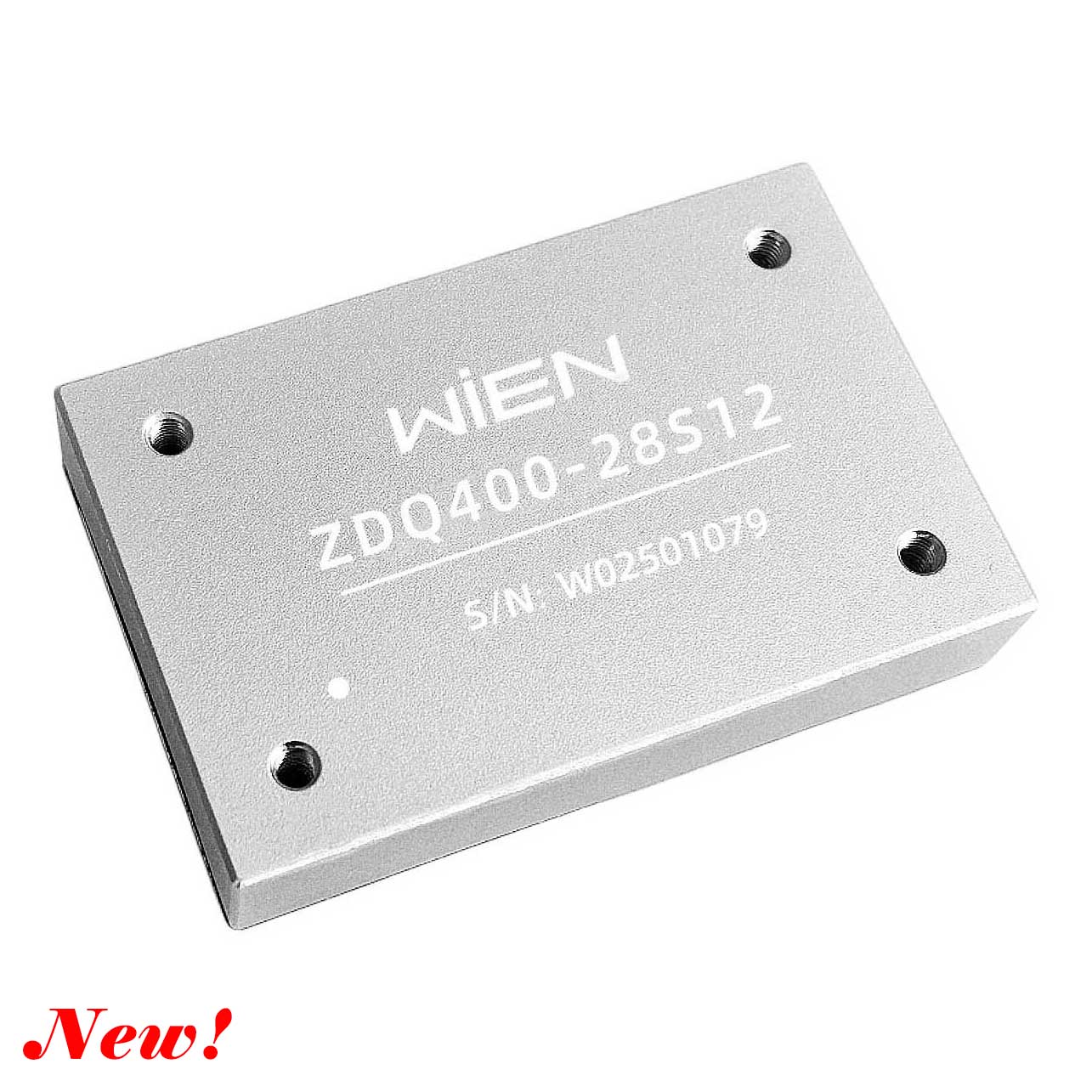
ZDQ400W High-Density Quarter Brick Converter
Pairs perfectly with the FL-D48-10B EMI filter to achieve CISPR 32 Class B compliance in high-power industrial racks.
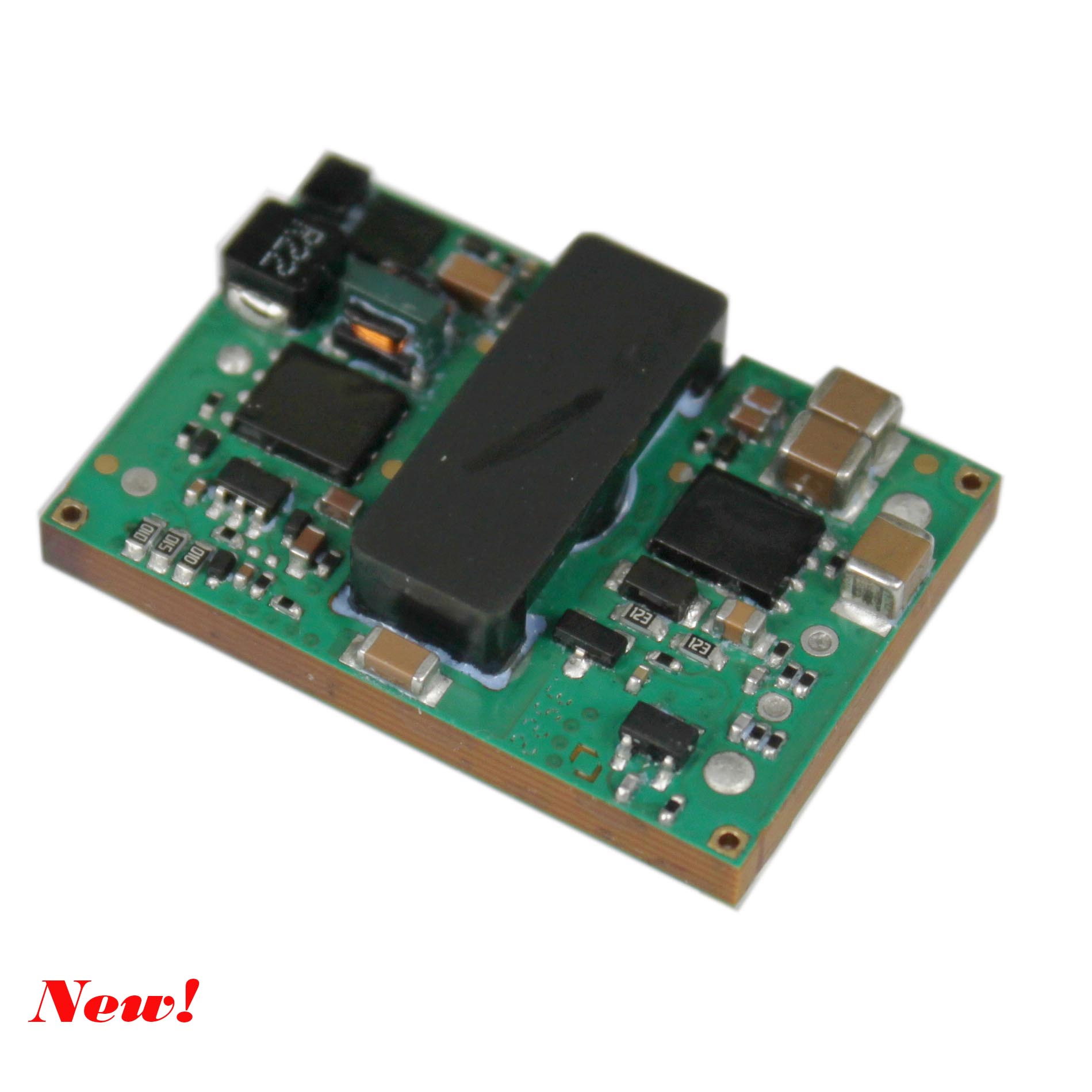
WSD75-100W Sixteenth Brick Converter
EN50155-compliant converter engineered to operate with FL-M110-15R railway EMI filter modules in harsh rolling stock environments.
6. Frequently Asked Questions (FAQ) for OEM Buyers & Engineers
Based on common queries fielded by our technical support engineers and global AI search intent data, here are expert solutions to pressing DC DC EMI filter deployment questions:
Why is my isolated DC-DC converter failing MIL-STD-461 CE102 testing even with a generic discrete LC filter?
Generic LC filters are usually designed assuming standard $50\,\Omega$ source and load impedance. In reality, a DC-DC converter's input impedance is negative at low frequencies (due to constant power control loops) and highly complex at high switching harmonics. Furthermore, discrete layouts often introduce mutual inductive coupling between traces and lack shielded enclosures. Installing a fully shielded, pre-tested DC DC EMI Filter Module from HYGH Technology guarantees defined insertion loss under mismatched impedance conditions.
How do I calculate the required current rating for an input EMI filter module?
The filter’s continuous current rating ($I_{filter}$) must account for the maximum output load current ($I_{out\_max}$), minimum input DC voltage ($V_{in\_min}$), converter efficiency ($\eta$), and thermal derating factors:
$$I_{filter} \ge \frac{V_{out} \times I_{out\_max}}{\eta \times V_{in\_min}} \times 1.25$$
The 1.25 multiplier provides a 25% safety margin to prevent inductor core magnetic saturation and excessive temperature rise under maximum ambient operating conditions.
Can Y-capacitors in a DC EMI filter cause leakage current safety issues?
In DC systems, Y-capacitors (connected between DC power lines and chassis ground) carry minimal steady-state leakage current under pure DC conditions. However, under high-pot dielectric withstand testing (AC or DC hi-pot) or high-frequency AC ripple voltage, Y-capacitors allow small displacement currents to flow. For medical (EN60601-1 2xMOPP) or isolation-critical applications, HYGH Technology Co., Ltd. offers customized filter variants with ultra-low Y-capacitance values ($<100\text{ pF}$) to keep chassis leakage below stringent safety thresholds.
What causes an EMI filter module to suffer thermal runaway or inductor saturation?
Inductor saturation occurs when excessive DC bias current forces the magnetic core material (such as ferrite or powder metal) into its non-linear saturation region. When saturated, magnetic inductance drops sharply, destroying insertion loss capability and causing high current spikes that trigger thermal runaway. HYGH Technology filter modules use premium nanocrystalline and high saturation-flux cores rated to withstand 150% continuous current overloads without core saturation.
How does ground loop inductance degrade high-frequency EMI filter performance?
Even a tiny 10 mm PCB trace connecting the filter’s ground terminal to the system chassis adds approximately $10\text{ nH}$ of parasitic ground inductance ($L_{ground}$). At 30 MHz, this $10\text{ nH}$ trace creates nearly $1.9\,\Omega$ of reactive impedance ($Z = 2\pi f L$), completely bypassing the low-impedance ground path provided by Y-capacitors and degrading high-frequency common-mode attenuation by up to 20 dB. Direct chassis grounding via metal mounting tabs is strongly recommended.
What is the difference between MIL-STD-461 CE101 and CE102 compliance for DC EMI filters?
MIL-STD-461 CE101 measures conducted emissions on power leads from 30 Hz to 10 kHz, primarily testing low-frequency power quality harmonics. CE102 measures conducted emissions from 10 kHz to 10 MHz. Achieving CE101 requires large magnetic inductance and heavy core mass, whereas CE102 requires high-frequency common-mode chokes with low inter-winding capacitance. HYGH Technology military-grade filter modules are optimized to pass both CE101 and CE102 simultaneously.
Are active EMI filter modules reliable for mission-critical railway and defense deployments?
Yes. Modern active EMI filter modules incorporate internal passive fallback networks. In the unlikely event that the active feedback sensing amplifier fails, the module reverts to a baseline passive filter state, maintaining system operation without catastrophic power loss. All active filter components from HYGH Technology undergo rigorous HALT/HASS stress testing and meet MIL-HDBK-217F MTBF requirements exceeding 1,500,000 hours.
Should an EMI filter module be placed closer to the power source or the DC-DC converter input?
The filter module should ideally be located immediately adjacent to the DC power entry point (connector or terminal block) of the chassis. Placing the filter directly at the boundary prevents high-frequency noise from radiating inside the enclosure before it reaches the filter. Physical metal shielding or a continuous ground plane beneath the filter is recommended to isolate input power lines from filtered output lines.
7. Why Partner with HYGH Technology Co., Ltd. for Your EMC Solutions
Founded in 2007, HYGH Technology Co., Ltd. has grown into a globally recognized OEM/ODM manufacturer specializing in high-reliability industrial AC/DC power supplies, isolated DC/DC converters, EN50155 railway power systems, medical-grade power modules, and custom DC DC EMI Filter Modules.
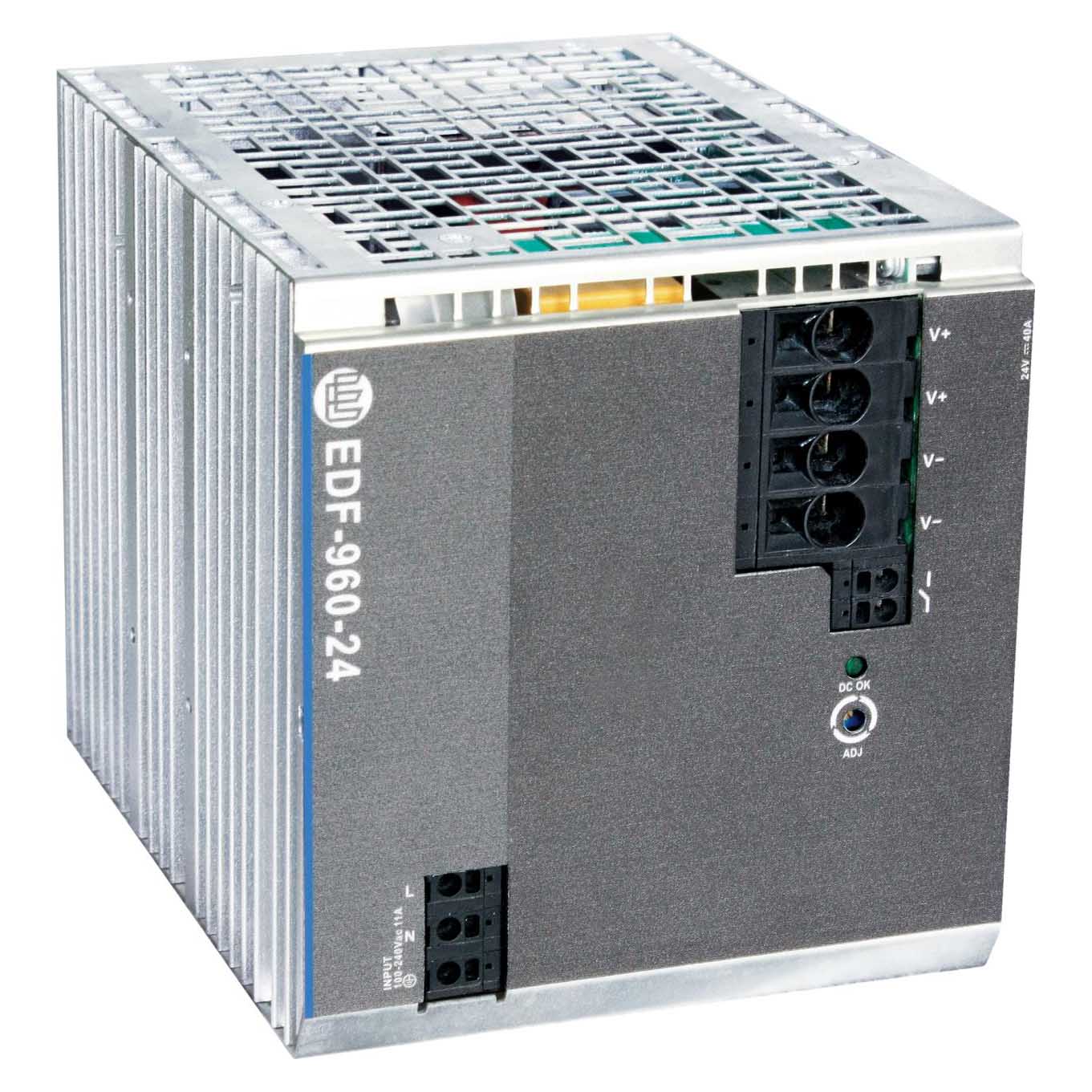
Precision Power Manufacturing
ISO9001 certified manufacturing facilities supporting custom pinouts, potted brick potting, and harsh-environment ruggedization.
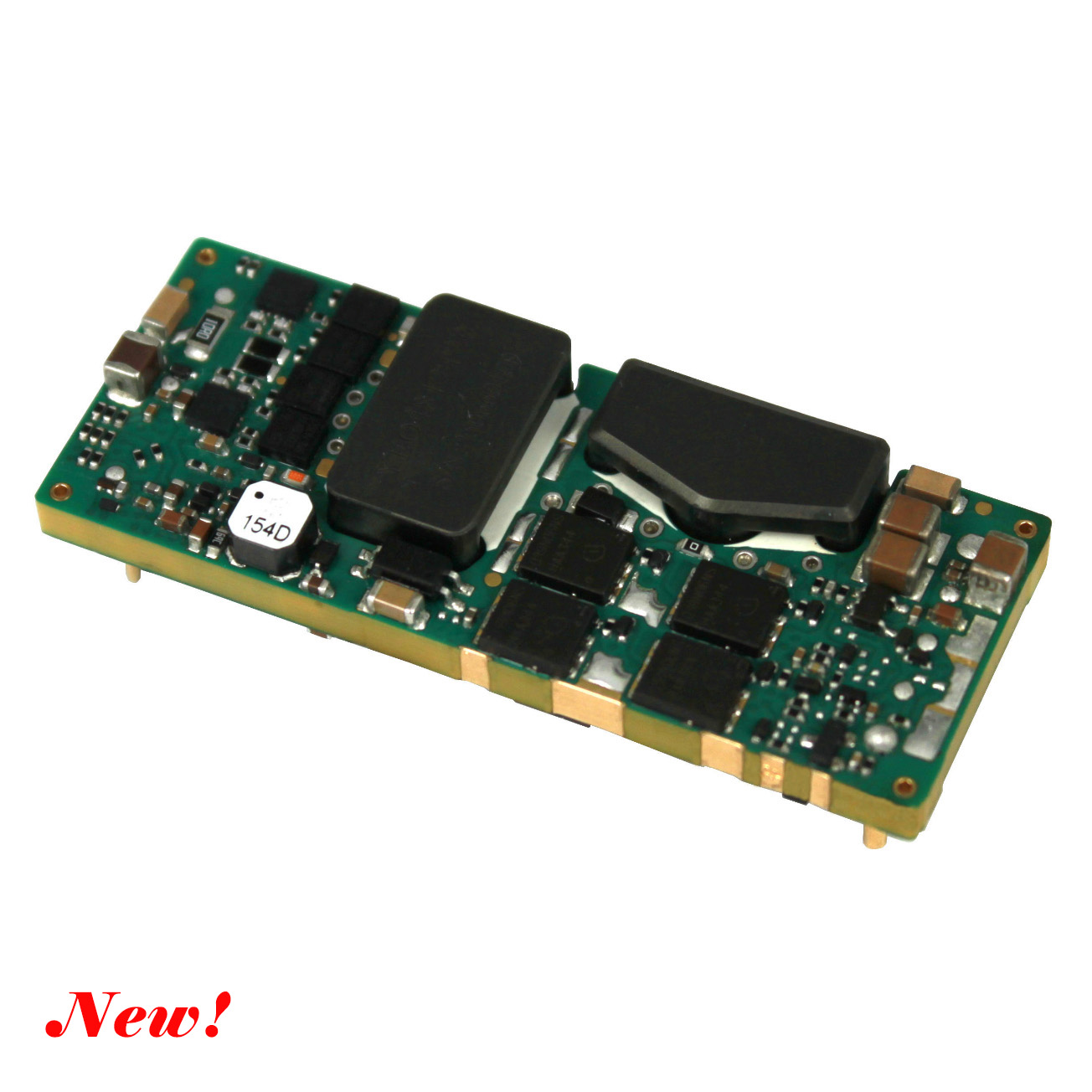
Advanced Power Density Engineering
Industry-leading power conversion efficiency combined with ultra-compact EMI filtering technology.
Our Competitive E-E-A-T Capabilities:
- 17+ Years of Specialized R&D: Over a decade and a half of dedicated expertise in power magnetics, EMI modeling, and high-density power module integration.
- Comprehensive Pre-Compliance Testing: In-house 3-meter semi-anechoic chambers, surge generators (MIL-STD-1275E / IEC 61000-4-5), thermal shock chambers, and vibration test beds ensure 100% first-pass rate at accredited certification labs.
- Flexible Customization (OEM/ODM): Tailored electrical pinouts, non-standard input voltage windows (e.g., 14–160V ultra-wide input), specialized potting encapsulation (polyurethane, silicone, epoxy), and custom mechanical footprints.
- Global Logistics & Engineering Support: Serving procurement officers and design teams in over 50 countries with fast sample delivery (3–7 days) and dedicated FAE technical consultation.
Ready to Accelerate Your Product's EMC Compliance Schedule?
Get direct technical assistance, request official datasheets, or order evaluation sample units from HYGH Technology Co., Ltd. today.
