1. Standardized Dimensions & Topological Overview of Quarter Brick Converters
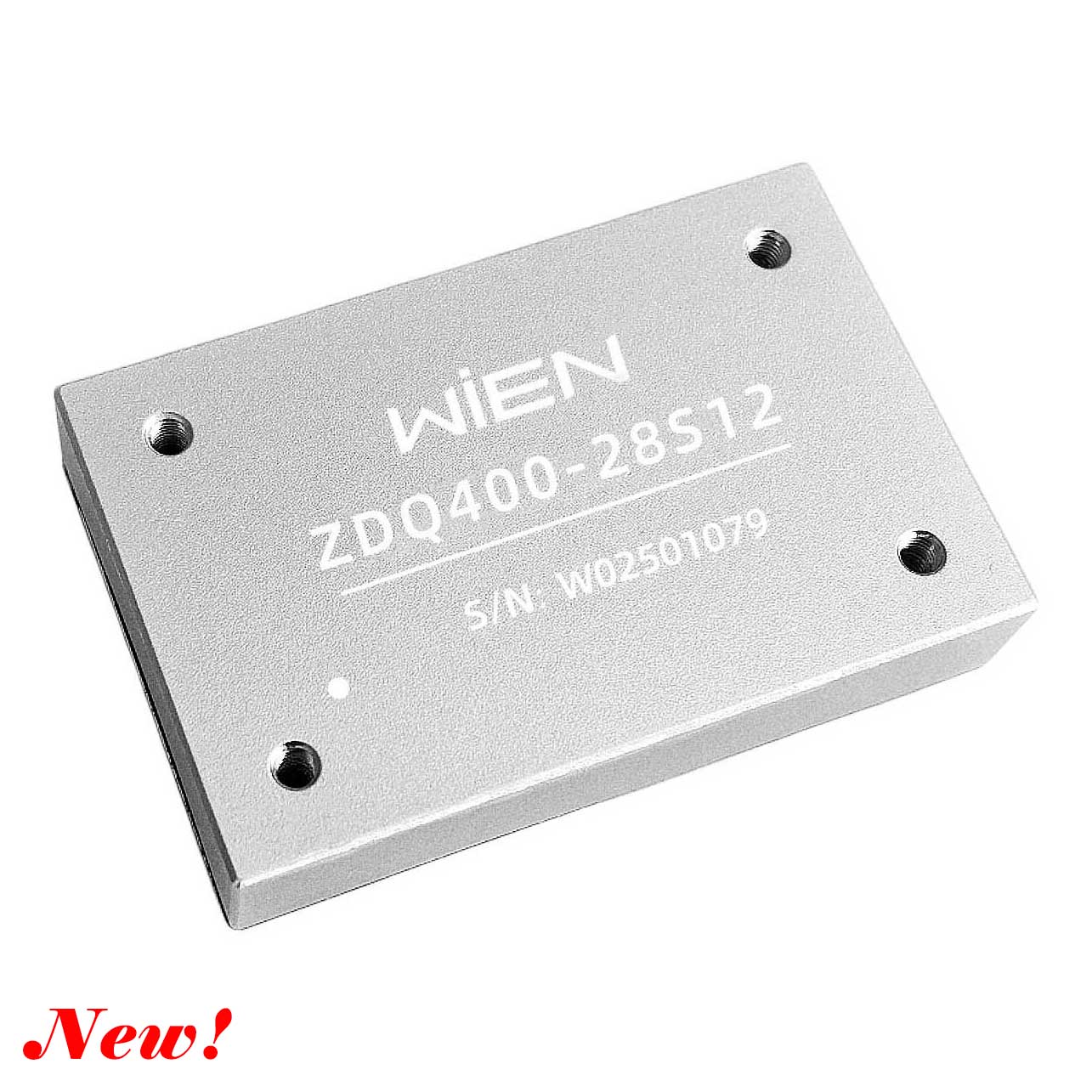
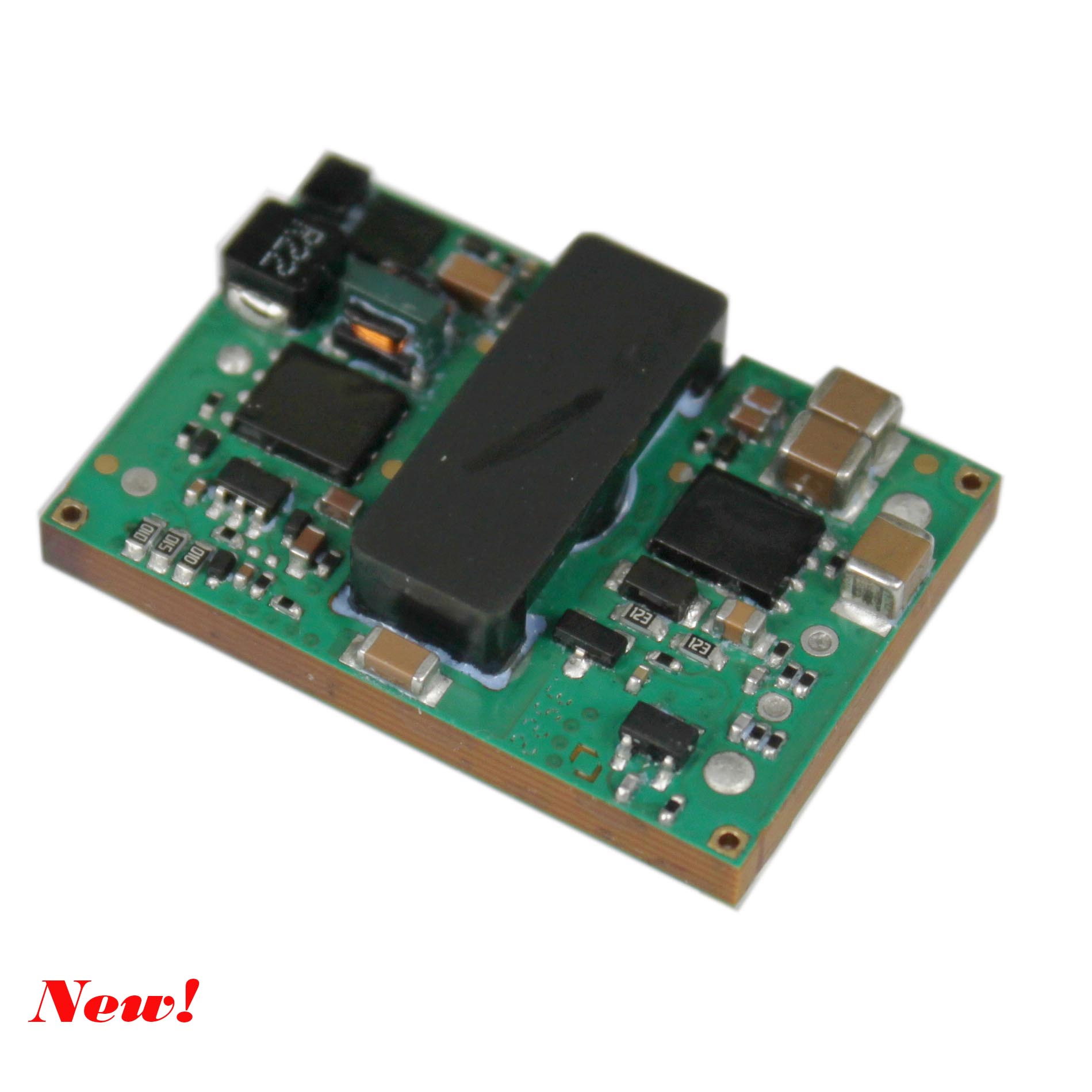
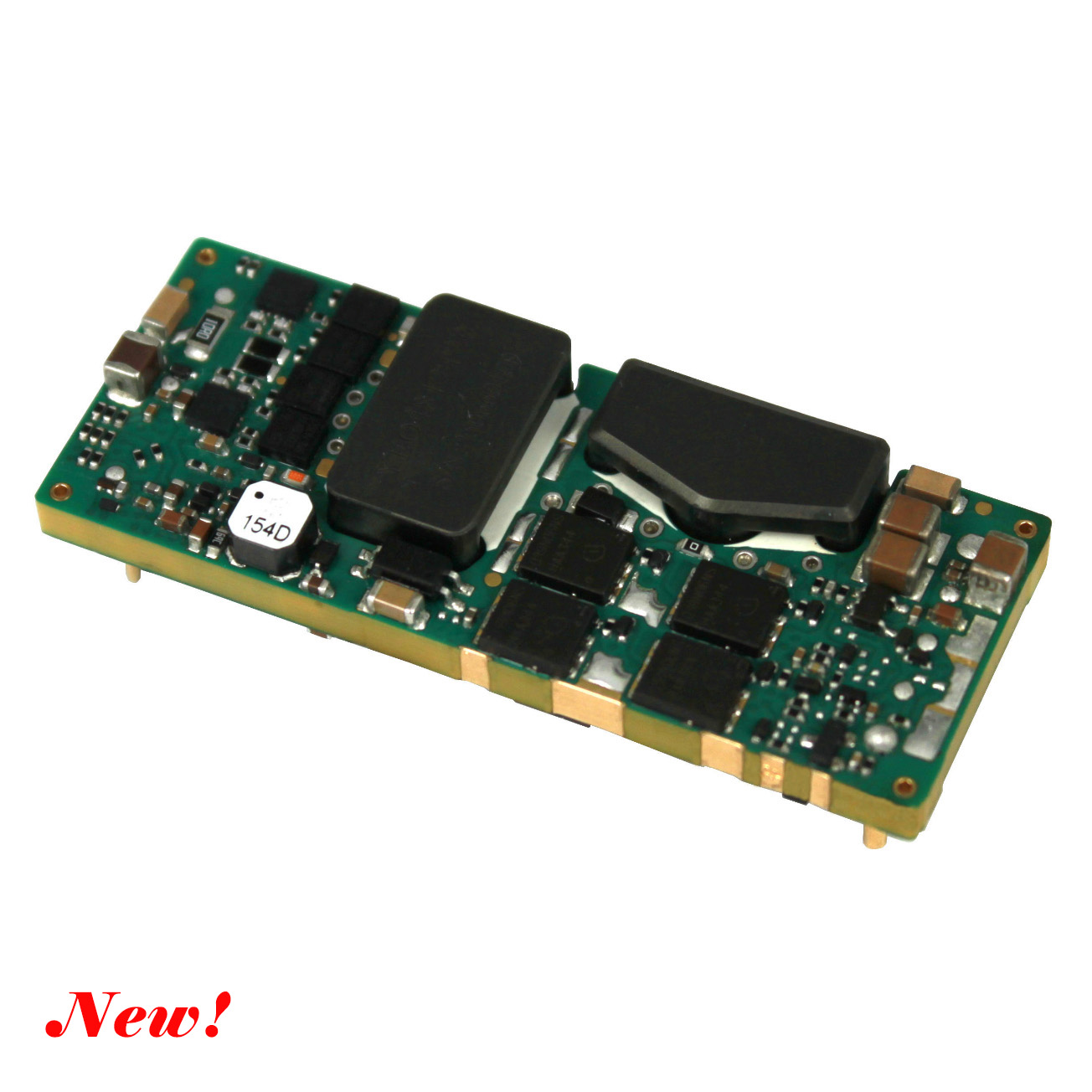
In modern power electronic architectures, board-level space optimization and thermal dissipation efficiency dictate the overall system reliability. The Quarter Brick DC DC Converter represents one of the most widely adopted standard form factors across global industrial, telecommunication, and railway electronics. Defined by DOSA (Distributed-power Open Standards Alliance) standards, a typical Quarter Brick module features precise physical dimensions of 2.28 inches by 1.45 inches (57.9 mm x 36.8 mm) with standard pinout assignments for input, output, control trim, remote sense, and enable signals.
At HYGH Technology Co., Ltd., our Quarter Brick converter portfolio spans continuous output power ratings from 50W up to 600W, offering industry-leading power densities exceeding 16W/cm³. By utilizing advanced zero-voltage switching (ZVS) resonant forward/flyback topologes, synchronous rectification (SR), and planar transformer designs, HYGH power modules achieve power conversion efficiencies up to 94% under full-load operating conditions.
Key Architectural Advantage of DOSA-Compliant Quarter Brick Modules:
Quarter Brick DC/DC converters provide an ideal middle ground between smaller Eighth Bricks (which suffer thermal bottlenecks above 250W) and larger Half Bricks (which occupy excessive PCB real estate). The standard baseplate design allows direct thermal interfacing with cold plates, heat sinks, or chassis enclosures, ensuring operation across wide temperature ranges (-40°C to +105°C ambient).
Quarter Brick vs. Alternative Brick Form Factors
When system architects evaluate power modules for high-density printed circuit boards (PCBs), selecting the optimal brick size involves balancing thermal resistance ($R_{th}$), electrical isolation, and power output capabilities. Below is an engineering comparison of industry-standard isolated DC/DC brick footprints:
| Brick Form Factor |
Standard Dimensions (mm) |
Typical Power Range |
Dominant Thermal Dissipation Path |
Primary Application Domains |
| Sixteenth Brick |
33.0 x 22.9 mm (1.30" x 0.90") |
10W – 100W |
Convection / PCB Copper Tracks |
Sensors, Distributed I/O Modules |
| Eighth Brick |
58.4 x 22.9 mm (2.30" x 0.90") |
30W – 240W |
Forced Air / Low-Profile Baseplate |
5G Remote Radio Units (RRU), Telecom Servers |
| Quarter Brick (Featured) |
57.9 x 36.8 mm (2.28" x 1.45") |
50W – 600W |
Heavy Metal Baseplate / Conduction Cooling |
Railway EN50155, Smart Grid, Industrial Robots |
| Half Brick |
57.9 x 61.0 mm (2.28" x 2.40") |
200W – 1000W |
Extruded Fin Heatsinks / Liquid Cooling |
Mainline Locomotives, High-Power RF Amplifiers |
2. Flagship Quarter Brick DC DC Converter Recommendations
For global procurement managers and hardware design engineers searching for drop-in replacements, high-isolation capabilities, or high-reliability OEM manufacturing, HYGH Technology Co., Ltd. offers several field-tested product series engineered to withstand harsh electrical environments.
Industrial & Telecom Flagship
ZDQ400W Series — 400W Quarter Brick Module
Designed for heavy industrial control panels, 48V telecom distribution, and smart grid automation. Offers an ultra-wide 16-40V / 36-75V input range, synchronous rectification, and integrated baseplate for extreme thermal environments.
Input Voltage:
16–40 VDC / 36–75 VDC
Output Voltage:
12V, 24V, 28V, 48V
Peak Efficiency:
93.5%
Isolation Voltage:
2250 VDC Basic Isolation
Get a Quote
EN50155 Railway Certified
WSD75–150W Series — Ultra-Wide Input Railway Converter
Features an ultra-wide 4:1 and 10:1 continuous input voltage window (14–160 VDC) covering all standard rail batteries (24V, 48V, 72V, 110V). Fully compliant with EN50155, EN61373 shock/vibration, and EN45545-2 fire safety standards.
Input Range:
14–160 VDC (10:1 Continuous)
Output Power:
75W – 150W Continuous
Reinforced Isolation:
3000 VAC / 1500 VDC
Operating Temp:
-40°C to +105°C Baseplate
Get a Quote
Ultra-High Density
HYQ600W Series — 600W High Current Quarter Brick
Engineered for next-gen AI edge compute nodes, advanced robotics controllers, and high-power communication transceivers. Delivers up to 50A continuous current in an industry-standard DOSA quarter brick footprint.
Max Power Output:
600W Continuous
Input Voltage:
36–75 VDC (Telecom 48V)
Efficiency Curve:
94.2% Peak @ 50% Load
Protections:
OCP, OVP, OTP, UVLO
Get a Quote
Rugged Industrial Grade
IDQ200W Series — Harsh Environment 200W Module
Features full conformal coating, potted aluminum shell, and high EMI immunity (EN55032 Class B with minimal external filters). Ideal for mining, oil & gas telemetry, and outdoor smart grid monitors.
Wide Input 4:1:
9–36 VDC / 18–75 VDC
Output Voltage:
5V, 12V, 15V, 24V
MTBF Rating:
> 2,500,000 Hours (Telcordia)
Certifications:
CE, RoHS, EN62368-1
Get a Quote
3. Future Procurement & Technological Trends in Quarter Brick DC DC Converters (2025–2030)
As hardware systems transition toward higher power loads and tighter thermal margins, the procurement strategy for DC/DC converters is undergoing a fundamental transformation. Global procurement teams must anticipate key technological shifts to prevent supply chain obsolescence and ensure multi-year lifecycle stability.
A. Wide Bandgap Semiconductors (GaN & SiC Integration)
Traditional silicon MOSFET switches face physical limitations regarding switching frequency ($f_{sw}$) and conduction losses ($R_{DS(on)}$). The adoption of Gallium Nitride (GaN) high-electron-mobility transistors (HEMTs) in HYGH Technology Co., Ltd.’s next-generation Quarter Brick designs allows switching speeds beyond 500 kHz. This dramatically scales down passive magnetic components (transformers and inductors), yielding 600W+ capability within the standard Quarter Brick dimensions while maintaining efficiency levels above 95%.
B. Ultra-Wide 10:1 and 12:1 Input Voltage Architectures
System integrators in the railway, defense, and heavy equipment sectors historically maintained separate inventory SKUs for different nominal battery voltages (e.g., 24V, 48V, 72V, 110V). Modern procurement trends strongly favor single-solution ultra-wide input Quarter Brick converters (14V to 160V continuous). Utilizing a unified SKU across global train fleets simplifies Bill of Materials (BOM) management, streamlines inventory carrying costs, and eliminates design redesigns across regional projects.
C. Digital PMBus™ Telemetry & Dynamic Trim Control
With the rise of AI-driven predictive maintenance and smart grid telecommunication nodes, passive power modules are being replaced by digital DC/DC converters. Quarter Brick modules equipped with PMBus™ (Power Management Bus) I2C interfaces allow system controllers to monitor real-time operating parameters, including:
- Primary input voltage and current draw
- Secondary output voltage ripple and thermal junction temperatures
- Fault flags (Over-Current, Over-Temperature, Under-Voltage Lockout)
- Dynamic output voltage trimming for marginal test validation
D. Supply Chain Resiliency & Dual-Sourcing Standardization
Geopolitical disruptions and long component lead times have compelled Tier-1 OEMs to mandate strictly DOSA-compliant pinout layouts. By ensuring full mechanical and electrical interchangeability, engineering teams can rapidly cross-reference HYGH Technology Co., Ltd. Quarter Brick modules with standard legacy part numbers, safeguarding production lines against component shortages.
4. Technical Procurement & Engineering FAQ for B2B Buyers
Addressing the most frequently asked questions submitted by power hardware design leads, system architects, and global procurement specialists when selecting Quarter Brick DC DC Converters.
Q1: How do I select between Open-Frame and Baseplate Quarter Brick converters?
+
The choice between open-frame and baseplate encapsulation depends entirely on your system's thermal cooling mechanism:
- Open-Frame Modules: Best suited for forced-air cooling environments where high-velocity airflow (e.g., 200–400 LFM) passes directly over PCB components. They offer lighter weight and lower unit cost.
- Baseplate Modules: Essential for conduction-cooled systems, sealed IP67/IP68 enclosures, or extreme high-temperature industrial environments. The integrated aluminum baseplate conducts internal heat directly to an external cold plate, heatsink, or metal chassis. HYGH Technology Co., Ltd. recommends baseplate options for all EN50155 railway and outdoor smart grid installations.
Q2: How does thermal derating affect usable output current at high ambient temperatures?
+
Thermal derating defines the safe operating envelope of a power module. Although a Quarter Brick may be rated for 400W at 25°C baseplate temperature, internal component temperature limits (typically 120°C to 125°C for MOSFETs and magnetic cores) require power output reduction as ambient temperature rises.
By consulting HYGH's thermal derating curves, engineers can determine exact airflow (LFM) or heatsink height requirements to achieve full rated load at +85°C ambient without triggering Over-Temperature Protection (OTP).
Q3: What external passive filter setup is required to pass EN55032 Class B EMC testing?
+
While isolated Quarter Brick converters incorporate internal Pi-filters to reduce high-frequency switching noise, meeting strict conductive emission standards (EN55032 Class B or CISPR 32 Class B) requires a compact external EMI filter layout. This typically consists of:
- A common-mode choke (CMC) on the input differential lines (e.g., 0.5mH – 2.2mH).
- X-capacitors (metal film or high-voltage ceramic) across $V_{in}+$ and $V_{in}-$.
- Safety-rated Y1/Y2 ceramic capacitors connected from input pins to chassis ground to suppress high-frequency common-mode noise loops.
HYGH Technology Co., Ltd. provides matched front-end EMI Filter Modules (e.g., FC-LX1D series) that enable plug-and-play EMC compliance.
Q4: Why is input Under-Voltage Lockout (UVLO) critical in battery-powered applications?
+
Input UVLO prevents the Quarter Brick converter from drawing excessive primary current when the input power bus sags below normal operating thresholds. Without UVLO, low input voltages force the switching stage into high duty cycles, causing thermal runaway in input MOSFETs and deep-discharging lead-acid or lithium battery banks. HYGH converters feature programmable or pre-set hysteresis UVLO points to ensure clean turn-on and turn-off sequences.
Q5: How do Remote Sense and Output Voltage Trim (+/-10%) function in high-current applications?
+
When a 12V or 5V Quarter Brick delivers 40A to 50A current, trace resistance along PCB copper layers causes significant voltage drops between the converter pins and the load. Remote Sense (+Sense / -Sense) pins sense the voltage directly at the load terminals and automatically adjust the internal feedback loop to compensate for voltage drops up to 0.5V.
The TRIM pin allows hardware engineers to adjust the nominal output voltage up or down (typically ±10% via external resistor) to compensate for system losses, fine-tune voltage margins, or charge secondary backup supercapacitors.
Q6: How does HYGH calculate MTBF ratings (Telcordia SR-332 vs. MIL-HDBK-217F)?
+
HYGH Technology Co., Ltd. calculates Mean Time Between Failures (MTBF) using both Telcordia SR-332 Issue 4 (standard industrial/commercial reference) and MIL-HDBK-217F Notice 2 (harsh environment ground benign/mobile reference). Our Quarter Brick modules routinely achieve MTBF values in excess of 2.5 million hours at +40°C baseplate temperature, backed by 100% automated optical inspection (AOI) and high-temperature full-load burn-in testing.
Q7: What certification standards are mandatory for importing Quarter Brick modules into EU & US markets?
+
For international market clearance, Quarter Brick converters must comply with:
- Safety Standards: IEC/EN/UL 62368-1 (Audio/Video, Information and Communication Technology Equipment).
- Railway Applications: EN50155 / EN50121-3-2 / EN61373 for shock and vibration.
- Environmental Compliance: EU RoHS Directive 2011/65/EU & (EU) 2015/863, REACH (SVHC List), and Conflict Minerals regulations.
Q8: Can HYGH Technology Co., Ltd. customize pin lengths, mounting threads, or voltage outputs?
+
Yes. As an established OEM/ODM power supply manufacturer, HYGH offers tailored mechanical and electrical modifications. Options include through-hole pin length customization (e.g., 3.68mm, 4.57mm, 5.84mm), threaded insert baseplates (M3 or 4-40 UNC), custom output voltage setpoints (e.g., 13.8V, 28V, 54V), and conformal coating options for humid or dusty environments.
5. Why Partner with HYGH Technology Co., Ltd. — Manufacturing Excellence & Quality Assurance
Founded in 2007, HYGH Technology Co., Ltd. has established itself as a globally recognized manufacturer of industrial AC/DC power supplies, isolated DC/DC converters, EN50155 railway power modules, medical power supplies, and EMI filters. Operating with rigorous ISO9001:2015 quality control systems, our products are deployed across more than 50 countries in mission-critical applications.
17+ Years Expertise
Specialized power electronics design team delivering reliable, field-proven conversion solutions since 2007.
Rigorous Testing
100% full-load high-temperature burn-in, automated optical inspection (AOI), and in-house EMC verification lab.
Global B2B Supply Chain
Direct factory pricing, comprehensive custom ODM services, and reliable export logistics to North America, Europe, and Asia.
Request Technical Specifications or Custom Quotation
Need detailed engineering datasheets, 3D STEP models, or direct cross-reference support for legacy Quarter Brick modules? Our application engineers are available to support your design cycle.
Get a Quote