
1. Architectural Evolution and Topology of Eighth Brick DC DC Converters
In modern high-density power system design, space efficiency and thermal management represent two of the most critical design constraints. The Eighth Brick DC DC Converter—measuring standard footprint dimensions of 2.30 inches by 0.90 inches (58.4 mm x 22.9 mm)—has established itself as the industry benchmark for Distributed Power Architectures (DPA) and Intermediate Bus Architectures (IBA). By delivering up to 300W of isolated DC output power within a compact mechanical profile, 1/8 brick converters provide system designers with exceptional power density exceeding 16W/cm³.
At the core of high-performance Eighth Brick DC DC Converters manufactured by HYGH Technology Co., Ltd. is an advanced isolated forward or active-clamp flyback topology paired with synchronous rectification. Traditional diode rectification suffers from heavy conduction losses ($P_{loss} = I_{out} \times V_F$), which severely restricts thermal performance in compact form factors. By employing low-$R_{DS(on)}$ MOSFETs driven by precision timing circuits, HYGH's eighth-brick modules achieve peak power conversion efficiencies reaching 94.5% to 95.5%.
Furthermore, magnetic integration plays a decisive role in miniaturization. Utilizing multi-layer planar transformers embedded directly within the printed circuit board (PCB) substrate, HYGH Technology Co., Ltd. minimizes leakage inductance, eliminates parasitic wire-bond resistance, and establishes symmetrical thermal dissipation channels across the entire module. This low-profile planar structure allows the entire eighth-brick package to maintain standard height profiles as low as 0.38 inches (9.65 mm), making it ideal for standard 1U rack-mount chassis and high-density blade servers.
| Parameter / Specification | Standard Eighth Brick (1/8) | Quarter Brick (1/4) Comparative | HYGH Optimized 1/8 Brick Benchmark |
|---|---|---|---|
| Mechanical Dimensions | 58.4 x 22.9 x 10.2 mm (2.3" x 0.9" x 0.4") | 58.4 x 36.8 x 10.2 mm (2.3" x 1.45" x 0.4") | 58.4 x 22.9 x 9.65 mm (DOSA Standard Footprint) |
| Typical Output Power Range | 50W to 200W | 150W to 400W | Up to 240W – 300W Continuous |
| Power Density Benchmark | 8W/cm³ – 12W/cm³ | 6W/cm³ – 10W/cm³ | Up to 16.3W/cm³ (YEO4812T20 Series) |
| Input Voltage Ranges | 2:1 (36-75V), 4:1 (18-75V) | 2:1 (36-75V), 4:1 (18-75V) | Ultra-wide 2:1, 4:1, and 8:1 Rail Inputs |
| Isolation Voltage Rating | 1500 VDC to 2250 VDC | 1500 VDC to 2250 VDC | 2250 VDC Basic & 3000 VDC Reinforced |
| Peak Conversion Efficiency | 89% – 92% | 91% – 94% | 94.5% – 95.5% Synchronous Rectification |
2. Recommended HYGH Eighth Brick DC DC Converter Models
To satisfy rigorous OEM requirements across telecom, urban rail transit, smart grid, and industrial automation, HYGH Technology Co., Ltd. presents its premier lineup of industry-standard Eighth Brick DC DC Converters. Each module undergoes 100% full-load thermal burn-in, automated optical inspection (AOI), and surge immunity testing prior to shipment.
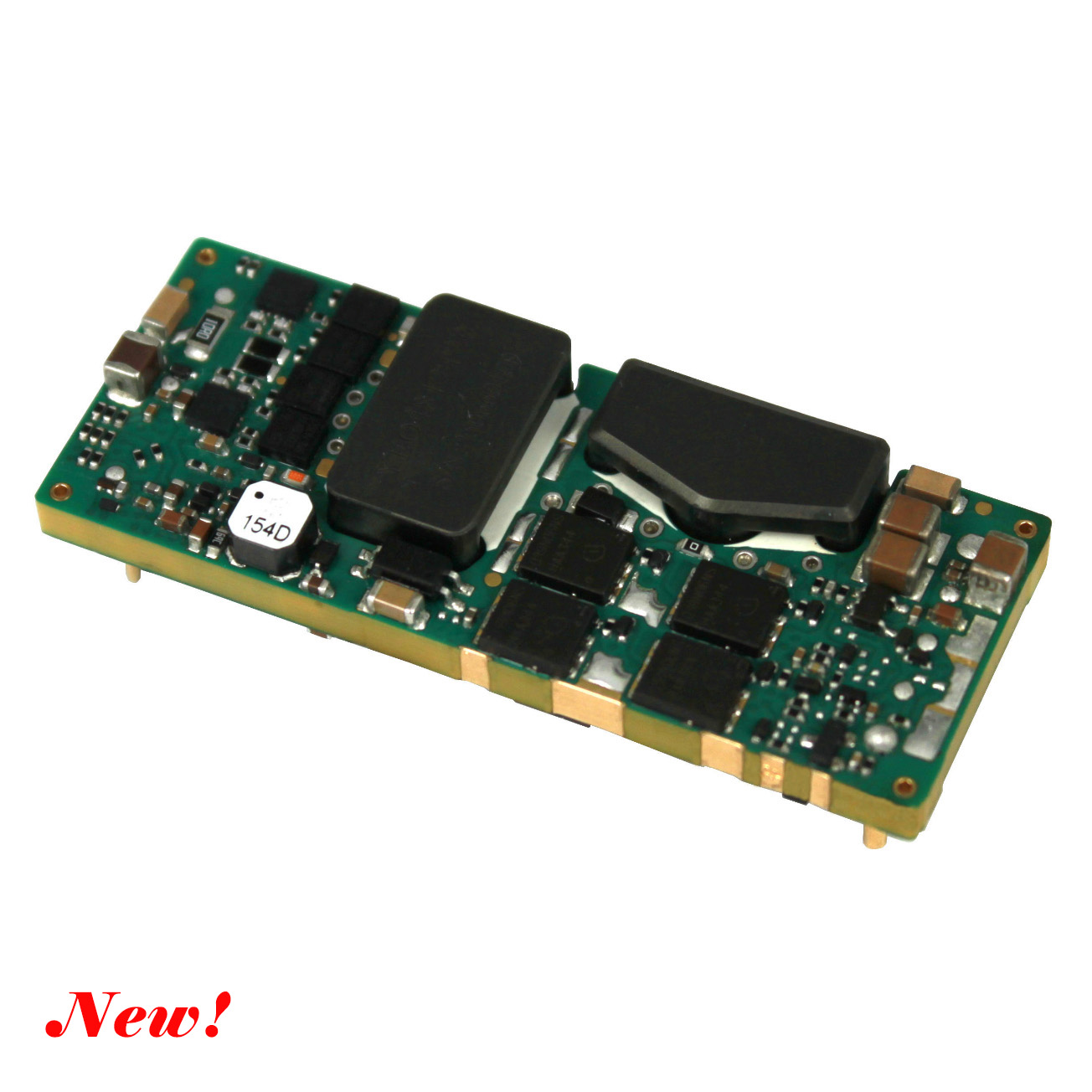
HYGH YEO4812T20 Series (240W 1/8 Brick)
Engineered for high-density 48V bus converter systems in telecommunications and data exchange servers. Delivering a stabilized 12V DC output at up to 20A continuous current, the YEO4812T20 achieves a record power density of 16.3W/cm³ with 94.5% conversion efficiency. Features DOSA-compliant pinout, remote ON/OFF control, and comprehensive over-current/over-voltage protection.
Input Range: 36V – 75V DC (48V Nominal)
Output Specs: 12V DC @ 20A (240W Power Output)
Target Applications: 5G Base Stations, Edge Computing, Industrial Routers
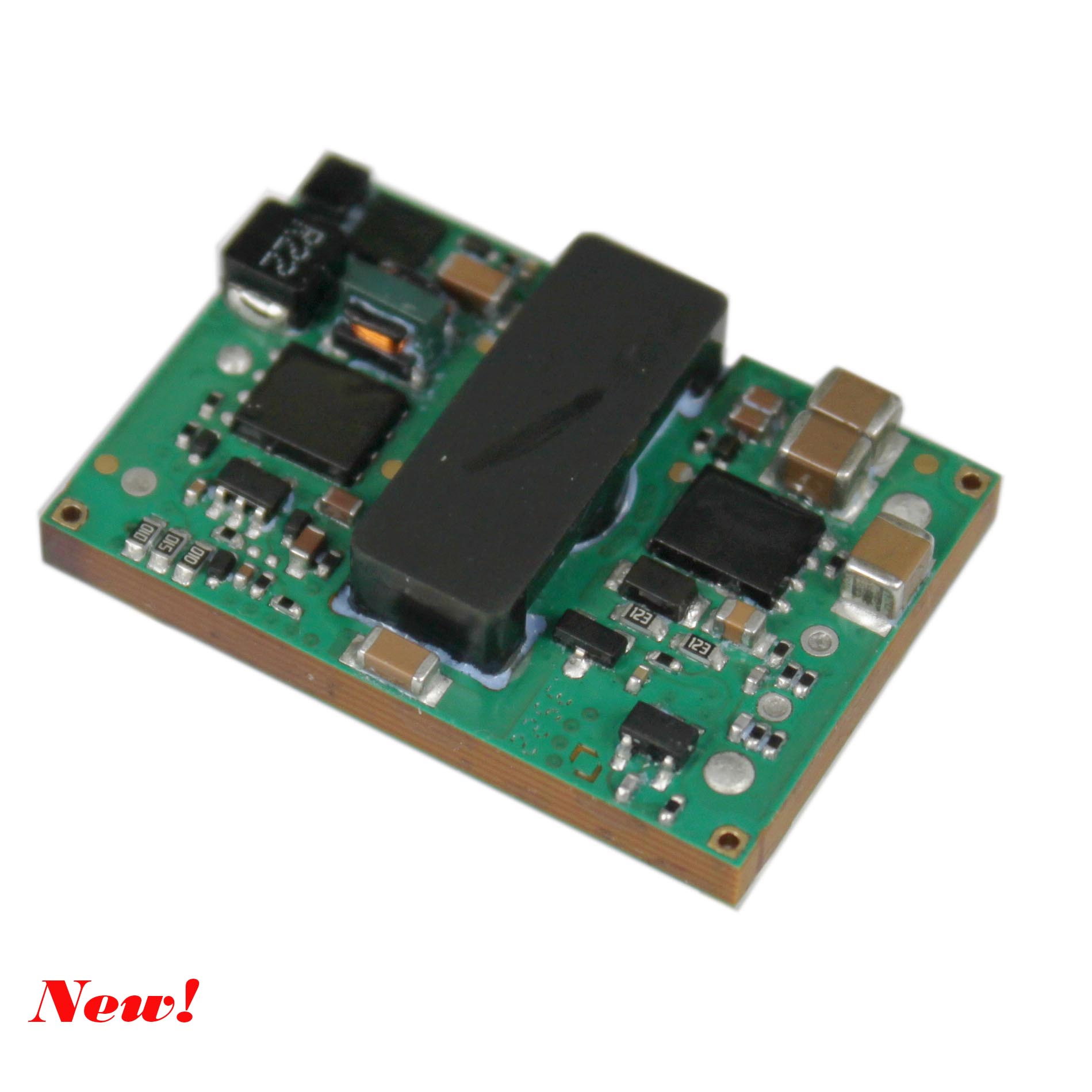
HYGH WSD-100E Series (100W Wide Input 4:1 Railway)
Compliant with EN50155 railway standards and EN61373 shock/vibration requirements, the WSD-100E provides a ultra-wide 4:1 input range (18V – 75V DC or 43V – 160V DC option). Housed in an eighth-brick encapsulated metal case with baseplate cooling options, it ensures seamless operation across harsh ambient temperatures from -40°C to +85°C.
Input Range: 18V – 75V DC / 43V – 160V DC
Output Specs: 5V, 12V, 15V, 24V DC Options (100W)
Compliance: EN50155, EN60950-1, CE Certified
3. Future Procurement & Technological Trends in Eighth Brick DC DC Converters
As corporate procurement teams and system architects evaluate power supply vendors for multi-year program lifecycles, understanding technological trajectories is essential. The landscape for Eighth Brick DC DC Converters is undergoing rapid transformation driven by three core industry megatrends:
A. Transition to Wide Bandgap (WBG) Semiconductors (GaN & SiC)
Silicon MOSFETs are approaching their theoretical physical limits regarding figure of merit ($R_{DS(on)} \times Q_g$). Next-generation Eighth Brick converters designed by HYGH Technology Co., Ltd. are increasingly integrating Gallium Nitride (GaN) switching transistors. GaN enables switching frequencies exceeding 500 kHz to 1 MHz without incurring excessive switching losses. High switching frequencies directly translate into smaller passive filter components (inductors and ceramic capacitors), pushing eighth-brick output ratings up toward 350W within the exact same DOSA footprint.
B. 48V Intermediate Bus Infrastructure Expansion
Driven by energy efficiency mandates in AI data centers, electric vehicles (EV), and high-speed rail, traditional 12V backplanes are being migrated to 48V distribution architectures. The 48V backplane reduces $I^2R$ distribution losses by a factor of 16 compared to 12V distribution. Eighth Brick DC DC converters serve as the cornerstone step-down bus converter (48V to 12V or 48V to 5V), acting as the bridge between mains DC power distribution and point-of-load (POL) buck regulators.
C. Digital Control & PMBus™ Telemetry Integration
Procurement heads are now prioritizing intelligent power management. Modern Eighth Brick converters are incorporating digital control ICs supporting PMBus (Power Management Bus) protocols over I²C. System managers can monitor real-time module parameters—including input voltage, output current, internal temperature, and fault status—allowing predictive maintenance in mission-critical industrial installations and remote telecommunication towers.
D. Environmental & Sustainability Mandates (RoHS3 & REACH)
Global electronics procurement requires strict adherence to environmental regulations. HYGH Technology Co., Ltd. leads the market by manufacturing 100% lead-free, RoHS3-compliant, and REACH-certified power modules, eliminating hazardous substances while optimizing recyclable aluminum baseplate packaging.
4. Frequently Asked Questions (FAQ) — Global B2B Buyer Intent
Below are authoritative engineering answers to the most frequent technical and commercial questions posed by hardware designers and procurement specialists regarding Eighth Brick DC DC Converters.
The Distributed-power Open Standards Alliance (DOSA) defines standard mechanical dimensions and pin positions for Eighth Brick converters to ensure cross-vendor drop-in compatibility. A standard DOSA 1/8 brick measures 58.4 x 22.9 mm (2.30 x 0.90 inches). Standard pin configurations include Pin 1 (+Vin), Pin 2 (Remote ON/OFF), Pin 3 (-Vin), Pin 4 (-Vout), Pin 5 (-Sense, optional), Pin 6 (Trim), Pin 7 (+Sense, optional), and Pin 8 (+Vout). HYGH Technology Co., Ltd. designs all standard Eighth Brick modules in strict alignment with DOSA pinout geometries, enabling effortless secondary-sourcing for OEM manufacturing.
Operating an Eighth Brick converter in zero-airflow (convection-cooled) or sealed IP67 enclosures requires utilizing modules equipped with an optional integral aluminum baseplate. The baseplate acts as an isothermal conduction plane, which is thermally coupled to the outer equipment chassis via a thermal interface material (TIM) pad. Designers should consult HYGH’s thermal derating curves (ambient temperature vs. airflow linear feet per minute - LFM). With baseplate conduction cooling, a 200W Eighth Brick module can deliver up to 80-90% rated power at 85°C baseplate temperature without thermal shutdown.
Input ratio indicates the operational input voltage span. A 2:1 input range converter designed for telecom standard 48V networks operates from 36V to 75V DC. A 4:1 wide-input converter operates over a broader range such as 18V to 75V DC or 9V to 36V DC, accommodating battery discharge cycles in 24V/48V industrial equipment. An 8:1 ultra-wide input converter covers extreme input swings (e.g., 14V to 160V DC), enabling a single power module SKU to satisfy multiple nominal system voltages (24V, 48V, 72V, 96V, 110V) across railway and defense platforms.
Railway-grade Eighth Brick DC DC converters from HYGH Technology Co., Ltd. undergo rigorous testing to comply with EN50155. Key design requirements include wide input voltage tolerance (handling 0.6 to 1.4 Times nominal voltage and brownout transients down to 0.5 Times $V_{nom}$), 2250 VDC to 3000 VDC isolation voltage, anti-vibration/shock resistance tested per EN61373 Category 1 Class B, conformal coating protection against humidity, and compliance with EN50121-3-2 EMC standards.
While HYGH Eighth Brick converters incorporate internal LC filtering to maintain low output ripple (typically < 50 mV peak-to-peak), sensitive load applications such as RF transceivers or precision analog instrumentation benefit from external filtering. Adding a low-ESR ceramic capacitor array (e.g., 10µF to 47µF X7R) parallel with a small 1µF high-frequency ceramic cap directly across output terminals minimizes high-frequency voltage spikes. For stringent noise requirements, a differential mode LC pi-filter or dedicated DC EMI filter module (such as HYGH EMI series) should be deployed at the input.
HYGH Eighth Brick converters feature auto-recovery "hiccup mode" short-circuit protection or constant current limiting. In hiccup mode, when an output over-current or direct short condition occurs, the internal controller disables the switching drive pulses, pausing energy transfer. The module periodically attempts a soft-start restart. If the fault persists, it re-enters sleep mode. This prevents thermal runaway and component stress, automatically restoring normal power delivery once the load short is cleared.
5. Why Partner with HYGH Technology Co., Ltd. for Power Supplies
Founded in 2007, HYGH Technology Co., Ltd. has established itself as an authoritative global manufacturer of high-reliability AC/DC power supplies, isolated DC/DC converters, EN50155 railway power systems, medical grade modules, and military-spec EMI filters. With over 17 years of continuous technical innovation, our products power critical infrastructure across 50+ countries worldwide.
Certified Quality Systems
Operates fully certified ISO9001 and ISO14001 manufacturing facilities equipped with automated high-speed SMT lines, selective soldering, and automated optical inspection systems.
Extensive Product Portfolio
Over 500 standardized product models spanning power ratings from 2.5W to 960W, providing off-the-shelf and modified-standard power solutions for rapid prototyping.
Rigorous Safety & EMC Testing
All Eighth Brick DC DC Converters meet international safety standards including CE, EN60950-1, EN62368-1, EN50155, EN60601-1, and CISPR32/EN55032 Class B electromagnetic compatibility.
Custom OEM Engineering & Support
Dedicated application engineering support offering custom PCB modifications, thermal simulation models, custom pinouts, and volume manufacturing SLAs tailored to global Tier-1 OEM needs.
Request Technical Specifications or Custom Quotations
Whether you require standard DOSA-compliant 1/8 brick samples or customized wide-input DC DC power modules, HYGH Technology Co., Ltd. delivers world-class engineering support and competitive volume pricing.
Inquire Now