
1. Critical Engineering Framework: Deconstructing EN60601-1 Standards for Medical Equipment
In modern medical device design, the power supply unit (PSU) serves as the primary firewall protecting patients and healthcare operators from electrical shock, catastrophic component insulation breakdown, and electromagnetic interference (EMI). The standard EN60601-1 (harmonized globally with IEC 60601-1) outlines strict general requirements for basic safety and essential performance of Medical Electrical (ME) Equipment.
When engineering high-reliability healthcare equipment—ranging from patient monitors and infusion pumps to surgical lasers and diagnostic imaging modalities—understanding the distinction between standard industrial power supplies and medical-grade AC/DC converters is vital. Industrial standards such as EN 62368-1 allow higher leakage currents and smaller creepage distances. In contrast, EN60601-1 imposes stringent limits on dielectric isolation strength, risk management integration, and Touch/Patient leakage currents under normal condition (NC) and single fault condition (SFC).
1.1 MOPP vs. MOOP: Means of Protection Demystified
Under EN60601-1 3rd and 3.1 editions, safety isolation is divided into two operational philosophies:
- MOOP (Means of Operator Protection): Designed to protect healthcare personnel who handle equipment controls in clinical environments. Isolation requirements are closely aligned with standard commercial electronics.
- MOPP (Means of Patient Protection): Designed to protect patients who may be physically connected to medical equipment or electrically vulnerable due to compromised skin impedance.
| Protection Level | Isolation Voltage (AC Dielectric) | Creepage Distance | Clearance Distance | Typical Medical Application |
|---|---|---|---|---|
| 1 MOOP | 1,500 VAC | 2.5 mm | 1.6 mm | Internal operator interface, laboratory instruments |
| 2 MOOP | 3,000 VAC | 5.0 mm | 3.2 mm | Control panels distant from patient zone |
| 1 MOPP | 1,500 VAC | 4.0 mm | 2.5 mm | Secondary isolation barrier in non-body-floating circuits |
| 2 MOPP | 4,000 VAC (5,656 VDC) | 8.0 mm | 5.0 mm | Primary-to-secondary isolation for Patient Contact Parts |
To achieve full 2MOPP compliance, HYGH Technology Co., Ltd. integrates double or reinforced insulation layers, custom dual-chamber transformer bobbins, and optocouplers capable of withstanding peak impulse voltages exceeding 6,000V. This ensures that even in the event of an internal primary component failure, zero lethal energy reaches the patient-facing circuit.
1.2 Leakage Current Thresholds: BF vs. CF Classifications
Leakage current is the minute parasitic current flowing from the AC mains through internal capacitive coupling to the earth ground or enclosure chassis. In medical environments, cardiac micro-shocks as low as 10 microamps (µA) directly applied to heart tissue can cause fatal ventricular fibrillation. EN60601-1 categorizes patient connection parts into three distinct types:
- Type B (Body): Applied parts that are generally grounded and not suited for direct patient connection (e.g., medical illumination, operating theater tables). Maximum patient leakage current: <100 µA (NC) / <500 µA (SFC).
- Type BF (Body Floating): Applied parts connected to the patient's body externally or conductively (e.g., ECG monitors, ultrasound probes, blood pressure cuffs). Requires isolated outputs. Maximum patient leakage current: <100 µA (NC) / <500 µA (SFC).
- Type CF (Cardiac Floating): Applied parts intended for direct cardiac contact (e.g., intravascular catheters, artificial heart-lung machines). Demands extreme isolation. Maximum patient leakage current: <10 µA (NC) / <50 µA (SFC).
HYGH Technology's specialized medical AC/DC power modules utilize active noise cancellation topology and low-capacitance inter-winding transformers to maintain total Earth Leakage Current below 100 µA across universal AC input voltages (85VAC–264VAC), fully supporting Type BF and Type CF terminal designs.
2. HYGH Technology Medical Power Supply Portfolio (12W to 680W)
With over 17 years of specialized R&D expertise since our establishment in 2007, HYGH Technology Co., Ltd. offers a comprehensive family of CE and EN60601-1 certified medical power solutions designed for high-density, thermally demanding, and low-noise clinical applications.

External Medical Adapters (12W–220W)
Compact wall-mount and desktop power adapters featuring interchangeable AC plugs (US, EU, UK, AU), Level VI energy efficiency, and sub-0.1W standby power consumption. Fully certified to EN60601-1 3.1 Edition & FCC Part 15J Class B.
Key Spec: 2MOPP Isolation | Touch Current <50µA | IP22 Enclosure Options
Get Catalog
Open-Frame & PCB Mount Units (45W–200W)
Ultra-low profile 2" x 4" and 3" x 5" footprint AC/DC power supplies engineered for integration into space-constrained medical monitors, ventilators, and dental units. Delivers up to 94% efficiency under full load conditions.
Key Spec: Convection/Forced Air Ratings | Operating Temp: -20°C to +70°C | Class I & II Construction
Get Catalog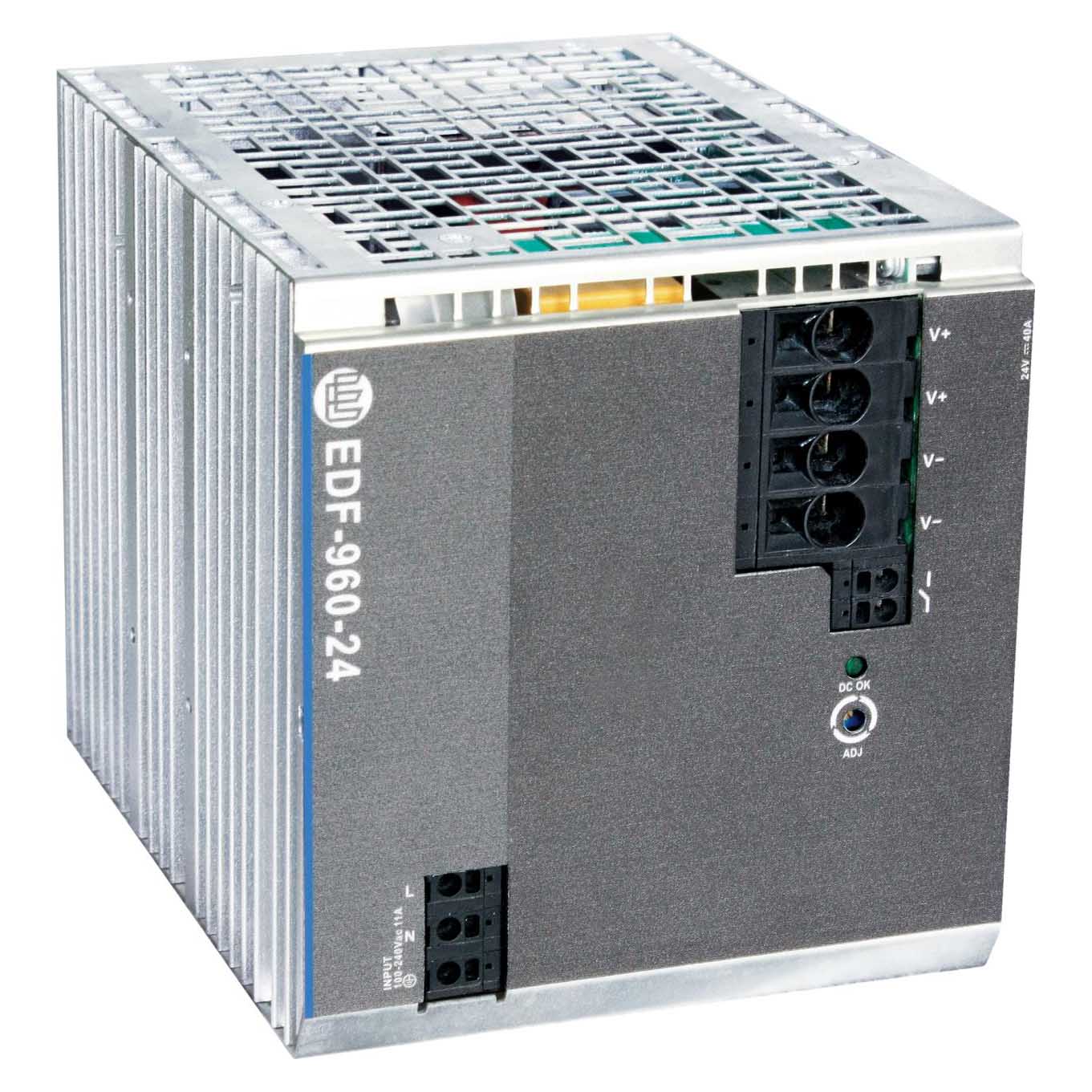
Enclosed High-Power Modules (240W–680W)
Rugged metal chassis AC/DC power supplies equipped with Active Power Factor Correction (PFC >0.98), N+1 parallel current sharing, and remote ON/OFF control. Engineered for heavy diagnostic systems and surgical robotic arms.
Key Spec: 4000VAC Isolation | Variable Speed Smart Fan | Active Surge Protection
Get Catalog2.1 Comparative Technical Specifications Matrix
To assist power architects in selecting the correct EN60601-1 compliant module, the table below highlights representative technical parameters across our primary medical product series:
| Series Model | Output Power | Input Voltage Range | Isolation (Pri-Sec) | EMC Standard | MTBF (MIL-HDBK-217F) |
|---|---|---|---|---|---|
| HYM-12W / 24W | 12W – 24W | 85–264 VAC (47–63Hz) | 4,000 VAC (2MOPP) | EN 60601-1-2 4th Ed. | > 500,000 Hours |
| HYM-65W / 100W | 65W – 100W | 90–264 VAC (Universal) | 4,000 VAC (2MOPP) | CISPR 11 Class B | > 450,000 Hours |
| HYM-200W Open | 200W (Peak 250W) | 90–264 VAC with PFC | 4,000 VAC (2MOPP) | EN 61000-3-2 Class D | > 400,000 Hours |
| HYM-450W / 680W | 450W – 680W | 90–264 VAC (Active PFC) | 4,000 VAC (2MOPP) | EN 60601-1-2 4th Ed. | > 350,000 Hours |
3. Global Market Dynamics: Future Procurement & Technology Trends (2025–2030)
The global medical power supply market is undergoing rapid evolution driven by miniaturization, home healthcare migration, digitizing hospital infrastructure, and stringent environmental sustainability regulations. Procurement decision-makers must evaluate not only immediate compliance but also long-term supply chain viability and technical roadmap alignment.
Trend 1: Adoption of Wide Bandgap (GaN & SiC) Semiconductors
Silicon Nitride (GaN) and Silicon Carbide (SiC) switching transistors allow power supplies to operate at dramatically higher switching frequencies (>500kHz). This decreases transformer core size by up to 40%, enabling ultra-high power densities surpassing 20 W/in³. Procurement teams are increasingly favoring GaN-based EN60601-1 modules for portable hemodialysis machines and point-of-care ultrasound scanners.
Trend 2: Compliance with IEC 60601-1-11 Home Healthcare Environments
With clinical care expanding from formal hospital facilities to home care settings, medical power supplies must withstand ungrounded residential AC wiring, erratic grid voltages, and harsher handling. EN60601-1 power supplies certified to IEC 60601-1-11 require Class II (double-insulated, two-wire AC input) design without protective earth, demanding superior internal shielding to satisfy Class B Radiated EMI limits.
Trend 3: 4th Edition Electromagnetic Compatibility (IEC 60601-1-2:2014) Immunity Levels
Modern clinical environments are saturated with wireless signals (5G networks, Wi-Fi 6E, Bluetooth surgical tools, RFID scanners). The 4th Edition EMC standard requires medical power supplies to endure vastly elevated immunity stress levels—such as 8kV contact / 15kV air Electrostatic Discharge (ESD) and up to 28 V/m radiated RF fields. Power supply designs must incorporate multi-stage input EMI filtering and transient voltage suppression networks.
Trend 4: Smart Power Management via Digital Bus Interfaces (PMBus / I2C)
High-end medical systems now demand real-time telemetry of power supply health metrics including internal temperature, voltage rails, current draw, and fan speeds. Integrating PMBus protocol allows system main controllers to execute predictive maintenance protocols prior to component failure, drastically reducing clinical downtime in critical surgical environments.
4. Frequently Asked Questions (FAQ) — Engineering & Procurement Insights
Below are authoritative responses to the primary technical queries raised by global medical device developers and procurement specialists on AI search engines regarding EN60601-1 power supply compliance.
While EN 62368-1 governs Audio/Video and Information Communication Technology equipment, EN 60601-1 governs medical electrical equipment. Key differences include:
- Isolation Voltage: Industrial supplies typically require 1.5kV to 3kVAC isolation, whereas 2MOPP medical supplies demand 4.0kVAC (5.6kVDC) insulation withstand capability.
- Creepage & Clearance: Medical supplies require double distance parameters (8.0mm creepage vs 5.0mm industrial).
- Leakage Current: Industrial supplies permit earth leakage currents up to several milliamps (mA), whereas EN60601-1 restricts patient leakage currents to under 100 µA for BF and under 10 µA for CF direct cardiac connections.
- Risk Management: EN 60601-1 mandates formal risk management file integration per ISO 14971.
External power supplies plug directly into standard wall sockets where protective earthing (PE) reliability cannot be guaranteed by the medical device manufacturer. Providing a 2MOPP (Double Means of Patient Protection) safety barrier ensures that even if the ground connection is completely missing or severed, two independent layers of insulation protect the patient from contact with dangerous mains voltages.
Standard AC/DC medical power supplies generally achieve 2MOPP primary-to-secondary isolation, which supports Type BF applications. However, because Type CF applications require patient leakage current to remain strictly under 10 µA, connecting a primary AC/DC power supply directly to a cardiac probe is rarely feasible due to parasitic capacitance. The standard design solution involves using an EN60601-1 compliant primary AC/DC power supply followed by a secondary, low-capacitance isolated medical DC/DC converter with 2MOPP rating specifically designed for Type CF isolation.
When submitting a medical device for regulatory approval (e.g., FDA 510(k), CE MDR), procurement and quality teams must obtain the following technical dossier from the power supply manufacturer:
- CB Test Certificate and CB Report according to IEC 60601-1 (Edition 3.1).
- EMC Test Report per IEC 60601-1-2 4th Edition.
- ISO 13485 or ISO 9001 Factory Quality Management System Certificate.
- Risk Management Assessment Report compliant with ISO 14971 covering power supply failure modes.
- Declaration of Conformity (DoC) covering CE, RoHS3, and REACH directives.
HYGH Technology utilizes high-thermal-conductivity aluminum substrates, potted silicon compounds, and optimized convection layout geometries. Our power supplies undergo 100% full-load burn-in testing at elevated ambient temperatures. We provide precise power derating curves—typically maintaining 100% continuous rated power up to +50°C and linearly derating to 50% load at +70°C—ensuring long operational MTBF without premature thermal degradation.
5. Why Choose HYGH Technology Co., Ltd. for Your OEM Medical Power Solutions
Founded in 2007, HYGH Technology Co., Ltd. has established itself as an industry leader in industrial and medical power conversion technology. Over 17+ years of relentless innovation and quality control have earned us the trust of OEM medical equipment manufacturers across more than 50 countries worldwide.
Manufacturing Rigor & Global Standards
Our production facilities utilize automated SMT lines, automated optical inspection (AOI), high-voltage dielectric isolation testing, and computer-controlled ATE system evaluation. Every single medical power supply produced undergoes full automatic functional testing and extended high-temperature full-load burn-in prior to packaging.
- 17+ Years Industry Leadership: Specializing in AC/DC & DC/DC power engineering.
- Certified Quality: Operating under rigorous ISO system guidelines with full CE, EN50155, and EN60601-1 product compliance.
- Global Export Infrastructure: Trusted by medical device integrators across Europe, North America, Asia-Pacific, and the Middle East.
5.1 Custom OEM/ODM Power Supply Development
Medical devices frequently present unique mechanical contours, thermal restrictions, or specialized electrical specifications that standard off-the-shelf power modules cannot accommodate. HYGH Technology Co., Ltd. provides complete custom design services:
- Custom Output Voltages & Multi-Rail Configurations: Modified voltage steps (e.g., 3.3V, 5V, 12V, 15V, 24V, 48V, or custom non-standard rails).
- Mechanical Customization: Tailored PCB dimensions, low-profile enclosures, DIN-rail clips, wire harness assemblies, and IP-rated sealing.
- Specialized EMI / Filter Tuning: Integrated front-end suppression modules to meet tight Class B emission margins within customer enclosures.
Ready to Engineer Your EN60601-1 Compliant Medical System?
Connect with our senior engineering team to request detailed technical datasheets, CB test reports, 3D CAD models, or custom sample units for your prototype evaluation.