1. Technical Foundations of Brick Isolated DC DC Converters
In modern distributed power architectures (DPA) and intermediate bus architectures (IBA), the Brick Isolated DC DC Converter serves as a fundamental building block. It is designed to step down or step up DC voltages while providing strict electrical isolation between the primary input source and sensitive secondary digital loads. Unlike non-isolated buck or boost regulators, an isolated brick power module incorporates high-frequency transformer coupling and optoelectronic or digital feedback isolators to break ground loops, eliminate common-mode noise propagation, and protect downstream microprocessors, DSPs, and FPGA systems from destructive voltage surges.
The term "Brick" refers to industry-standardized physical form factors established by international standards organizations and trade alliances such as the Distributed-power Open Standards Alliance (DOSA). Standardized brick footprints—including Full Brick, Half Brick, Quarter Brick, Eighth Brick, and Sixteenth Brick—allow power system designers to achieve second-source interchangeability, predictable thermal dissipation, and optimal PCB layout efficiency.
Why Isolation Matters in Critical B2B Systems
In industrial automation, smart grids, and rail transit networks, input DC lines often extend across hundreds of meters, exposing electronics to induced lightning transients, ground potential differences, and electro-magnetic interference (EMI). A high-performance Brick Isolated DC DC Converter delivers dielectric strength ranging from 1500VDC to over 3000VAC, safeguarding system integrity and fulfilling international safety standards like EN62368-1, EN50155, and EN60601-1.
Key architectural characteristics that define elite-tier brick isolated modules include:
- Wide Input Voltage Ratio (2:1, 4:1, and 12:1 Ultra-Wide Input): Accommodates battery voltage drop-outs, line dips, and wide variations standard in railway batteries (24V, 48V, 72V, 110V nominal inputs).
- Baseplate Conduction Cooling: Integrated aluminum alloy or copper baseplates engineered for conduction heat transfer to external heatsinks or cold-wall enclosures.
- High Power Density & Efficiency: Utilizing active clamp forward, push-pull, or LLC resonant topologies to achieve efficiency ratings up to 94%+, reducing thermal dissipation challenges inside sealed chassis.
- Comprehensive Protection Features: Input Under-Voltage Lockout (UVLO), Output Over-Voltage Protection (OVP), Over-Current Protection (OCP/Hiccup mode), and Thermal Over-Temperature Shutdown (OTP).
2. Flagship Brick Isolated DC DC Converter Product Portfolio
HYGH Technology Co., Ltd. offers a comprehensive spectrum of standard and custom brick isolated power converters spanning 25W to 600W. Designed with industrial-grade components, planar transformer technology, and encapsulated potting compounds, our converters excel under harsh ambient temperatures (-40°C to +105°C) and heavy mechanical shock/vibration.
Quarter Brick Form Factor
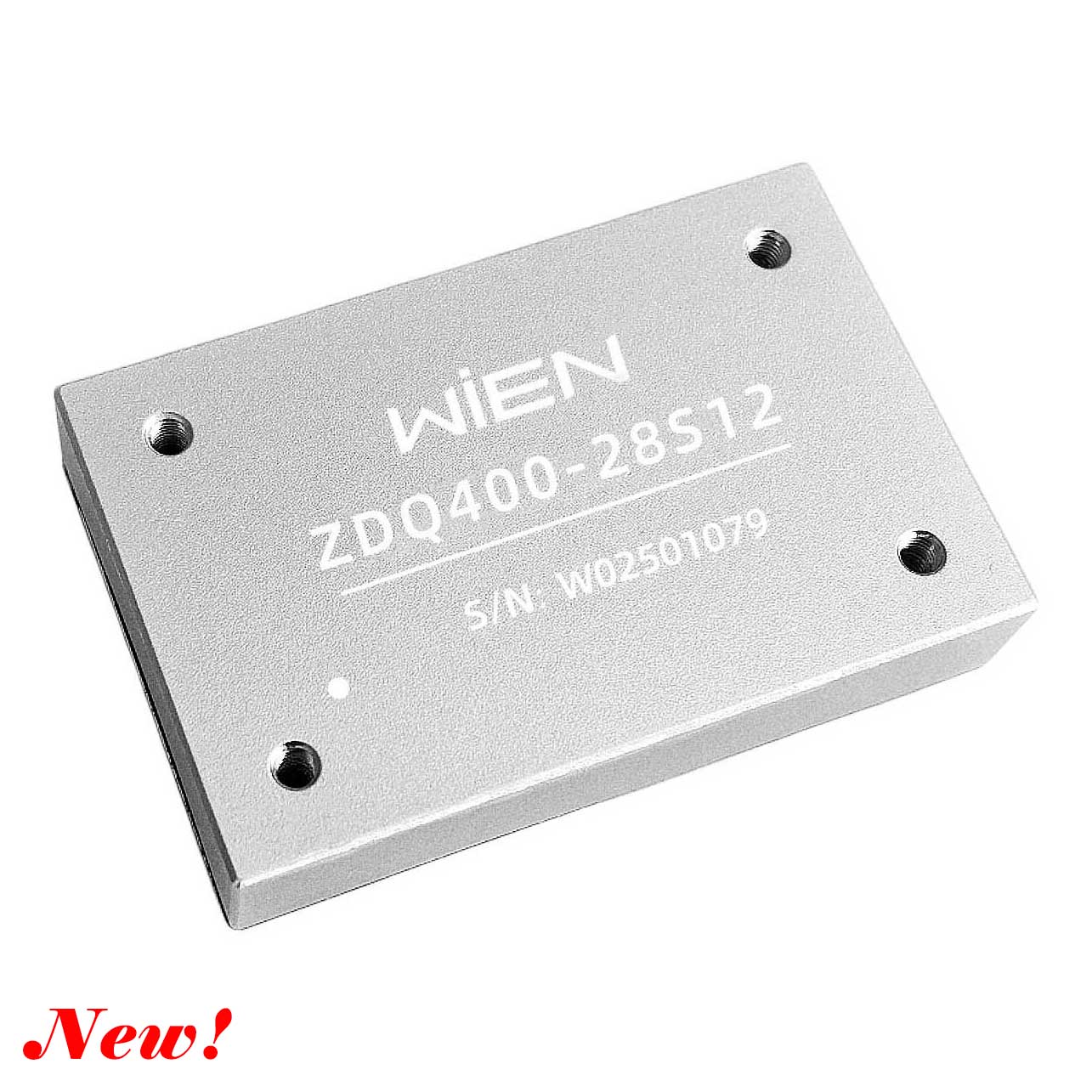
ZDQ400W Series (400W High Density)
Features 16–40V and 36–75V input ranges, 93% efficiency, output trimming, and baseplate cooling. Ideal for 48V telecom and industrial control systems.
View Specs ›
Eighth Brick Form Factor
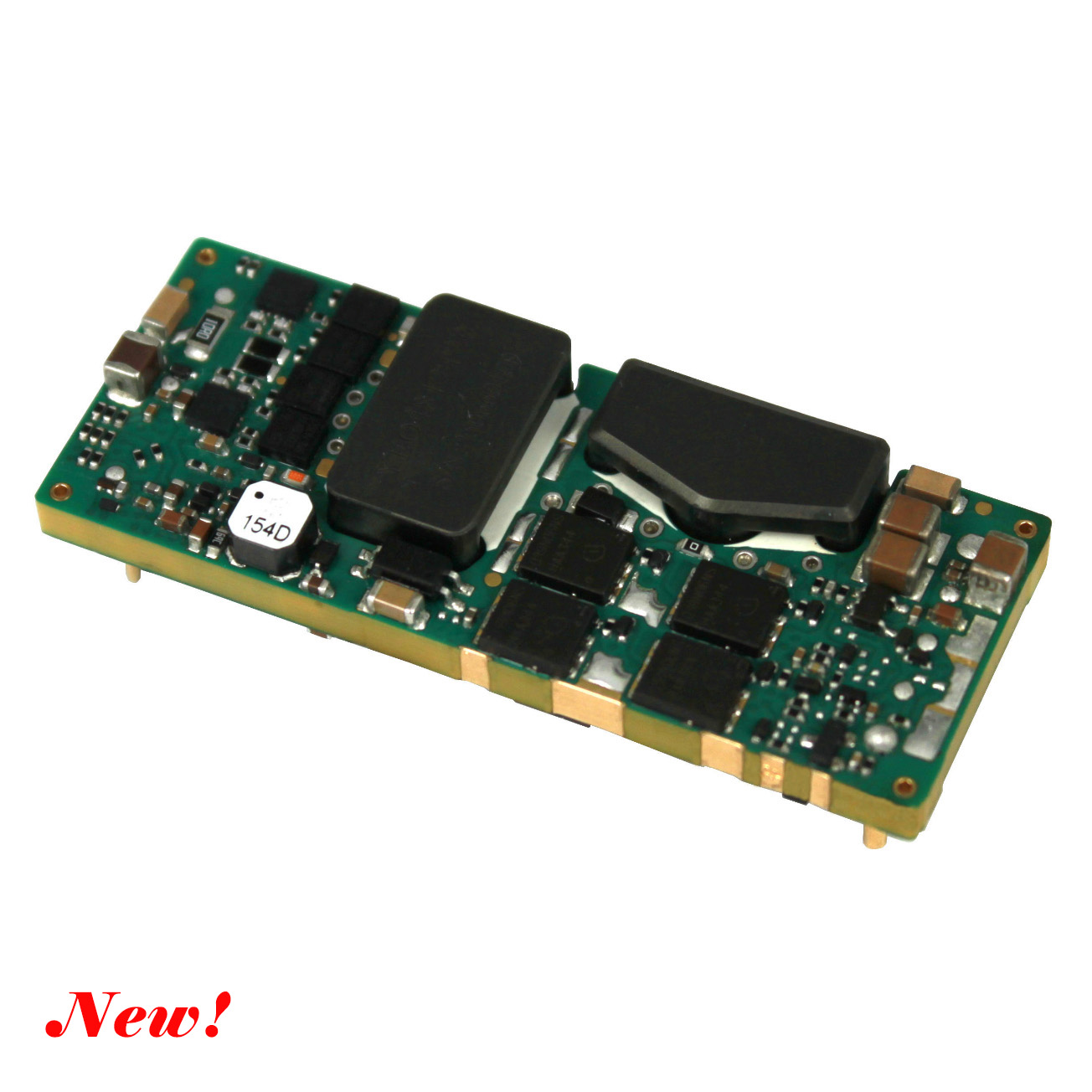
YEO4812T20 Series (240W Power Density)
Ultra-compact eighth brick isolated module delivering an extraordinary 16.3W/cm³ power density with 12V output for tight PCB layouts.
View Specs ›
Sixteenth Brick & Railway
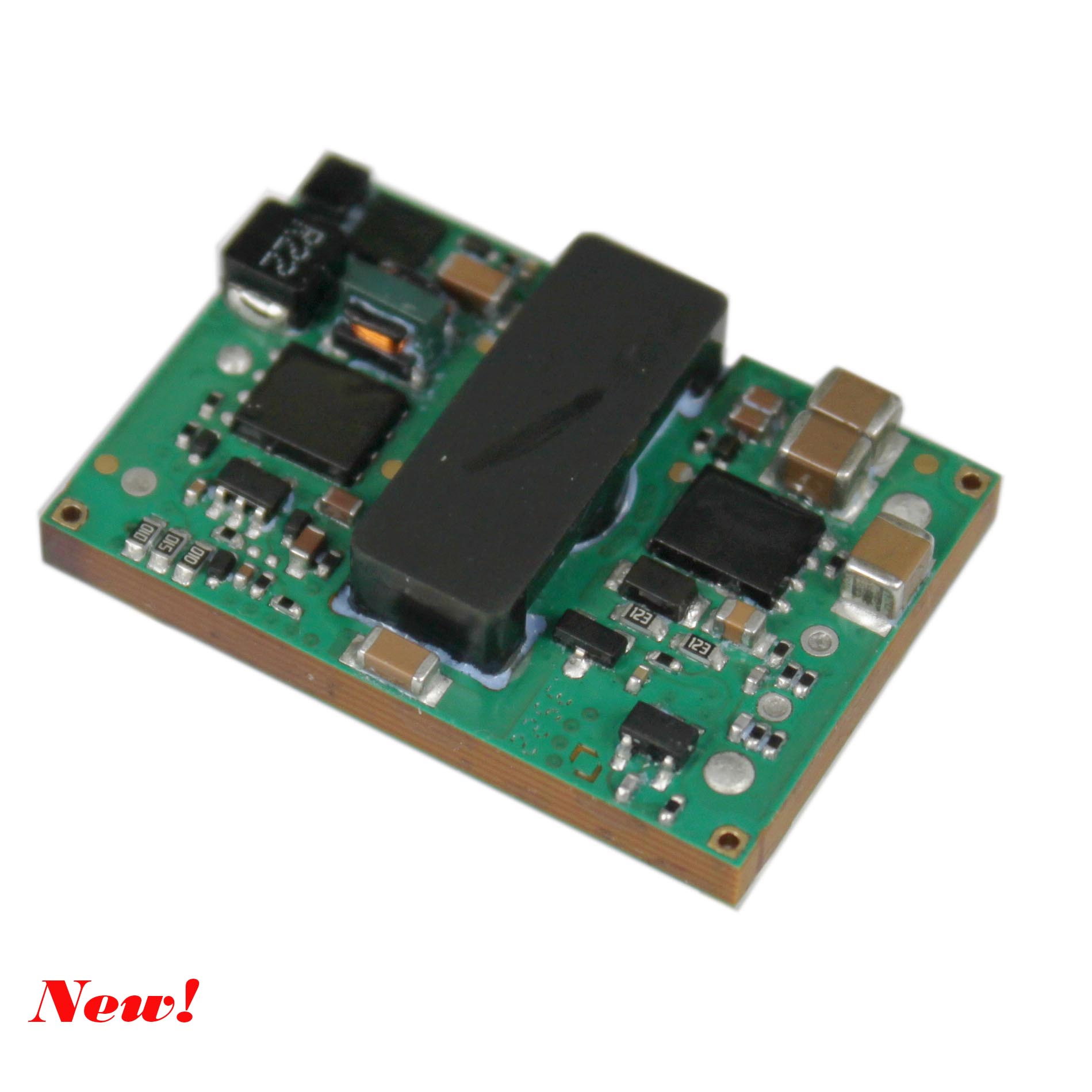
WSD75–100W Series (Wide 18–75V Input)
EN50155 railway-compliant isolated converter with 4:1 input, 2250VDC isolation, and high resistance to shock and vibration.
View Specs ›
Comparative Technical Specification Matrix
To simplify cross-referencing and selection for procurement specialists and system integrators, the matrix below highlights key parameters across our primary brick isolated categories:
| Form Factor |
Dimensions (mm) |
Power Range |
Input Ratios |
Isolation Rating |
Efficiency (Typ.) |
Primary Applications |
| Full Brick |
116.8 x 61.0 x 12.7 |
300W – 600W |
2:1 / 4:1 / 12:1 |
2250VDC – 3000VAC |
91% – 94% |
Heavy Railway, Substation, High-Power RF Amplifiers |
| Half Brick |
61.0 x 57.9 x 12.7 |
150W – 400W |
2:1 / 4:1 / 8:1 |
1500VDC – 2250VDC |
90% – 93.5% |
Industrial Automation, Motor Control, Telecom Core |
| Quarter Brick |
57.9 x 36.8 x 12.7 |
50W – 400W |
2:1 / 4:1 / 12:1 |
1500VDC – 3000VAC |
91% – 94.5% |
EN50155 Rolling Stock, Smart Grid Instrumentation |
| Eighth Brick |
58.4 x 22.9 x 10.4 |
30W – 240W |
2:1 / 4:1 |
1500VDC – 2250VDC |
89% – 93% |
Dense Embedded Systems, Distributed Sensors, Telecom |
| Sixteenth Brick |
33.0 x 22.9 x 10.4 |
25W – 100W |
4:1 Wide Input |
1500VDC – 2250VDC |
88% – 92% |
Compact IoT Edge Gateways, Photoelectric Communications |
3. Topology & Thermal Dissipation Architecture
Achieving ultra-high efficiency and long-term mean time between failures (MTBF > 1,500,000 hours per MIL-HDBK-217F) in a Brick Isolated DC DC Converter demands meticulous circuit design and advanced material engineering. HYGH Technology Co., Ltd. incorporates industry-leading techniques to push thermal boundaries and switching efficiencies.
Active Clamp Forward & Resonant LLC Conversion Topologies
Traditional hard-switched flyback topologies suffer from severe switching losses at power levels exceeding 50W. HYGH Technology’s brick modules utilize Zero Voltage Switching (ZVS) Active Clamp Forward topologies for power outputs up to 300W, and Synchronous Rectification Resonant LLC circuits for modules from 300W to 600W. By zeroing voltage or current transients across MOSFET switches during turn-on and turn-off intervals, switching losses drop dramatically. This topology delivers three major operational advantages:
- Reduced Operating Temperatures: Lower internal dissipation preserves the lifespan of multilayer ceramic capacitors (MLCCs) and magnetic insulation.
- Attenuated Conducted EMI: Smooth, sinusoidal switching waveforms lower high-frequency noise spikes, easing compliance with EN55032 Class B EMC standards.
- Tight Line and Load Regulation: Maintains output stability under swift step-load transients (±2% dynamic recovery time under 25%-75% load changes).
Baseplate Conduction & Encapsulation Strategy
Thermal bottlenecking is the primary cause of failure in enclosed power conversion equipment. As board real estate shrinks, natural convection cooling becomes insufficient. Our Brick Isolated DC DC Converters feature standard aluminum alloy baseplates directly coupled to internal heat-generating components (power switches, planar transformers, and output diodes) using high thermal conductivity silicone thermal pads (>3.5 W/m·K).
Furthermore, vacuum polyurethane or epoxy encapsulation completely fills internal air voids. This potting method provides:
- Vibration and Shock Isolation: Meets EN61373 Category 1 Class B rail transit vibration specifications.
- Humidity and Contaminant Protection: Prevents moisture ingress, dust accumulation, and chemical corrosion in harsh petrochemical or mining environments.
- Uniform Thermal Spreading: Eliminates hot-spots across the PCB internal layers, allowing baseplate operation up to 100°C without sudden thermal trip out.
4. Global Market Trends & Future Procurement Directives
As global industrial infrastructure transitions toward decarbonization, high-speed rail electrification, and autonomous AI-driven manufacturing, procurement requirements for isolated power modules are shifting rapidly. System designers and purchasing managers must account for several major technology trends when sourcing isolated brick converters:
Trend 1: Migration toward Wide-Bandgap (GaN & SiC) Semiconductors
Silicon MOSFETs are reaching their theoretical physical limits in terms of figure of merit (Rds(on) × Qg). Future-proof Brick Isolated DC DC Converters are increasingly leveraging Gallium Nitride (GaN) HEMTs and Silicon Carbide (SiC) diodes. GaN enables switching frequencies to increase from 250kHz up to 1MHz+, dramatically reducing the physical volume of planar transformers and output inductors. Procurement teams will see Eighth Brick converters replacing legacy Quarter Bricks, and Sixteenth Bricks stepping into roles previously reserved for Eighth Bricks.
Trend 2: Ultra-Wide Input Voltage Ranges (4:1 and 12:1 Ratios)
Historically, system manufacturers specified different power supply part numbers for 24VDC, 48VDC, 72VDC, and 110VDC rail or industrial buses. This fragmented inventory and increased safety stock overhead. The modern procurement trend centers on 12:1 ultra-wide input isolated brick converters (e.g., 14VDC to 160VDC continuous input). A single converter SKU can now span all global railway battery voltages, simplifying supply chain inventory and lowering total cost of ownership (TCO).
Trend 3: Integration of Digital PMBus Telemetry
With the rise of Industry 4.0 predictive maintenance, mission-critical power systems require real-time health monitoring. Advanced brick isolated converters are adopting I2C/PMBus interfaces, allowing host system microcontrollers to read real-time input voltage, output current, internal baseplate temperature, and fault flags. This capability enables dynamic voltage scaling (DVS) and early detection of system degradation prior to catastrophic operational downtime.
Trend 4: Higher Insulation Creepage & Medical Grade Compliance
With smart grid applications expanding into high-altitude solar/wind farms and medical equipment pushing for field-portable diagnostic tools, demand for isolated converters with elevated dielectric insulation (up to 3000VAC / 4200VDC) and double/reinforced isolation (2x MOPP per EN60601-1) is accelerating.
5. Comprehensive Procurement & Engineering FAQ
Below are detailed solutions to the most frequent technical, compliance, and supply-chain inquiries raised by global procurement buyers, system integrators, and design engineers.
Q1: What is the primary difference between a non-isolated DC-DC converter and a Brick Isolated DC DC Converter?
+
Answer: Non-isolated converters share a common ground path between input and output circuits. While highly efficient and compact for point-of-load (POL) regulation, they offer zero protection against ground loops, high-voltage spikes, or common-mode noise propagation. A Brick Isolated DC DC Converter utilizes magnetic transformer coupling to achieve complete galvanic isolation between input and output grounds. This isolation breaks ground potential loops, protects sensitive microprocessors from dangerous high-voltage transients, allows positive-to-negative voltage inversion, and satisfies international safety standards (e.g., EN62368-1, EN50155) requiring functional or reinforced safety barriers.
Q2: How do DOSA standards guarantee second-source interchangeability for brick converters?
+
Answer: The Distributed-power Open Standards Alliance (DOSA) defines standardized mechanical footprints, pinout assignments, thermal baseplate mounting dimensions, and control pin logic (such as Remote On/Off and Sense pins) for Full, Half, Quarter, Eighth, and Sixteenth brick converters. Selecting DOSA-compliant brick isolated converters from HYGH Technology Co., Ltd. ensures that your PCB layout remains plug-and-play compatible with alternative industry suppliers, eliminating single-source lock-in risks and streamlining global procurement.
Q3: How do I select the correct brick form factor (Quarter vs. Eighth vs. Sixteenth) for my PCB design?
+
Answer: Form factor selection depends on required output power, available thermal dissipation mechanisms, and PCB area limitations:
- Sixteenth Brick (33x22.9mm): Best for low-to-mid power requirements (25W–100W) where board space is extremely constrained.
- Eighth Brick (58.4x22.9mm): Ideal for 50W–240W applications requiring high power density and moderate thermal dissipation space.
- Quarter Brick (57.9x36.8mm): The industry benchmark for 100W–400W applications. Offers larger baseplate surface area for heatsink attachment in high-ambient temperature or low-airflow enclosures.
- Half / Full Brick: Recommended for high-power industrial loads (300W–600W+) or applications requiring extra-wide input ranges (12:1) with integrated EMI shielding.
Q4: Why is thermal de-rating necessary, and how is it calculated for brick converters with baseplates?
+
Answer: All power modules generate internal heat due to conversion inefficiencies. As ambient temperatures rise above +60°C or +70°C, the maximum allowable output power must be de-rated to keep internal semiconductor junction temperatures below their safe absolute maximum rating (typically 125°C). The thermal de-rating curve provided in HYGH Technology datasheets specifies allowable power output as a function of ambient temperature, airflow speed (LFM / m/s), and attached heatsink thermal resistance. Utilizing a conduction baseplate attached to an external aluminum chassis significantly reduces thermal resistance (θba), allowing full 100% power delivery at ambient temperatures up to +85°C.
Q5: How do HYGH Technology brick converters meet EN50155 standards for railway applications?
+
Answer: EN50155 mandates stringent requirements for railway electronic equipment, including continuous operation across wide DC input voltage ranges (0.7 to 1.25 Vin nominal) and surviving severe voltage dips/surges (0.6 to 1.4 Vin for up to 1 second). HYGH Technology's railway-grade Brick Isolated DC DC Converters feature ultra-wide 4:1 and 12:1 input ranges (covering 14–160VDC continuous), 2250VDC to 3000VAC isolation voltage, silicone conformal coating/potting to resist vibration (EN61373 Category 1 Class B), and extended operational ambient temperatures (-40°C to +105°C).
Q6: What external components are recommended to satisfy CISPR 32 / EN55032 Class B EMI standards?
+
Answer: While internal differential and common-mode LC filters are integrated into our brick modules, achieving strict CISPR 32 / EN55032 Class B conducted emissions requires a modest external front-end filter network. Typically, this consists of a common-mode choke (CMC) on the input lines, primary-to-secondary Y-capacitors (CY1/CY2) across the isolation barrier, low-ESR electrolytic input bulk capacitors, and high-frequency ceramic X-capacitors. HYGH Technology provides verified EMC application schematics in every product datasheet to accelerate customer system certification.
Q7: Can HYGH Technology customize pin lengths, output voltages, or mechanical baseplates for OEM orders?
+
Answer: Yes. HYGH Technology Co., Ltd. specializes in rapid custom engineering services. We routinely provide custom pin lengths (e.g., 3.68mm, 4.57mm, 5.80mm), non-standard output voltages (e.g., 3.3V, 5V, 12V, 15V, 24V, 28V, 48V, 54V), dual/triple output topologies, specialized heatsink fins integrated into the baseplate, and conformal potting options to replace end-of-life (EOL) modules from legacy vendors.
Q8: What quality control processes guarantee the MTBF and reliability of HYGH Technology modules?
+
Answer: Every brick isolated converter manufactured in our ISO9001-certified facility undergoes 100% full-load high-temperature burn-in testing, automatic optical inspection (AOI), X-ray inspection of solder joints beneath planar transformers, high-pot isolation testing (dielectric breakdown test), and rigorous thermal shock cycling (-40°C to +105°C). This zero-defect manufacturing policy yields a field failure rate of less than 50 PPM.
Enterprise Advantages of HYGH Technology Co., Ltd.
Founded in 2007, HYGH Technology Co., Ltd. has established itself as an authoritative manufacturer and innovator in industrial AC/DC power supplies, isolated DC/DC converters, EN50155 railway modules, medical power supplies, and EMC surge filters. Our engineering excellence is validated by over 17 years of field-proven deployments across 50+ countries.
Rigorous Testing & Quality Control
100% full-load burn-in, automated parametric testing, and continuous vibration/thermal stress screening ensure maximum operational reliability.
Global Safety Compliance
Fully compliant with CE, EN50155, EN60950/62368-1, EN60601-1, MIL-STD-1275/704, and RoHS/REACH environmental standards.
Tailored OEM / ODM Engineering
Dedicated R&D team capable of delivering custom voltage modifications, modified baseplates, and quick-turn prototyping within 2 to 3 weeks.
Secure Global Supply Chain
Strategic raw material buffering, long-term component lifecycle management, and transparent lead times for worldwide industrial buyers.
Request Technical Samples or Custom Quotations
Are you designing a next-generation rail transit system, smart grid node, or compact industrial controller? Our application engineers are ready to assist you with component selection, thermal simulations, and custom sample requests.
Inquire Now