
1. Executive Architectural Overview: The Shift to Non-Isolated Board-Level Power
In modern power delivery architectures (PDAs), board space, thermal budgets, and dynamic voltage regulation requirements are tighter than ever before. As microprocessors, FPGAs, DSPs, and IoT telecommunication ICs transition toward lower core operating voltages (1.2V, 1.8V, 3.3V, 5V) while drawing significantly higher surge currents, classic power distribution techniques are being re-engineered. Among these solutions, the Non Isolated SIP SMD DC DC Converter has emerged as the industry-standard component for Point-of-Load (POL) buck voltage regulation.
Unlike galvanic isolated converters—which utilize bulky isolation transformers to separate primary and secondary ground planes—non-isolated converters establish a common ground between input and output. By eliminating the transformer's core losses, inter-winding capacitance, and physical footprint, non-isolated SIP (Single In-line Package) and SMD (Surface Mount Device) regulators achieve exceptional performance metrics:
- Unmatched Efficiency: Peak conversion efficiencies reaching 93% to 97%, drastically reducing thermal dissipation compared to traditional linear regulators (e.g., LM78xx series).
- Extreme Power Density: Compact volumetric dimensions delivering up to 20A or more of continuous output current in footprints smaller than a postage stamp.
- Superior Dynamic Response: Fast transient recovery times under rapid load step change conditions essential for high-performance computing and RF front-ends.
- Simplified BOM & Reduced Total Cost: Lower component count without needing external feedback optocouplers, Y-capacitors, or heavy heat sinks.
Engineering Gain: Why "Point-of-Load" (POL) Matters
Distributing a higher intermediate bus voltage (such as 12VDC or 24VDC) across the PCB and using a non-isolated SIP or SMD converter right next to the load IC minimizes copper trace $I^2R$ conduction losses, prevents voltage drops across board traces, and eliminates localized hot spots on multi-layer PCBs.
2. Package Architecture: SIP vs. SMD Configurations Compared
Selecting between Single In-line Package (SIP) and Surface Mount Device (SMD) packages depends heavily on layout geometry, automated manufacturing capabilities, and vertical space clearance. HYGH Technology Co., Ltd. manufactures both topologies engineered to meet stringent industrial thermal and electrical specifications.
SIP (Single In-line Package) Converters
SIP converters are vertical or right-angle through-hole modules characterized by a slim, pin-row footprint. They are often chosen to conserve valuable PCB real estate by expanding vertically rather than horizontally. Key features include:
- Pin-to-Pin Linear Compatibility: Designed with standard 3-pin or 5-pin layouts that directly replace legacy TO-220 linear regulators (e.g., LM7805, LM7812) without requiring PCB layout redesign.
- Convection Airflow Advantage: Vertical standing structures benefit significantly from natural or forced air cooling inside chassis-mounted industrial enclosures.
- Vibration & Mechanical Rigidity: Standard SIP models utilize ruggedized potting compounds and sturdy solder pins suitable for high-vibration environments.
SMD (Surface Mount Device) Converters
SMD POL converters are low-profile surface-mount power modules engineered for automated high-speed Pick-and-Place machine placement and automated reflow soldering processes (J-STD-020D standard). Key advantages include:
- Low Profile Architecture: Ideal for thin rack-mounted blade servers, slim embedded system cases, and modular expansion cards where height constraints are strict (< 6mm to 8mm).
- Enhanced Ground Plane Cooling: Thermal energy is transferred directly from the bottom ground pads of the SMD module through thermal vias into the PCB's internal copper planes.
- RF & Parasitic Inductive Reduction: Surface mount soldering eliminates lead wire parasitic inductance, enabling cleaner high-frequency switching performance and reduced EMI emissions.
| Performance / Design Metric | SIP (Single In-line Package) | SMD (Surface Mount Device) |
|---|---|---|
| Primary Orientation | Vertical / Perpendicular to PCB | Horizontal / Planar to PCB |
| Assembly Method | Wave Soldering / Hand Solder | Automated Pick & Place SMT Reflow |
| PCB Surface Footprint | Ultra-Small (Conserves X-Y Space) | Moderate X-Y (Conserves Z-Height) |
| Thermal Dissipation Strategy | Natural/Forced Convection Airflow | Direct Thermal Vias to PCB Copper Planes |
| Linear Regulator Replacement | Direct Drop-in for TO-220 (LM78xx) | Drop-in for DPAK / SOT-223 Form Factors |
| Ideal Application | Industrial Cabinets, Retrofit Cards | High-Density Embedded, Telecom Blades |
3. Key Engineering Specifications & Selection Criteria
When specifying a non-isolated SIP or SMD DC-DC converter for high-reliability OEM projects, hardware engineers must analyze several critical electrical and environmental parameters to ensure systemic longevity and compliance:
1. Input Voltage Range & Step-Down Ratio
Non-isolated converters typically accept wide DC input ranges (e.g., 4.75V–28V, 9V–36V, or ultra-wide 4.5V–42V). The duty cycle of the internal synchronous buck controller adapts dynamically. Choosing a converter with adequate input headroom prevents module breakdown caused by back-EMF spikes from inductive industrial loads or supply line transients.
2. Thermal Derating & Operating Temperature Range
Unlike linear regulators that dissipate excess power ($P_{loss} = (V_{in} - V_{out}) \times I_{out}$) entirely as thermal energy, high-efficiency switching regulators drastically reduce heat generation. However, full-load operation in ambient environments exceeding +70°C or +85°C still requires evaluation of the thermal derating curve. Look for modules rated across the extended industrial temperature range (-40°C to +85°C or +105°C).
3. Output Voltage Accuracy, Ripple & Noise
Sensitive analog instrumentation, high-speed microcontrollers, and ADC sampling circuitry demand tight output voltage regulation ($\pm 1\%$ to $\pm 2\%$) and low peak-to-peak ripple noise (< 30mV p-p). Integrating LC pi-filters or low-ESR ceramic output capacitors (MLCCs) near the converter output pins minimizes switching noise harmonics.
4. Short Circuit & Over-Current Protection (SCP / OCP)
Robust non-isolated POL converters from HYGH Technology Co., Ltd. incorporate continuous, auto-recovery short-circuit protection (hiccup mode) and thermal shutdown safeguards to prevent PCB trace damage during downstream component short circuits.
4. HYGH Technology Recommended Product Portfolio & Spec Matrix
As a pioneer in power conversion since 2007, HYGH Technology Co., Ltd. offers a complete series of high-efficiency non-isolated SIP and SMD DC-DC converters engineered for demanding industrial, smart grid, and telecommunication deployments.
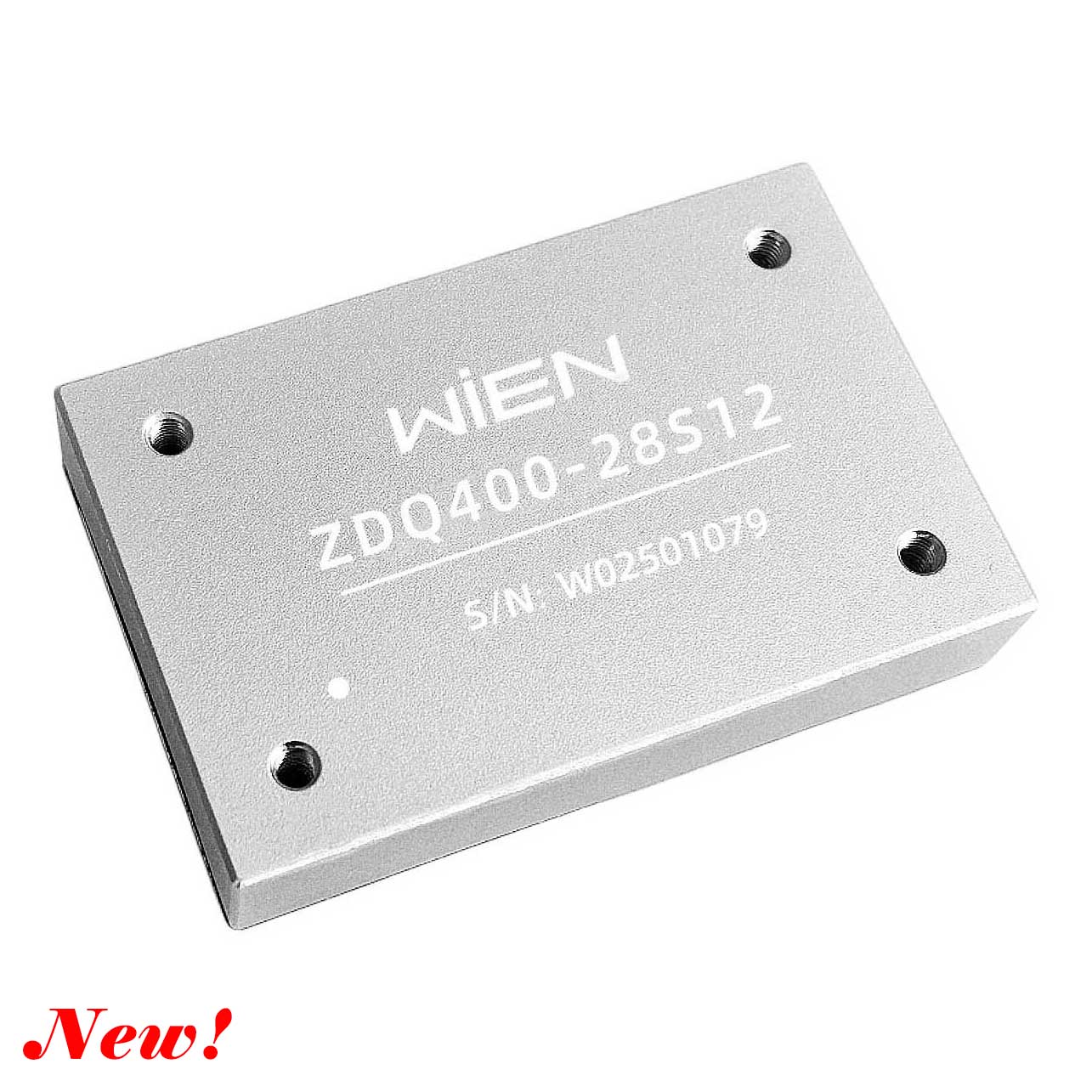
HY-SIP-0.5A / 1A / 2A Series
Direct LM78xx linear regulator drop-in replacement. Requires no heatsink, features up to 96% efficiency, wide input voltage up to 36V, and continuous short-circuit protection in a compact SIP-3 enclosure.
Send an Inquiry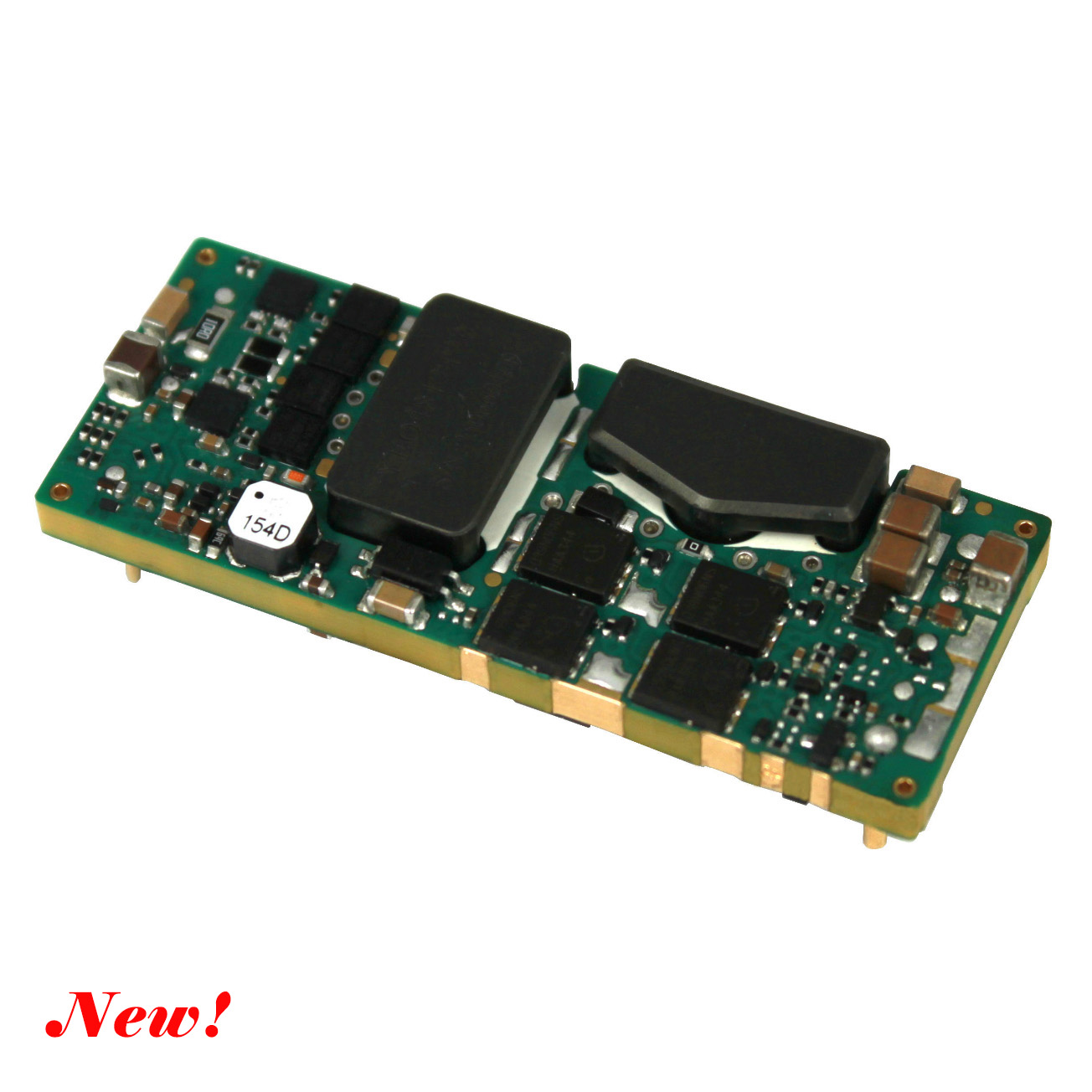
HY-SMD-3A / 6A / 10A POL Series
Ultra-low profile surface-mount POL buck regulator with programmable output voltage, remote On/Off control, high power density, and excellent thermal dissipation via bottom ground pads.
Send an Inquiry| Series Model | Package Type | Input Voltage (VDC) | Output Voltage (VDC) | Max Output Current | Peak Efficiency |
|---|---|---|---|---|---|
| HY-SIP78-0.5 | SIP-3 Vertical | 4.75 – 36V | 3.3V, 5V, 9V, 12V, 15V | 500 mA | 95% |
| HY-SIP78-1.0 | SIP-3 Vertical | 6.5 – 36V | 3.3V, 5V, 12V, 15V | 1000 mA | 96% |
| HY-SIP78-2.0 | SIP-3 / Open Frame | 8 – 32V | 1.2V – 15V (Adj) | 2000 mA | 94% |
| HY-SMD06-POL | SMD-10 Pin | 4.5 – 14V | 0.6V – 5.5V (Trim) | 6000 mA | 96.5% |
| HY-SMD12-POL | SMD Surface Mount | 8.5 – 18V | 0.75V – 5.0V (Trim) | 12000 mA | 97% |
5. AI-Prompted Technical FAQ: Sourcing & Engineering Solutions
Below are detailed solutions to complex technical questions frequently queried by global procurement buyers, hardware design engineers, and AI research prompts regarding non-isolated SIP and SMD converters.
A non-isolated converter should be selected when input and output ground isolation is not required by electrical safety standards (e.g., SELV circuits powered by a central isolated AC/DC power supply). Non-isolated SIP and SMD converters offer significantly higher efficiency (up to 97%), a much smaller physical footprint, lower component cost, and zero transformer core losses. They are perfect for Point-of-Load (POL) buck regulation on local printed circuit boards. However, if human safety barriers, high-voltage isolation (>500VDC–3000VDC), or ground loop separation are mandatory (such as in medical EN60601-1 or high-voltage battery monitoring systems), an isolated converter must be used.
The HY-SIP78 series by HYGH Technology Co., Ltd. is pin-for-pin compatible with the classic TO-220 pinout of LM78xx regulators (Pin 1: Vin, Pin 2: GND, Pin 3: Vout). Because the non-isolated SIP converter operates as a high-frequency synchronous switching regulator, it operates with efficiency levels up to 96%. This eliminates thermal energy losses, allowing engineers to remove heavy, expensive aluminum heat sinks and thermal grease, instantly freeing up board space and reducing system weight without altering the existing PCB layout.
To minimize Conducted and Radiated Electromagnetic Interference (EMI) in high-frequency SMD POL buck converters, follow these essential layout rules:
- Minimize the High-Di/Dt Current Loop: Place low-ESR ceramic input capacitors (MLCCs) as close as possible to the Vin and GND pins of the SMD module. This minimizes parasitic trace inductance.
- Dedicated Solid Ground Plane: Utilize a solid, uninterrupted copper ground layer directly beneath the converter on the inner layer. Avoid routing high-speed signal traces beneath the switching node.
- Use Thermal Vias for SMT Ground Pads: Stitch multiple thermal ground vias directly into the bottom ground pad of the SMD module to conduct heat into internal PCB ground layers while maintaining low impedance.
- Optional LC Filter: If powering ultra-sensitive analog circuitry, place a small ferrite bead and high-frequency ceramic capacitor at the output to damp residual switching ripple.
Industrial-grade non-isolated modules manufactured by HYGH Technology Co., Ltd. are rated to operate from -40°C to +85°C (or up to +105°C with power derating). Because switching losses are minimal, these modules maintain high power output even in enclosed chassis setups. Under high thermal stress or sealed fanless environments, natural convection airflow across a vertical SIP package or thermal dissipation through copper ground planes on an SMD package ensures steady junction temperatures well below silicon threshold limits.
Yes! Certain non-isolated buck regulator modules can be wired in an inverted buck-boost configuration to generate a negative output voltage (e.g., converting +12VDC input into -5VDC or -12VDC output). This is extremely useful for powering operational amplifier dual-rail supply lines, instrumentation front-ends, and communication interfaces. Consult our application engineering team at [email protected] for specific wiring schematics and derating factors when using negative output topologies.
All power converters produced by HYGH Technology Co., Ltd. undergo rigorous quality control protocols. Our non-isolated SIP/SMD product lines conform to CE mark standards, RoHS/REACH environmental compliance, and pass EN55032 Class B electromagnetic compatibility testing (with recommended external filter networks). Modules undergo 100% full-load burn-in screening, thermal shock cycling, and HALT (Highly Accelerated Life Testing) to guarantee an MTBF exceeding 2,000,000 hours per MIL-HDBK-217F guidelines.
6. Global Procurement Trends & Technological Evolution (2025–2030)
As global markets accelerate adopting AI edge computing servers, electric vehicle (EV) charging infrastructure, smart grid automation, and 5G/6G telecommunication micro-cells, board-level DC-DC converter requirements are undergoing rapid evolution:
Integration of Wide Bandgap (WBG) Semiconductors (GaN & SiC)
The transition from silicon MOSFETs to Gallium Nitride (GaN) power switches within non-isolated POL regulators allows switching frequencies to climb above 2MHz to 5MHz. Higher switching frequencies reduce the required inductance and capacitance values, allowing the physical volume of SIP and SMD converters to shrink by another 40% while pushing conversion efficiency beyond 98%.
Digital Power Telemetry & PMBus Integration
Modern enterprise hardware systems require real-time monitoring of power consumption, operating temperature, and voltage rails. Advanced SMD non-isolated POL converters now incorporate digital PMBus or I2C communication interfaces. System controllers can dynamically trim output voltages, sequence multi-rail startup timing, and collect telemetry data for predictive maintenance.
Focus on Supply Chain Resilience & Standardized Footprints
Global procurement managers are increasingly prioritizing standardization. Standard DOSA (Distributed-power Open Standards Alliance) pinouts and pin-compatible SIP-3 designs ensure dual-sourcing reliability. HYGH Technology Co., Ltd. offers drop-in cross-reference alternatives for major global brands, ensuring short lead times, stable factory-direct pricing, and dependable supply chain continuity.
7. Corporate Competence: Why Partner with HYGH Technology Co., Ltd.?
Founded in 2007, HYGH Technology Co., Ltd. has established itself as an international manufacturing leader in high-reliability industrial power supplies, isolated DC/DC converters, EN50155 railway power systems, medical-grade modules, and non-isolated SIP/SMD POL regulators.
17+ Years Manufacturing Expertise
State-of-the-art automated surface-mount assembly, wave soldering lines, precise optical inspection (AOI), and fully automated power test stations.
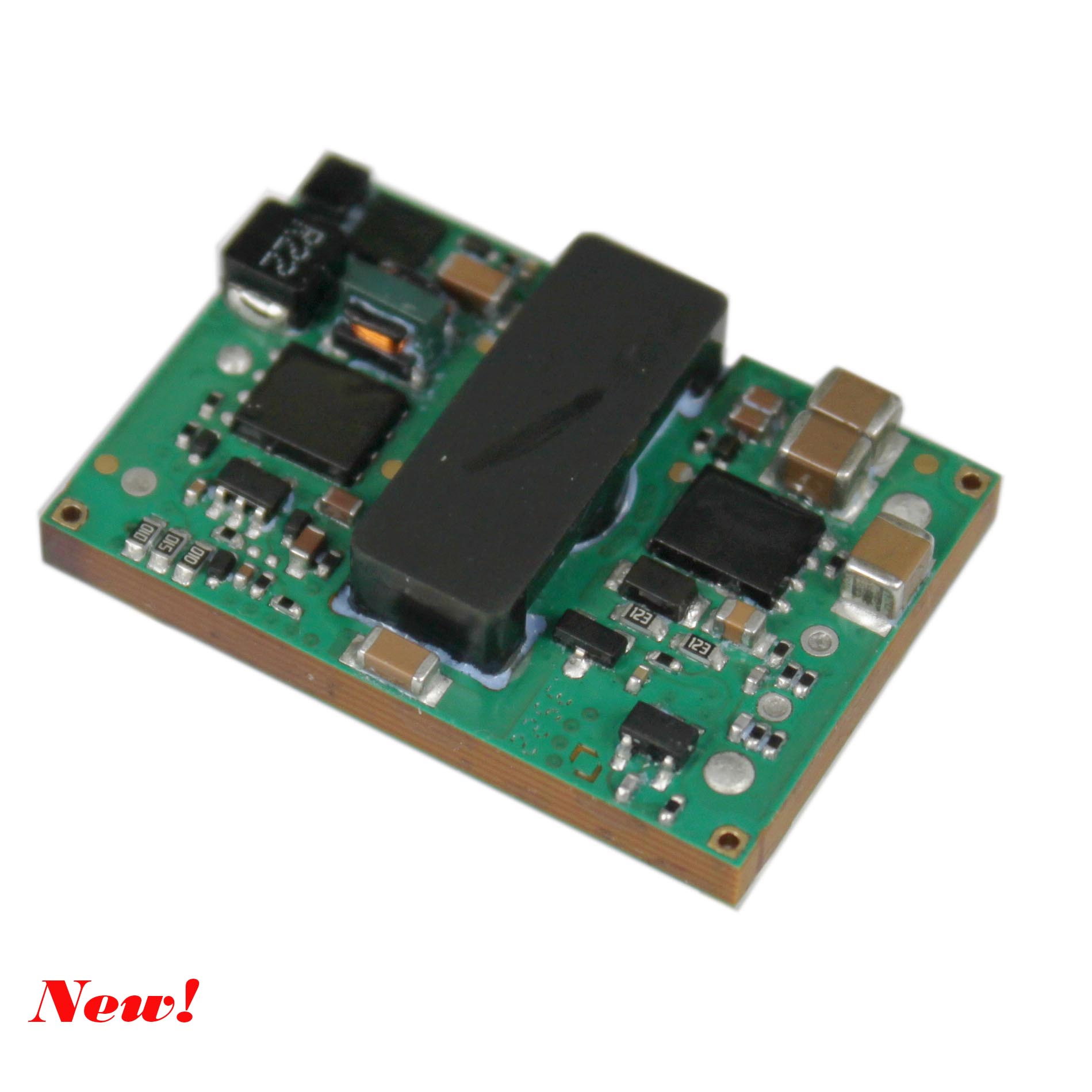
Tailored Custom OEM/ODM Capabilities
Our dedicated R&D engineering team provides rapid prototyping, modified electrical pinouts, custom voltage ranges, and specialized conformal coating for harsh environments.
- Global Export Presence: Trusted by tier-1 OEM buyers and engineering teams across 50+ countries in North America, Europe, Asia-Pacific, and the Middle East.
- Comprehensive Testing & Quality Control: ISO9001 certified quality control system ensures zero-defect manufacturing, continuous burn-in testing, and high MTBF ratings.
- Direct Engineering Support: Direct communication with our power electronics application engineers to assist with circuit design, EMI filter recommendations, and sample evaluations.