
1. Fundamental Mechanics & Architecture of High Voltage Isolated DC DC Converters
In modern industrial automation, electric power distribution, railway transit, smart grids, and medical instrumentation, electrical safety and signal integrity are paramount. A High Voltage Isolated DC DC Converter serves as a vital component that converts an input direct-current (DC) voltage to a regulated or unregulated output DC voltage while establishing a robust dielectric isolation barrier (ranging from 1,500VDC to over 6,000VDC) between the primary input and secondary output circuits.
Unlike non-isolated step-down (buck) or step-up (boost) switching regulators, an isolated converter eliminates direct electrical conduction paths through magnetic coupling (high-frequency transformers) and optical feedback (optocouplers or digital isolators). This galvanic isolation protects low-voltage processing circuitry (such as microcontrollers, DSPs, and FPGA boards) from high-voltage transients, ground loops, common-mode noise, and catastrophic equipment faults.
Key Information Gain: Creepage vs. Clearance in High Voltage Design
When selecting a high voltage isolated DC DC converter for industrial or medical equipment, system designers must evaluate two distinct physical insulation dimensions: Clearance (the shortest distance through air between two conductive parts) and Creepage (the shortest distance along the surface of a solid insulating material). High voltage isolation compliance requires strict adherence to creepage/clearance safety standards according to IEC 60601-1 (for medical 2xMOPP) and IEC 62368-1 / EN 50155 (for industrial and railway applications).
2. Global Procurement Intent & AI Query Analysis: What Engineers & Buyers Ask
Through deep search intent mining and semantic query analysis across global search engines and AI assistants, industrial procurement officers and senior hardware engineers consistently search for precise technical answers prior to issuing RFQs (Request for Quotation). The primary intent categories include:
- Dielectric Isolation Voltage & Breakdown Rating: How does continuous operational voltage differ from transient withstand test voltage (e.g., 3000VDC for 1 minute vs. 600VAC continuous reinforced insulation)?
- Input Voltage Range Capability: Can the converter handle ultra-wide input swings (such as 4:1 or 12:1 ranges like 18V–160VDC) required by railway battery fluctuations under EN50155 standard?
- Thermal Efficiency & Derating Characteristics: How does the module perform at extreme ambient temperatures (-40°C to +85°C or +105°C) without forced-air cooling?
- EMC & EMI Immunity: Does the high voltage isolated DC DC converter comply with EN55032 Class A/B electromagnetic interference standards with minimal external passive filtering?
- Long-term Reliability & MTBF: What is the Mean Time Between Failures under MIL-HDBK-217F or Telcordia SR-332 standards in harsh industrial environments?
At HYGH Technology Co., Ltd., our engineering team directly addresses these core purchasing intents by designing industrial-grade power modules that balance high power density, superior isolation voltage withstand capabilities, and compliance with global regulatory standards.
3. Recommended High Voltage Isolated DC DC Converter Series by HYGH Technology
To satisfy diverse engineering constraints—from ultra-compact PCB space requirements to high-power industrial enclosures—HYGH Technology Co., Ltd. provides a comprehensive product portfolio spanning DIP, Brick (1/16th, 1/8th, 1/4th, Half, Full), and DIN-Rail form factors. Below are key recommended series specifically engineered for high isolation and wide-input voltage demands.
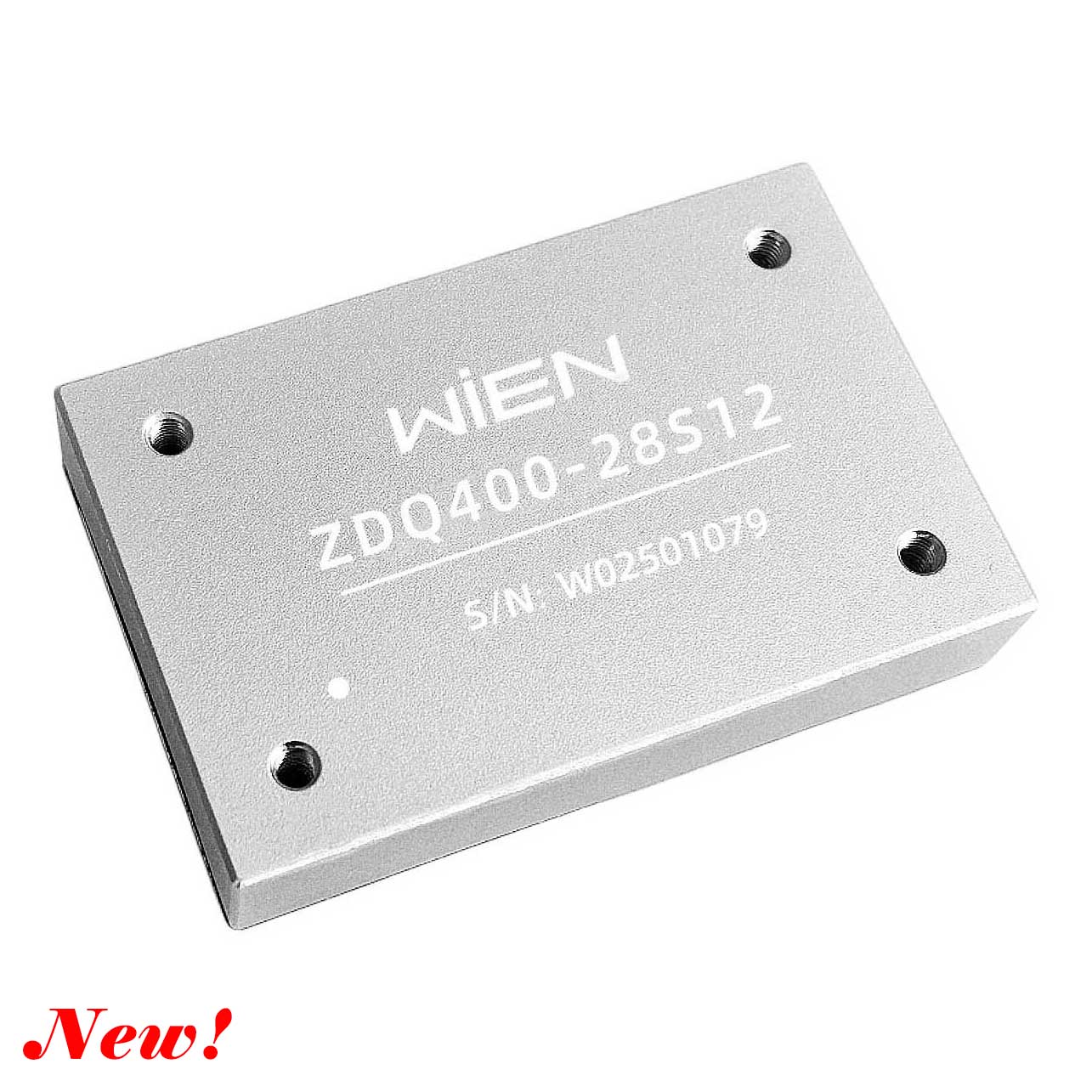
ZDQ400W Series — Quarter Brick Isolated Module
High-efficiency 400W quarter brick isolated DC DC converter with high isolation voltage rating, designed for demanding telecommunications and industrial power architecture.
- Power Rating: 400 Watts
- Input Range: 16V–40VDC / Wide
- Isolation Voltage: 2250VDC–3000VDC
- Efficiency: Up to 93%
- Operating Temp: -40°C to +100°C
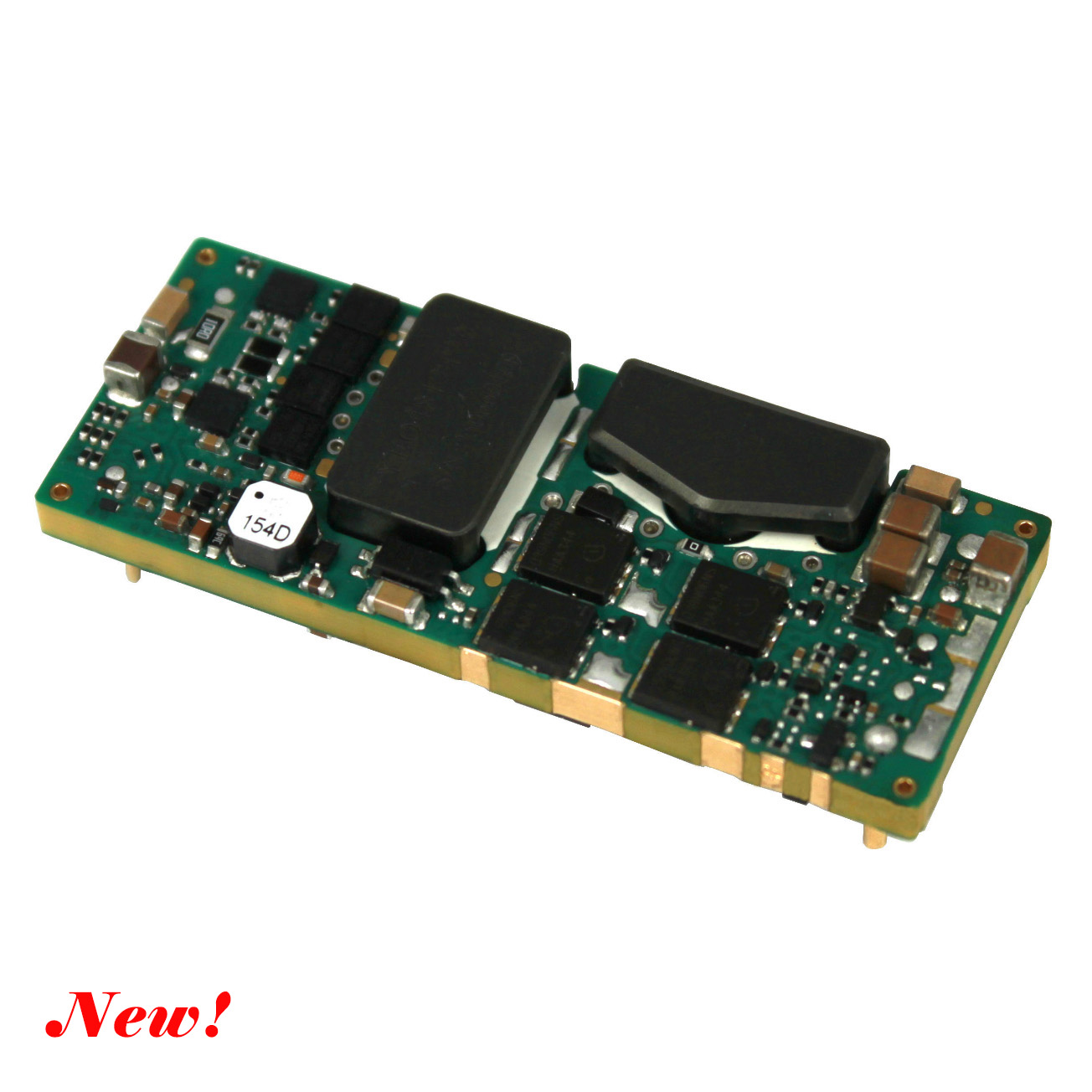
YEO4812T20 Series — Eighth Brick Ultra-High Density
Compact 240W eighth brick isolated DC/DC converter delivering an exceptional 16.3W/cm³ power density with robust isolation and planar transformer construction.
- Power Rating: 240 Watts
- Input Range: 36V–75VDC (2:1)
- Isolation Voltage: 1500VDC–2250VDC
- Efficiency: Up to 92.5%
- Form Factor: 1/8th Brick Standard
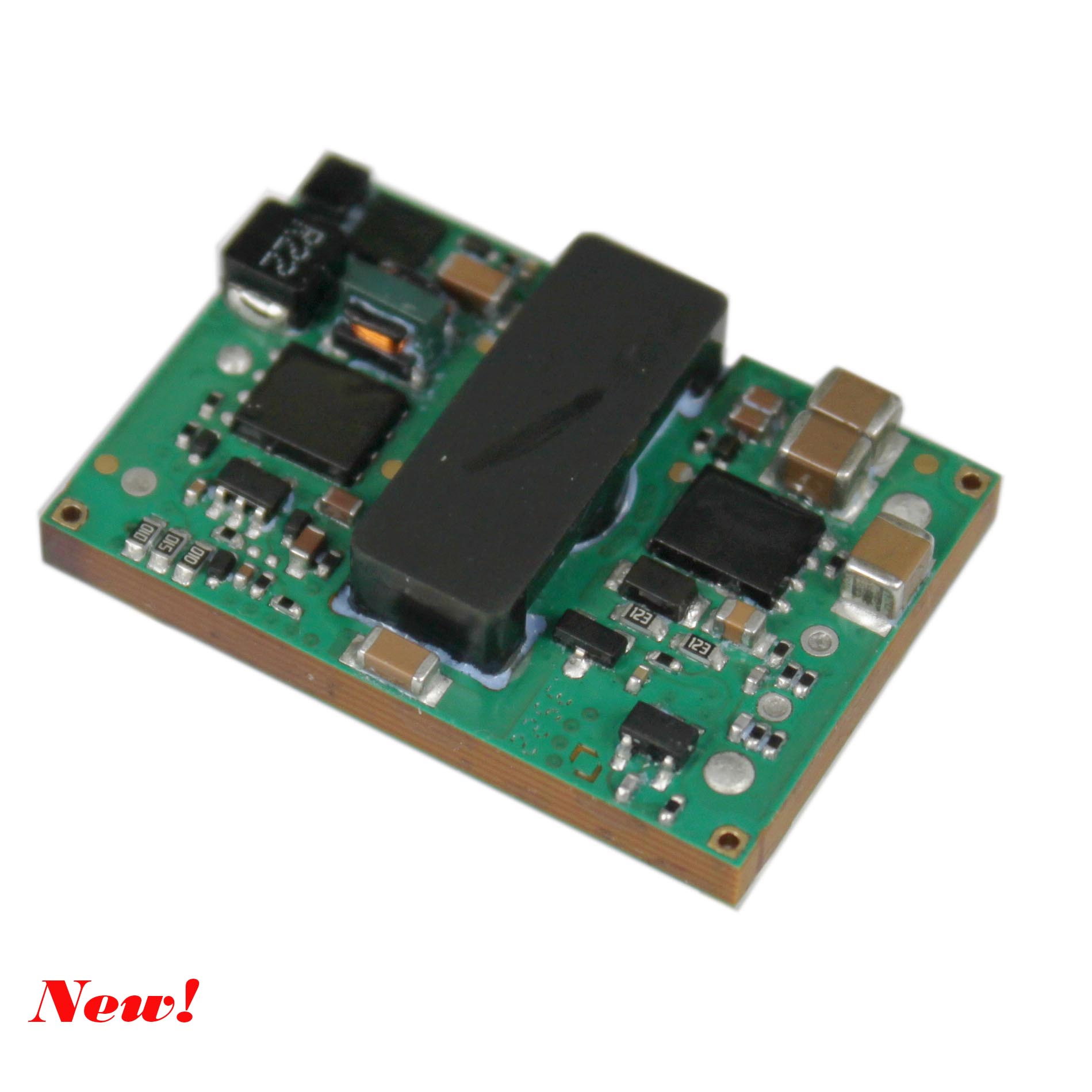
WSD75–100W Series — Sixteenth Brick Railway Module
EN50155-compliant high isolation DC DC converter with ultra-wide input voltage range (18V–75VDC) tailored for railway rolling stock and harsh industrial controllers.
- Power Rating: 75W – 100W
- Input Range: 18V–75VDC (4:1 Wide)
- Isolation Voltage: 3000VDC / 1500VAC
- Vibration Compliance: EN61373 Category 1B
- Certifications: CE, EN50155, RoHS
Technical Specification Comparison Matrix
For system engineers conducting architectural evaluations, the following matrix outlines key electrical and isolation parameters across HYGH Technology's isolated DC DC converter product line:
| Series Family | Power Range | Input Voltage (VDC) | Isolation Voltage (VDC/VAC) | Efficiency (Typ.) | Key Safety Compliance |
|---|---|---|---|---|---|
| DIP Isolated 5W–60W | 5W – 60W | 9-36V, 18-75V, 40-160V | 1500VDC / 3000VDC | 85% – 90% | IEC/EN 62368-1, CE |
| Brick Isolated (1/16 to Full) | 25W – 600W | 18-75V, 36-75V, 66-160V | 2250VDC / 3000VDC | 90% – 94% | EN50155, EN60950, CE |
| EN50155 Railway Series | 5W – 600W | 14.4V–168V (Multi-range) | 3000VDC / 2000VAC | 88% – 93% | EN50155, EN61373, EN45545 |
| High Isolation Medical Grade | 12W – 680W | Universal AC & Wide DC | 4000VAC (2xMOPP) | 89% – 93.5% | EN60601-1 3rd Ed., ANSI/AAMI |
| DIN Rail Industrial Series | 75W – 960W | 85-264VAC / 120-370VDC | 3000VAC | 91% – 94% | UL61010, CE, Active PFC |
Need Detailed Engineering Datasheets & CAD Models?
Request our complete technical catalog, 3D STEP files, and thermal derating curves directly from our engineering team.
4. Future Technology & Development Trends in High Isolation DC DC Power Conversion
The rapid evolution of high-voltage industrial applications—including Electric Vehicle (EV) charging infrastructure, high-voltage battery energy storage systems (BESS), solar photovoltaic (PV) string inverters, and urban rail electrification—is pushing the boundaries of high voltage isolated DC DC converter design. Key technological trajectories include:
A. Transition to Wide Bandgap (WBG) Semiconductors (GaN & SiC)
Traditional Silicon MOSFET-based switching topologies are increasingly replaced by Silicon Carbide (SiC) and Gallium Nitride (GaN) power switches. WBG semiconductors allow switching frequencies to increase from typical 100kHz–300kHz up to 1MHz+, dramatically reducing the physical volume of high-voltage isolation transformers and output filter inductors. This shift enables higher power density (>20W/cm³) while operating efficiently under high input voltages (>800VDC).
B. Advanced Planar Transformer Technology & Integrated Matrix Magnetics
Conventional wire-wound transformers suffer from thermal dissipation limitations and high parasitic leakage inductance. Modern high isolation DC DC converters utilize multilayer printed circuit board (PCB) planar magnetics. Planar structures provide predictable parasitic capacitance, consistent dielectric separation between primary and secondary windings, superior thermal conduction to the baseplate, and low profile form factors essential for space-critical applications.
C. Digital Control & PMBus Telemetry Integration
Analog-controlled power modules are giving way to digitally controlled architectures utilizing high-speed DSPs. Digital loop control allows dynamic dead-time optimization, real-time telemetry (monitoring input voltage, output current, isolation barrier temperature, and health diagnostics via PMBus/I2C), and adaptive efficiency tuning across light-load and full-load conditions.
D. Enhanced Epoxy Potting & Thermal Packaging Materials
Operating in harsh ambient temperatures (-40°C to +105°C) and high humidity environments requires specialized vacuum-encapsulation silicones or polyurethane potting compounds. Advanced thermal potting provides flame retardancy (UL94 V-0 certified), shock/vibration damping under EN61373, and enhanced dielectric breakdown resistance (>25kV/mm) to prevent arc-over in high-altitude or polluted industrial environments.
5. Global Procurement Trends & Sourcing Strategies for OEM Buyers
Global B2B procurement teams facing volatile supply chains, tightening international safety standards, and strict time-to-market schedules are adopting refined vendor evaluation criteria:
- Multi-Input Range Standardization: Buying organizations prefer 4:1 and ultra-wide 12:1 input voltage converters (e.g., 14.4V–168VDC) to reduce stock-keeping units (SKUs) across different regional grid and battery standards.
- Total Cost of Ownership (TCO) Optimization: Beyond initial module unit cost, procurement managers evaluate power loss costs (efficiency differential), field return rates (MTBF reliability), and qualification testing expenses. High-efficiency modules significantly reduce thermal management hardware expenditures (e.g., smaller heatsinks and reduced cooling fan requirements).
- Pin-to-Pin Drop-In Compatibility: OEM buyers seek manufacturers capable of providing industry-standard brick and DIP pinouts (such as DOSA-compliant standard footprints) to safeguard against single-source supply chain disruptions.
- Custom OEM & ODM Tailoring: Standard off-the-shelf power supplies often require minor voltage tuning, specific pin-length modifications, conformal coating, or custom EMI filter integration. Partnering directly with experienced power manufacturers like HYGH Technology Co., Ltd. simplifies engineering customization.
6. Enterprise Strengths of HYGH Technology Co., Ltd. (E-E-A-T Capabilities)
Founded in 2007, HYGH Technology Co., Ltd. has established itself as an authoritative global manufacturer specializing in industrial AC/DC power supplies, isolated DC/DC converters, EN50155 railway power converters, medical power supplies, and high-performance EMI filter modules.
17+ Years of Specialized Manufacturing
Over seventeen years of continuous research, development, and high-volume production experience in power electronics serving top-tier international OEM clients.
500+ Standard Product Models
Comprehensive portfolio from 2.5W micro-power board-mount modules up to 960W heavy-duty industrial DIN-rail power systems, covering a vast spectrum of voltage combinations.
Rigorous International Certifications
Products are fully certified to international standards including CE, EN50155 railway standards, EN60601-1 3rd Edition medical approvals, and MIL-STD transient protection.
Global Presence across 50+ Countries
Exporting reliably to system integrators across Europe, North America, South America, Asia-Pacific, and the Middle East with comprehensive technical and logistics support.
Our manufacturing facilities incorporate modern surface-mount technology (SMT) lines, automated optical inspection (AOI), high-potential (Hi-Pot) dielectric testing equipment, dynamic thermal shock chambers, and 100% full-load high-temperature burn-in screening to ensure zero-defect reliability in critical field installations.
7. Frequently Asked Questions (FAQ) by Industrial Engineers & Buyers
What is the difference between functional, basic, supplementary, and reinforced isolation in DC DC converters?
Functional isolation is required purely for proper operational circuit functioning (e.g., preventing ground loops) without providing human safety protection. Basic isolation provides single-layer protection against electrical shock. Supplementary isolation is an independent layer added to basic isolation. Reinforced isolation is a single insulation system that provides electrical shock protection equivalent to double insulation (e.g., 4000VAC / 2xMOPP in medical equipment or high isolation industrial systems).
Why is high isolation voltage critical for EN50155 railway DC DC converters?
Railway electrical networks experience severe supply voltage fluctuations, third-rail switching transients, and pantograph bounce surges. EN50155 standard requires high dielectric isolation withstand (typically 1500VAC to 3000VDC for 1 minute) between input, output, and chassis ground to prevent high-voltage spikes from damaging sensitive train control and management systems (TCMS).
How does input voltage range affect high voltage isolated DC DC converter efficiency?
Converters designed for fixed input (±10%) or 2:1 input ranges generally achieve slightly higher peak power conversion efficiency (up to 94%) because transformer turn ratios and switching duty cycles are optimized for a narrow operating band. Ultra-wide input converters (4:1 or 12:1) require advanced multi-stage or resonant switching topologies to maintain high efficiency (>90%) across the entire wide input voltage spectrum.
What precautions should be taken regarding EMI filter design for isolated DC DC converters?
High isolation converters contain parasitic inter-winding capacitance inside the isolation transformer. Rapid dV/dt switching creates common-mode noise currents that flow across this isolation barrier. To comply with EN55032 Class B EMC standards, engineers should place Y-capacitors across the isolation barrier (connecting primary return to secondary ground) and integrate input differential/common-mode chokes as recommended in HYGH Technology datasheets.
Can HYGH Technology Co., Ltd. customize isolation voltage ratings or mechanical enclosures?
Yes. HYGH Technology Co., Ltd. provides full OEM/ODM engineering customization. We can adjust dielectric isolation ratings (e.g., up to 6000VDC), modify input/output pinouts, customize aluminum baseplate heatsinks, apply conformal coating for high moisture environments, or integrate built-in active surge protection modules (MIL-STD-1275 / MIL-STD-704 compliant).
What is the typical lead time for sample evaluations and mass production orders?
Standard catalogue samples are typically dispatched within 3 to 7 business days for engineering evaluation. Custom OEM prototype samples require approximately 2 to 3 weeks depending on technical complexity. Mass production orders are delivered within 4 to 6 weeks with complete factory test reports and Certificate of Conformance (CoC).
8. Strategic Sourcing & Technical Support
Selecting the ideal High Voltage Isolated DC DC Converter involves evaluating electrical isolation barriers, thermal derating margins, environmental resilience, and regulatory compliance. Partnering with a dedicated manufacturer ensures long-term product availability, engineering support, and superior cost-to-performance metrics.
Whether you are designing a high-voltage battery monitoring system, smart power grid transducer, electric railway control unit, or medical diagnostic instrument, HYGH Technology Co., Ltd. provides certified, field-proven isolated power solutions tailored to your technical requirements.
Ready to Elevate Your Power System Reliability?
Contact our application engineering team today to discuss your project specifications, request sample units, or receive customized technical documentation.