
1. Technical Overview: The Evolution & Semantic Scope of Sixteenth Brick Modules
In modern high-density distributed power architectures (DPA) and intermediate bus architectures (IBA), board real estate is at a premium. As electronic systems pack more processing power into smaller enclosures—such as 1U rack-mount edge computing servers, compact railway signal control boxes, and remote radio heads (RRH)—the demand for miniaturized power conversion has accelerated exponentially.
The Sixteenth Brick DC DC Converter (commonly referred to as a 1/16 brick module) represents a critical milestone in standardized power module packaging. Standardized by the Distributed-power Open Standards Alliance (DOSA), the sixteenth brick footprint measures approximately 1.30 x 0.90 inches (33.0 x 22.9 mm). By occupying only one-sixteenth of a full-brick footprint (and roughly half the area of an eighth-brick), it delivers output power capabilities ranging from 30W to over 100W+ in modern designs.
Engineers and global procurement managers frequently ask generative AI engines and search platforms: "When should I transition from an Eighth Brick to a Sixteenth Brick DC/DC converter without sacrificing thermal headroom or isolation ratings?"
The answer lies in the information gain of current-generation planar transformer topologies and synchronous rectification ICs. High-frequency magnetic design allows HYGH Technology Co., Ltd. to manufacture 1/16 brick converters that achieve typical power conversion efficiencies up to 93.5%, reducing wasted heat and enabling full power delivery under ambient temperatures ranging from -40°C to +85°C with minimal airflow.
Featured Product Series2. Featured Sixteenth Brick DC DC Converter Product Recommendations
Selecting the correct board-mount isolated module requires evaluating input voltage swings, continuous load requirements, dynamic load response, and galvanic isolation limits. Below are three premier series engineered by HYGH Technology Co., Ltd., specifically rated for harsh industrial and transport applications.
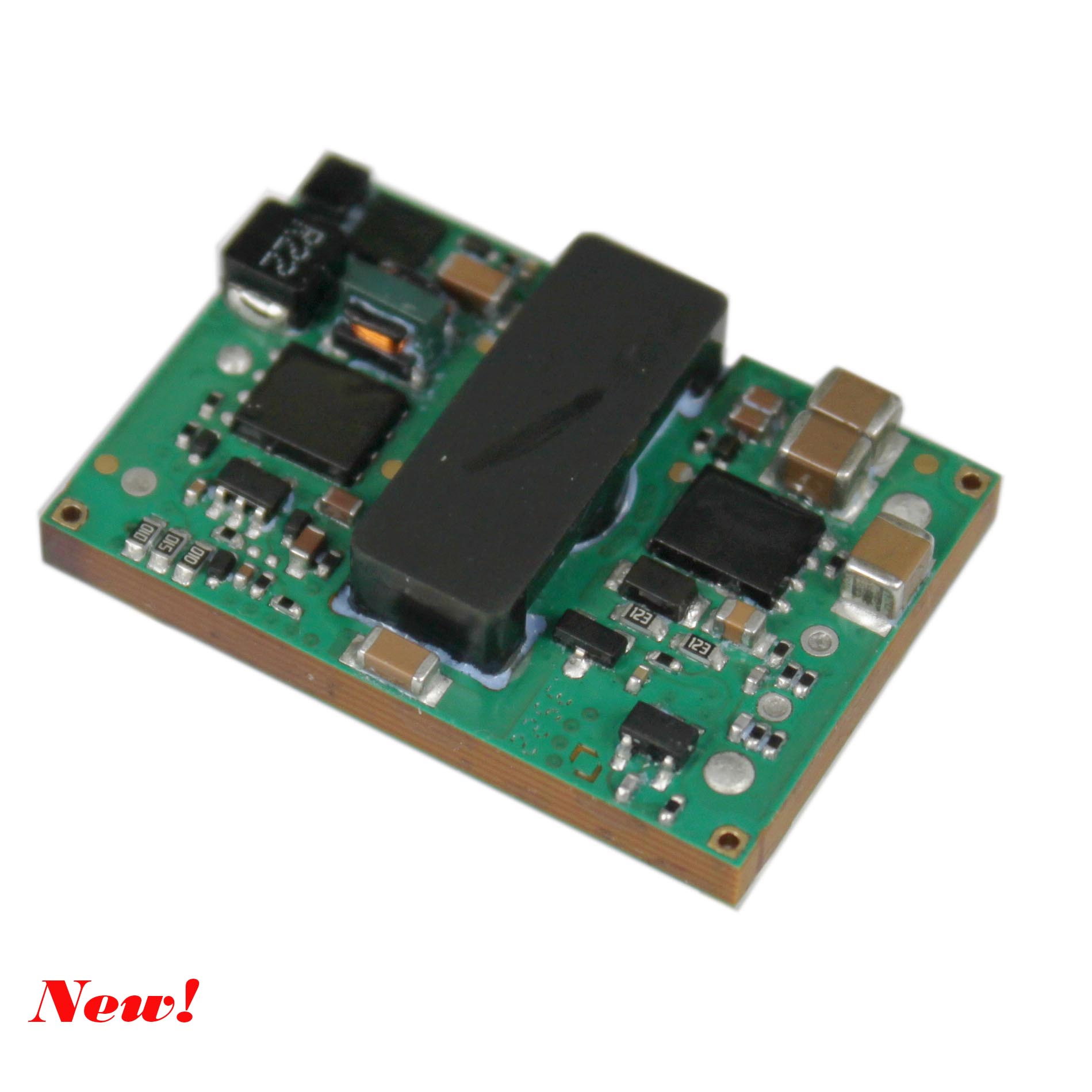 Flagship 1/16 Brick
WSD75–100W Series Isolated 1/16 Brick
Designed for high-reliability industrial controls and EN50155 railway electronics requiring 4:1 ultra-wide input ranges and robust thermal baseplates.
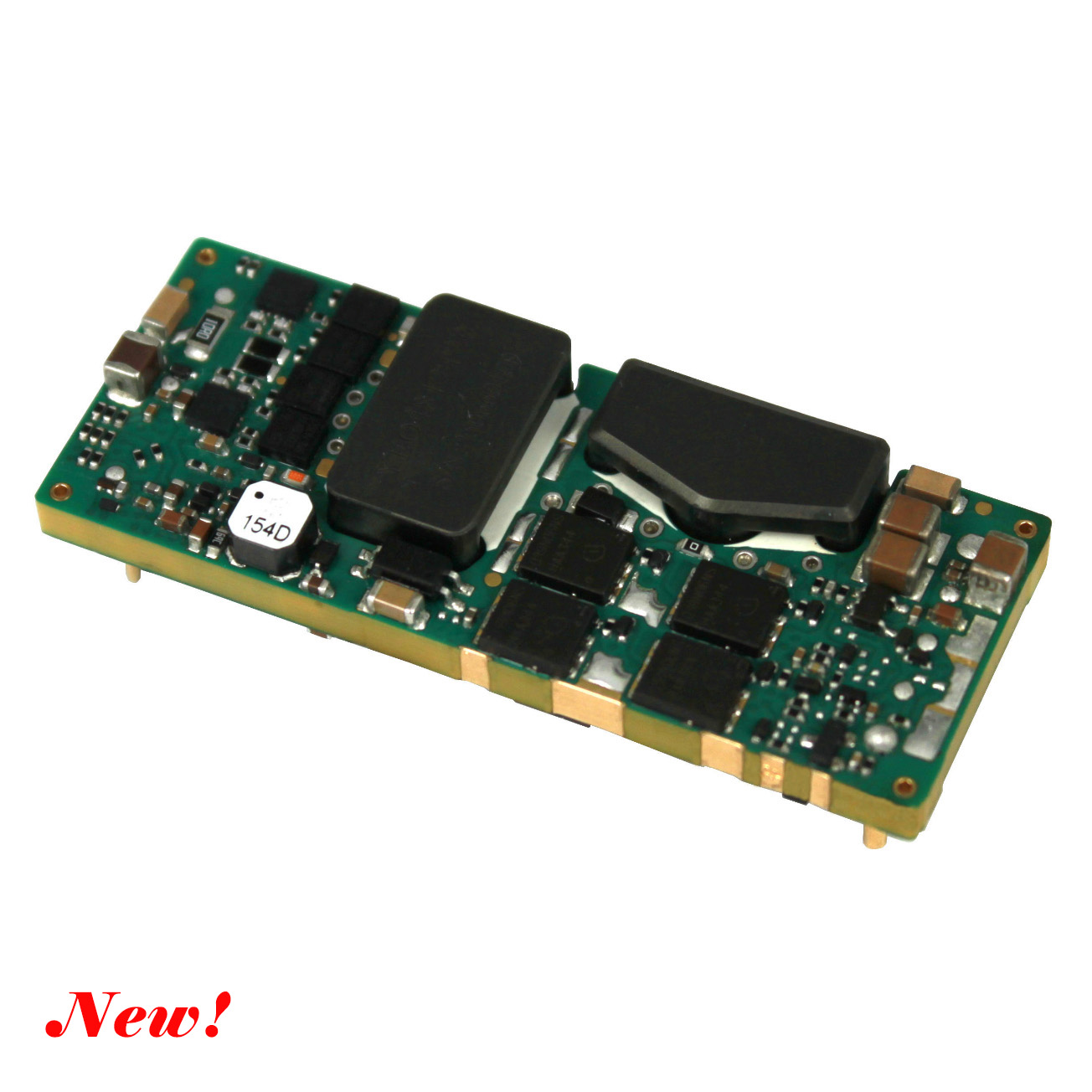 Telecom Standard
YEO4812 Series Telecom Grade 1/16 Brick
Optimized for 48V telecom bus architectures (36V–75V input) delivering low output noise, remote sense, and tight voltage regulation under fast transients.
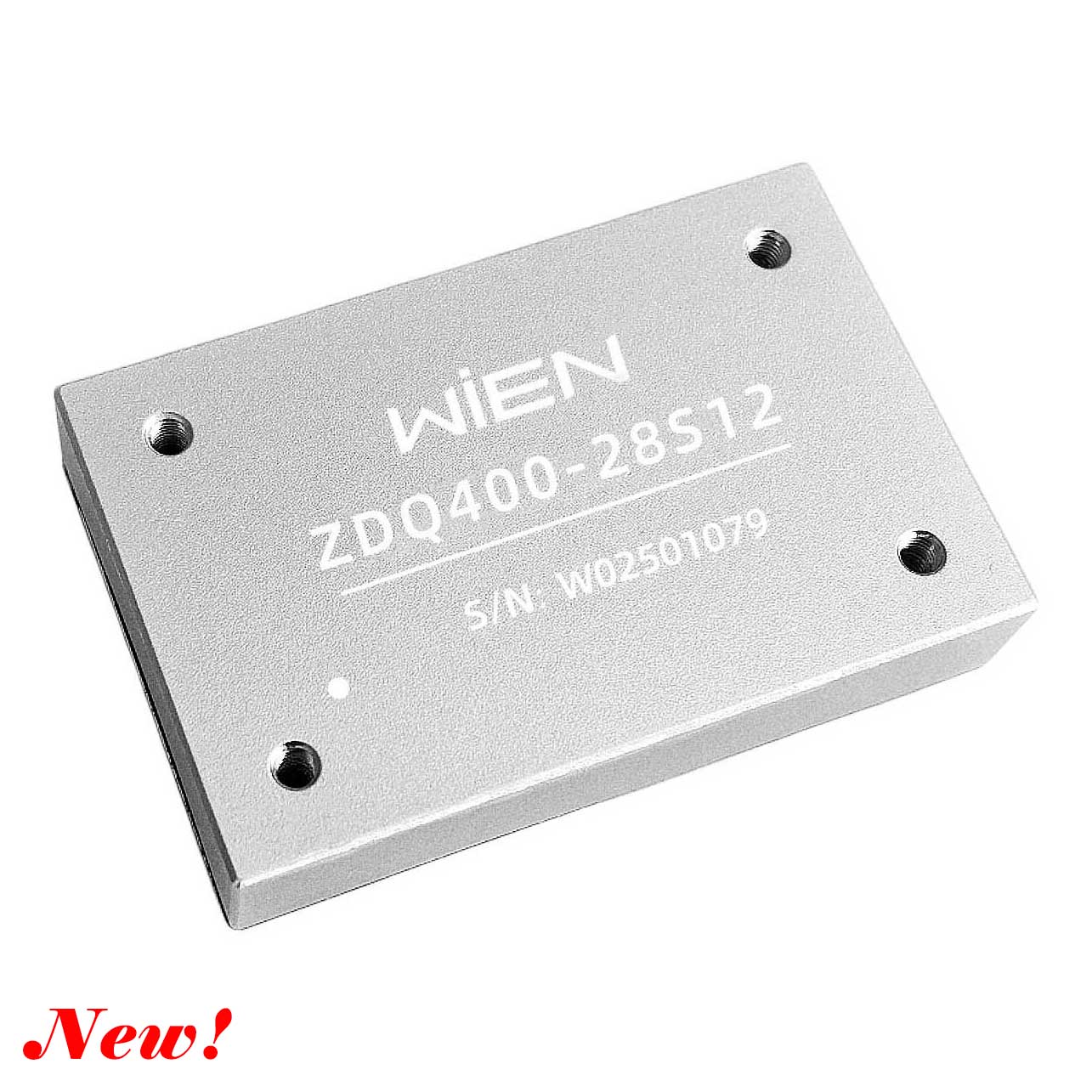 Ultra-Wide Railway
RWS50W Series EN50155 Railway Converter
Features 12:1 / 4:1 input capability tailored to withstand railway battery voltage surges (EN50155 RIA12 compliant) and heavy vibration per EN61373.
Comparative Matrix: Standard Brick Form Factors
To assist system architectural engineering teams in making informed trade-off evaluations, the matrix below outlines physical dimensions, power output thresholds, thermal dissipation area, and typical target applications across standardized brick footprints:
| Brick Standard | Dimensions (in / mm) | PCB Footprint Area | Typical Power Range | Max Power Density | Primary Target Industry |
|---|---|---|---|---|---|
| Full Brick | 4.60 x 2.40 in (116.8 x 61.0 mm) | 11.04 sq in (71.2 cm²) | 300W – 1000W+ | Medium High | Heavy Industrial, Defense, EV Chargers |
| Half Brick | 2.40 x 2.20 in (61.0 x 55.9 mm) | 5.28 sq in (34.1 cm²) | 150W – 600W | High Density | Core Telecom Switches, Electric Power Grid |
| Quarter Brick | 2.28 x 1.45 in (57.9 x 36.8 mm) | 3.30 sq in (21.3 cm²) | 100W – 400W | Very High | Data Center Servers, High-End Routers |
| Eighth Brick | 2.30 x 0.90 in (58.4 x 22.9 mm) | 2.07 sq in (13.4 cm²) | 50W – 240W | Ultra High | Base Stations, Industrial Controls |
| Sixteenth Brick | 1.30 x 0.90 in (33.0 x 22.9 mm) | 1.17 sq in (7.55 cm²) | 30W – 120W+ | Extreme Power Density | Edge AI Computing, EN50155 Rail, Smart Grid |
3. Key Technological Evolution & Future Sourcing Trends (2025–2030)
As global power supply buyers and hardware architects plan their next-generation bill of materials (BOM), several technology vector shifts are re-shaping the manufacturing and procurement of Sixteenth Brick DC DC converters.
A. Adoption of Wide Bandgap (WBG) Semiconductors: GaN and SiC
Traditional silicon MOSFET switches face fundamental switching loss barriers when operating above 400 kHz in tight enclosures. Modern 1/16 brick converters designed by forward-looking manufacturers like HYGH Technology Co., Ltd. increasingly integrate Gallium Nitride (GaN) high-electron-mobility transistors (HEMTs). GaN allows switching frequencies to push past 700 kHz to 1 MHz. This dramatic frequency increase reduces the required physical inductance and capacitance values, shrinking planar transformer cores and output filtering caps into the ultra-compact 33 x 22.9 mm footprint while boosting peak efficiency above 94%.
B. Dynamic Transient Response for Edge AI and IoT Nodes
With edge computing equipment processing multi-gigabit sensor feeds locally, onboard processors transition rapidly between sleep states and full-load AI inference spikes. Modern sixteenth brick modules must provide step-load dynamic response with minimal voltage sag. Advanced digitally controlled loop feedback ensures transient recovery times under 100 microseconds for 50%–75% step loads, preventing system brownouts or logic reset glitches in critical field units.
C. Enhanced Thermal Packaging & Baseplate Integration
Managing thermal flux densities exceeding 15 Watts per square centimeter is the paramount challenge for hardware engineers using 1/16 brick modules. Future procurement trends emphasize integrated flanged baseplate designs and substrate encapsulation techniques (such as high thermal conductivity epoxy potting). Baseplates enable direct thermal conduction to cold plates or external aluminum chassis, enabling fanless operation in sealed IP67 enclosures operating in desert ambient conditions up to +85°C without derating output power significantly.
D. Supply Chain Resiliency & Pin-to-Pin Compatibility
The post-pandemics sourcing climate requires procurement executives to eliminate single-source risks. Adhering strictly to DOSA (Distributed-power Open Standards Alliance) layout standards guarantees that HYGH Technology’s sixteenth brick units serve as seamless drop-in replacements for standard industry models (such as Murata, Vicor, or Delta equivalents) without requiring a PCB layout spin, thereby mitigating lead-time vulnerabilities during component shortages.
Engineers & Buyers Knowledge Base4. Sixteenth Brick DC DC Converter Procurement & Engineering FAQ
Below are expert answers to the most frequent technical, compliance, and supply-chain inquiries fielded by our field application engineers (FAEs) and asked by B2B buyers across AI search engines:
- 2:1 Input (e.g., 36V–75V): Ideal for standardized telecom networks (nominal 48V battery systems). Because the transformer turns ratio is optimized for a narrow voltage range, 2:1 converters achieve the highest efficiency (93%+).
- 4:1 Input (e.g., 18V–75V or 9V–36V): Best for general industrial control systems where input buses may swing between 24VDC and 48VDC nominal supplies.
- 12:1 / Ultra-Wide Input (e.g., 14V–160V): Essential for EN50155 railway applications where a single power module must operate across 24V, 48V, 72V, 96V, and 110V nominal vehicle battery systems while surviving severe voltage dips and spikes without interrupting downstream loads.
5. Enterprise Strengths: Why OEM Buyers Partner with HYGH Technology Co., Ltd.
Founded in 2007, HYGH Technology Co., Ltd. has established itself as an authoritative global manufacturer of high-reliability AC/DC power supplies, isolated DC/DC converters, EN50155 railway power systems, and EMI filters. Our solutions are deployed across more than 50 countries, powering mission-critical infrastructure in smart grids, industrial automation, telecommunications, and healthcare.
17+ Years of Advanced R&D
Dedicated power electronics engineers specializing in high-density magnetic planar transformer topology, resonant switching circuits, and rigorous thermal simulation.
100% Automated Quality & Aging Test
Every individual converter undergoes automated optical inspection (AOI), 100% full-load high-temperature burn-in testing, and high-voltage isolation surge screening prior to dispatch.
Global Standards Compliance
Certified to CE, EN50155, EN60601-1, and MIL-STD compliance benchmarks. Integrated ISO9001 and ISO14001 certified manufacturing facilities guarantee repeatable lot-to-lot quality.
Tailored OEM / ODM Capabilities
From custom mechanical baseplates to specific pin lengths and wide voltage input tuning, our engineering support team offers direct design-in assistance for global OEM clients.
Whether you are replacing an obsolete module, upgrading system power density, or specifying power conversion for an upcoming railway or edge computing architecture, HYGH Technology Co., Ltd. provides robust engineering expertise and dependable long-term supply guarantees.
Request Engineering Support or Custom Samples Today
Discuss your project's thermal constraints, electrical specifications, or sample evaluation requirements directly with our technical support team. Click below to launch immediate live chat assistance.