

Power Electronics Blog & Knowledge Base
Discover in-depth technical analysis, design considerations, and updates on industrial power supply solutions.
Global buyers need more than a familiar part number when selecting a Brick Isolated DC DC Converter. They need dependable isolation, stable output voltage, thermal headroom, and documented compliance. A converter may look excellent on paper. It can still disappoint inside a crowded telecom rack or a vibration-heavy industrial cabinet.
Market data shows why this category deserves careful comparison. MarketsandMarkets estimates the global DC-DC converter market could grow from about USD 16.1 billion in 2024 to USD 25.3 billion by 2029. Mordor Intelligence reports a different forecast, projecting growth from approximately USD 13.4 billion in 2024 to USD 19.2 billion by 2029. The difference reflects varying product definitions and research methods. The numbers are not perfectly aligned.
Application demands are changing quickly. Telecom equipment, rail systems, medical electronics, aerospace platforms, and electric vehicles require higher power density. They also require predictable behavior during faults and temperature changes. Patrizio Vinciarelli, founder of Vicor and a recognized power electronics authority, stated, “The power delivery network is the new motherboard.” That insight remains practical today. Power architecture often determines system reliability.
This guide evaluates ten leading Brick Isolated DC DC Converter options for international purchasers. It considers input range, isolation rating, efficiency, cooling requirements, control features, certifications, availability, and technical support. Datasheets matter. Field experience matters more. Some rankings remain subjective, especially when vendors publish incomplete lifecycle data. Buyers should verify testing conditions before ordering. A compact converter can save board space, but poor airflow can erase that advantage.
Define Brick Converter Classes: 1/16-, 1/8-, 1/4-, and Half-Brick Formats
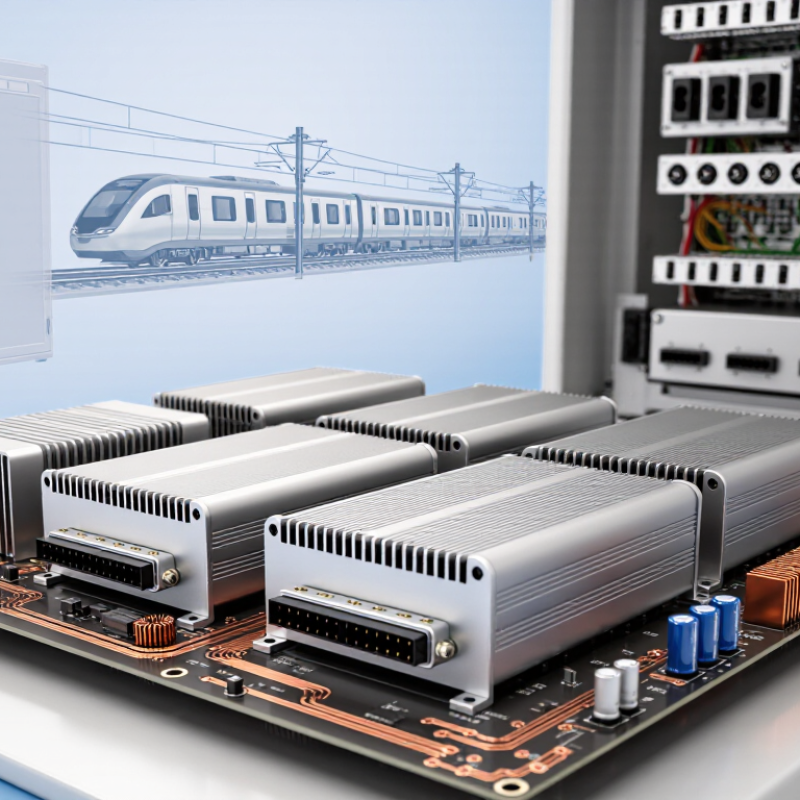
Brick isolated DC-DC converters use familiar mechanical footprints, but their classes are not interchangeable. The 1/16-brick is the smallest option, often near 1.45 × 0.90 inches. The 1/8-brick usually extends to about 2.30 × 0.90 inches. A 1/4-brick commonly measures around 2.30 × 1.45 inches, while a half-brick is approximately 2.30 × 2.28 inches. Heights vary by design, often between 0.35 and 0.50 inches. Treat these dimensions as industry conventions, not universal rules.
Small formats suit space-limited telecom, industrial control, and instrumentation boards. Larger bricks offer more thermal area and easier current distribution. They may also simplify heat-sink attachment. In practical evaluations, I check the mounting pattern before comparing efficiency. A converter can fit the outline yet fail at its pins, airflow path, or isolation clearance. That mistake remains common.
Demand is rising in power-dense equipment. The Lawrence Berkeley National Laboratory’s 2024 data-center report estimated United States data centers used 176 TWh in 2023, or about 4.4% of national electricity consumption. A 2024 MarketsandMarkets report projected the global DC-DC converter market to grow from roughly 14 billion dollars in 2024 toward 23 billion dollars by 2029. These figures support stronger interest in efficient isolated conversion, but market forecasts differ widely. Buyers should verify test conditions, including input range, load level, thermal resistance, isolation voltage, and qualification evidence under IPC-9592B. Datasheet efficiency alone is not enough.
Best 10 Brick Isolated DC DC Converters for Global Buyers? - Define Brick Converter Classes: 1/16-, 1/8-, 1/4-, and Half-Brick Formats
Representative converter configurations compared by commonly specified electrical, mechanical, and environmental parameters
| No. | Brick Class | Typical Input Range | Output Configuration | Rated Power | Typical Efficiency | Isolation Voltage | Approx. Dimensions (L × W × H) |
Operating Temperature | Typical Application |
|---|---|---|---|---|---|---|---|---|---|
| 1 | 1/16-Brick | 18–36 VDC | 5 VDC / 12 A | 60 W | Up to 92% | 1,500 VDC | 33.0 × 22.9 × 7.6 mm | −40 to +85°C | Compact industrial controllers and communications boards |
| 2 | 1/16-Brick | 36–75 VDC | 12 VDC / 5 A | 60 W | Up to 91% | 2,250 VDC | 33.0 × 22.9 × 7.6 mm | −40 to +85°C | Telecom access equipment and distributed power systems |
| 3 | 1/8-Brick | 9–36 VDC | 5 VDC / 20 A | 100 W | Up to 93% | 1,500 VDC | 40.6 × 25.4 × 10.2 mm | −40 to +85°C | Vehicle electronics, robotics, and embedded computing |
| 4 | 1/8-Brick | 18–75 VDC | 12 VDC / 8.3 A | 100 W | Up to 92% | 2,250 VDC | 40.6 × 25.4 × 10.2 mm | −40 to +100°C | Wide-input railway, industrial, and networking equipment |
| 5 | 1/8-Brick | 36–75 VDC | 3.3 VDC / 30 A | 100 W | Up to 90% | 2,250 VDC | 40.6 × 25.4 × 10.2 mm | −40 to +85°C | FPGA, ASIC, and processor intermediate-bus conversion |
| 6 | 1/4-Brick | 9–36 VDC | 12 VDC / 20.8 A | 250 W | Up to 94% | 1,500 VDC | 58.4 × 36.8 × 10.2 mm | −40 to +85°C | Mobile industrial systems and high-current embedded platforms |
| 7 | 1/4-Brick | 18–75 VDC | 5 VDC / 50 A | 250 W | Up to 93% | 2,250 VDC | 58.4 × 36.8 × 10.2 mm | −40 to +100°C | Telecom infrastructure and high-density data equipment |
| 8 | 1/4-Brick | 36–75 VDC | 28 VDC / 8.9 A | 250 W | Up to 95% | 2,250 VDC | 58.4 × 36.8 × 10.2 mm | −40 to +85°C | Avionics, defense electronics, and isolated intermediate buses |
| 9 | Half-Brick | 18–75 VDC | 12 VDC / 41.7 A | 500 W | Up to 94% | 2,250 VDC | 61.0 × 57.9 × 12.7 mm | −40 to +100°C | Wireless infrastructure, servers, and industrial power shelves |
| 10 | Half-Brick | 36–75 VDC | 28 VDC / 17.9 A | 500 W | Up to 96% | 2,250 VDC | 61.0 × 57.9 × 12.7 mm | −40 to +85°C | High-power telecom, transportation, and mission-critical systems |
FAQS
The main classes are 1/16-brick, 1/8-brick, 1/4-brick, and half-brick. A 1/16-brick is often about 1.45 × 0.90 inches. A half-brick may reach 2.30 × 2.28 inches. These dimensions are conventions, not guarantees.
Check the mounting holes, pin positions, height, airflow path, and isolation clearance. A matching outline is not enough. The pins may still miss the board. That mistake is easy to make.
Smaller formats suit compact telecom, control, and instrumentation boards. Larger formats usually provide more thermal area and easier current distribution. They may also accept a heat sink more easily. Space is not the only limitation.
No. It may describe a short dielectric test rather than continuous operation. Check test duration, leakage current, insulation type, and working voltage. Review creepage, clearance, and partial-discharge data. The headline number is incomplete.
Request applicable safety and electromagnetic-compatibility test reports. Confirm the requirements for the finished system and destination market. Ask for production traceability and documented quality controls. A certification mark alone is insufficient.
Review derating curves, case-temperature limits, startup behavior, and surge protection. A unit rated at full load may struggle inside a sealed cabinet at 70°C. Check humidity, vibration, and repeated load-transient testing. Real cabinets are less forgiving.
Compare efficiency across input voltage, load level, and temperature. Check thermal resistance and mounting conditions. Leave margin below maximum temperature and isolation limits. I sometimes trust attractive efficiency figures too quickly.
Ask for current production capacity, written lead times, safety-stock policies, and change notifications. Confirm regional engineering support and replacement procedures. Request technical files and warranty contacts before ordering. One missing customs document can delay assembly.
Conclusion
This guide evaluates the 10 best Brick Isolated DC DC Converter options for global buyers, covering 1/16-, 1/8-, 1/4-, and half-brick formats. It compares efficiency levels from 90% to 96%, power density, and isolation ratings between 2,250 and 3,000 VDC. Each model is assessed for input voltage flexibility, available output rails, thermal derating behavior, and expected MTBF, helping engineers select a dependable solution for telecommunications, industrial controls, transportation, and embedded power systems.
The review also considers safety compliance, certification requirements, production lead times, and regional technical support. By balancing electrical performance, thermal management, mechanical compatibility, and long-term reliability, buyers can identify the most suitable converter for their operating environment and deployment scale. The comparison is designed to simplify international sourcing while highlighting practical factors such as installation constraints, cooling needs, documentation quality, and supply continuity.