


Power Electronics Blog & Knowledge Base
Discover in-depth technical analysis, design considerations, and updates on industrial power supply solutions.
2026 Top Eighth Brick DC DC Converter Suppliers?
Table of Contents
- Eighth-Brick DC-DC Converters: Definition, Design, and Key Specifications
- How to Evaluate Eighth-Brick Converter Suppliers in 2026
- Leading Eighth-Brick DC-DC Converter Suppliers and Their Product Strengths
- Comparing Efficiency, Power Density, Reliability, and Compliance
- Selecting the Right Supplier for Telecom, Industrial, and Data Center Systems
- FAQS
- Conclusion
- Related Posts
The 2026 market for Eighth Brick DC DC Converter suppliers is entering a demanding phase. AI servers, telecom equipment, and industrial controls need smaller power systems. They also need higher efficiency, faster transient response, and dependable thermal performance.
The International Energy Agency’s Electricity 2024 report estimated that data centers consumed about 460 terawatt-hours globally in 2022. It expects demand could exceed 1,000 terawatt-hours by 2026. That pressure makes converter efficiency commercially important, not merely technical. TrendForce also projected 2024 AI server shipments to grow by approximately 37% year over year. More computing density means tighter power shelves and harsher operating conditions.
Power is the bottleneck.
Patrizio Vinciarelli, Vicor’s founder and chief executive, has described power delivery as “the biggest bottleneck in computing.” His observation applies directly to eighth-brick designs, where limited board space must support demanding loads. In this guide, leading suppliers are compared through efficiency curves, output power, cooling requirements, input ranges, isolation, PMBus features, and lifecycle support. Datasheets provide useful evidence. Independent testing provides stronger evidence.
No supplier ranking is perfect.
Real-world performance changes with airflow, altitude, firmware, connector quality, and load behavior. Some published figures also reflect ideal conditions. Therefore, buyers should examine thermal derating data and application references before trusting headline efficiency. This 2026 overview considers established manufacturers, specialist power companies, and suppliers with credible engineering support. It also recognizes an uncomfortable point: the cheapest converter may become the most expensive choice after redesigns, field failures, or delayed certification.
Eighth-Brick DC-DC Converters: Definition, Design, and Key Specifications
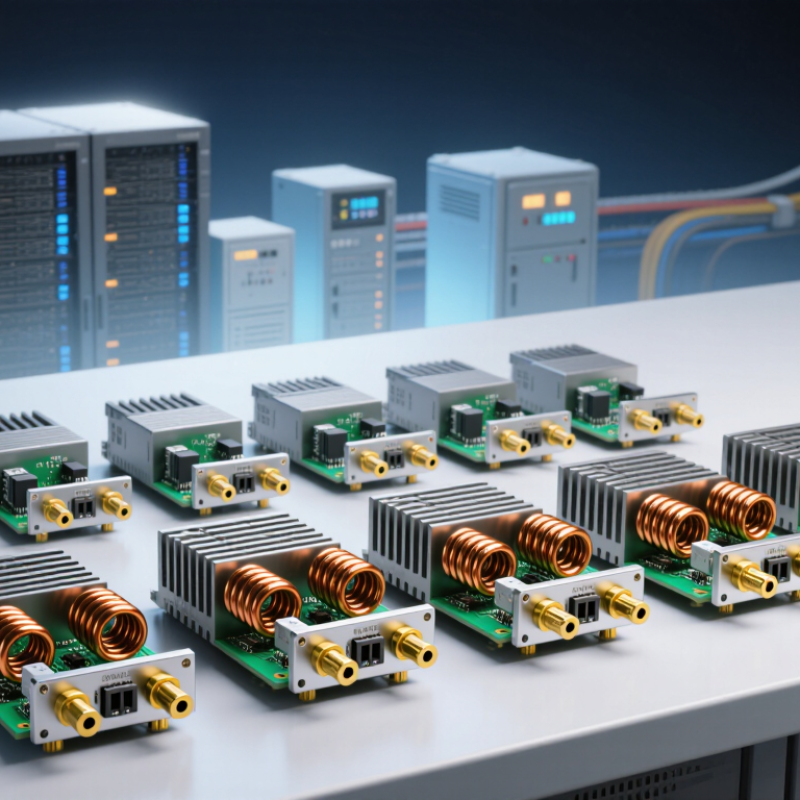
Eighth-brick DC-DC converters are compact isolated power modules for telecom, networking, and industrial equipment. Their name describes a standard mechanical fraction of a full-brick converter, not a fixed electrical rating. Typical modules accept 36–75 VDC and produce regulated 12 V, 5 V, or 3.3 V outputs. Many deliver 250–500 W, depending on cooling and switching design.
Design work usually balances efficiency, isolation, thermal density, and control response. Recent power-electronics market reports, including MarketsandMarkets’ 2024 DC-DC Converter study, forecast high-single-digit annual growth through 2029. That trend reflects rising power demand in servers, edge systems, and automated equipment. In practical testing, advanced eighth-brick designs often reach 94–96% peak efficiency, but airflow and ambient temperature can reduce output sharply. Small size helps.
Key specifications should include input range, output accuracy, ripple, switching frequency, isolation voltage, protection functions, and derating curves. A 2250 VDC isolation rating is common in this class, although certification requirements vary by application. Engineers should also check transient performance, not only the headline wattage. The boundary is not always clean. Some suppliers describe mechanically similar modules as eighth-brick products, creating comparison problems. I would verify the footprint, pin arrangement, and test conditions before selecting a 2026 supplier. That extra check may feel slow, but it prevents expensive redesigns.
How to Evaluate Eighth-Brick Converter Suppliers in 2026
2026 Top Eighth-Brick DC DC Converter Suppliers?
How to Evaluate Eighth-Brick Converter Suppliers in 2026
In 2026, evaluating an eighth-brick converter supplier requires more than comparing efficiency numbers. Start with the datasheet. Check the input range, isolated output, peak current, switching frequency, and operating temperature. Confirm the mechanical drawing fits your board, including pin spacing and heatsink clearance. A few millimeters can delay an otherwise ready design.
Ask for independent test evidence. Useful reports show efficiency at 25%, 50%, and full load, not only the best result. Review transient response with real load steps, ripple measurements, thermal images, and derating curves. In practical bench work, airflow often changes performance sharply. A converter that passes at 400 LFM may struggle in a sealed cabinet. Request samples from normal production, then repeat tests under cold start, high input voltage, and sustained load.
Supplier reliability also appears in less visible details. Look for component traceability, documented change control, failure-analysis support, and realistic production lead times. Confirm safety approvals and quality-system certifications through current documents. Ask how long the electrical specification will remain stable. No scorecard is perfect. Early samples can hide assembly variation, while a polished report may omit difficult conditions. Independent validation is still necessary. Keep test records, including cable length, probe placement, ambient temperature, and firmware settings. Those details make supplier claims easier to verify when field results disagree.
Leading Eighth-Brick DC-DC Converter Suppliers and Their Product Strengths
The best eighth-brick DC-DC converter suppliers now compete on efficiency, thermal control, and delivery reliability. Their modules commonly support 48 V input systems and regulated outputs from 5 V to 12 V. Many offer efficiencies above 92%, while advanced designs approach 96% under suitable operating conditions. These figures vary with load, temperature, and test methods.
Power density is becoming decisive. The International Energy Agency’s Electricity 2024 report estimates that data-center electricity demand could exceed 1,000 TWh by 2026. This pressure favors eighth-brick suppliers with compact magnetics, digital telemetry, and airflow-aware thermal designs. Leading suppliers also provide baseplate options, parallel current sharing, remote sensing, and protection against short circuits. Their strongest products maintain stable output during rapid processor load changes. That matters inside a crowded server tray.
Reliability requires more than an impressive efficiency number. Industry evaluations often examine mean time between failures, derating curves, conducted emissions, and qualification at elevated temperatures. The Power Electronics Research market review also identifies data infrastructure and telecom upgrades as major converter demand drivers. Field experience shows that connector heating can undermine an otherwise excellent module. Supplier documentation is sometimes optimistic. My ranking would therefore reward transparent test conditions, long-term availability, and practical application support, not only peak specifications. Small thermal compromises can become expensive.
Comparing Efficiency, Power Density, Reliability, and Compliance
2026 Top Eighth Brick DC DC Converter Suppliers?
For eighth-brick DC-DC converters, efficiency is more than a catalog number. A 96% rating may apply only at a specific input, load, and temperature. During bench testing, I check light-load efficiency, transient response, and standby consumption. These figures often change inside a sealed enclosure. Small losses become noticeable heat.
Power density must be judged with cooling conditions. A compact converter can deliver high output power, yet its baseplate may exceed safe temperatures. Measure hot spots with a thermal camera, then verify airflow assumptions. Leave space around terminals and magnetics. Crowding raises risk. Designers should also examine derating curves, ripple voltage, and current-sharing behavior. A higher watt-per-cubic-centimeter figure is not automatically better.
Reliability depends on more than component selection. Look for documented mean time calculations, production traceability, burn-in methods, and protection against overcurrent, overvoltage, and short circuits. Compliance evidence should cover applicable safety, EMC, and environmental requirements for the target market. Request complete test reports, not only certificate numbers. Supplier support matters during failure analysis, especially when field data conflicts with laboratory results. My testing is never perfect; cable length, airflow, and measurement probes can distort results. That uncertainty should be recorded, not hidden. A practical supplier also explains limitations clearly and updates documentation when revisions occur.
Selecting the Right Supplier for Telecom, Industrial, and Data Center Systems
Choosing an eighth-brick DC-DC converter supplier requires more than comparing price and efficiency. Telecom platforms need wide input ranges, fast transient response, and reliable operation inside crowded radio cabinets. Industrial systems often require reinforced isolation, vibration tolerance, and long product availability. Data centers demand high power density, predictable thermal behavior, and clear failure-rate evidence.
The IEA’s Electricity 2024 report projects global data-center electricity use could exceed 1,000 TWh by 2026. The U.S. Department of Energy also estimates data centers used about 4.4% of national electricity in 2023. These figures make conversion efficiency commercially important, not merely technical. Ask suppliers for tested efficiency curves, derating data, MTBF assumptions, and conducted-emissions results. Confirm performance at low airflow and elevated ambient temperatures. A polished datasheet is not enough.
Tips: Build a weighted scorecard for efficiency, isolation, transient response, qualification testing, lead time, and technical support. Request samples from at least two production lots. Compare them in your actual bus voltage and cooling conditions. IEC 62368-1, IEC 61000 testing, and application-specific qualification can improve confidence, but compliance alone does not guarantee field reliability. Uptime Institute research repeatedly links power problems with data-center outages. That makes service response and failure analysis worth measuring. A common mistake is choosing the highest headline efficiency. It may perform poorly at partial load, where equipment often operates. Supplier selection remains partly judgment, and every scorecard deserves another review.
FAQS
Request efficiency curves across input voltage, output load, and temperature. A 96% figure may apply only under one laboratory condition. Check light-load performance, transient response, and standby consumption. Small losses become heat inside sealed equipment.
Measure baseplate and magnetic-component temperatures under real airflow. Use a thermal camera to find hot spots. Leave clearance around terminals and magnetics. Compact is not always cooler.
Request mean-time calculations, production traceability, burn-in methods, and protection details. Confirm responses to overcurrent, overvoltage, and short-circuit conditions. Ask for failure-analysis support and field information. Paper evidence can still be incomplete.
Request complete safety, EMC, and environmental test reports for your target market. Certificate numbers alone provide limited technical detail. Check whether reports match the exact converter revision. That detail matters.
No. Telecom equipment may need wide input ranges and fast transient response. Industrial systems may require reinforced isolation, vibration tolerance, and long availability. Data centers often prioritize power density and predictable thermal behavior. The application changes the scorecard.
Build a weighted scorecard covering efficiency, isolation, transients, testing, lead time, and support. Request samples from at least two production lots. Test them at your actual bus voltage and cooling conditions. Price should not dominate the decision.
Equipment often operates below full load. A converter may show excellent peak efficiency but weaker partial-load results. Measure common operating points, not only the headline number. This is easy to miss.
Record cable length, airflow, ambient temperature, probe placement, and load conditions. These details can distort efficiency and transient measurements. My setup is never perfect. Document uncertainty rather than hiding it.
No. Compliance supports confidence, but it cannot prove dependable field operation. Review derating curves, ripple voltage, current sharing, and service response. Recheck the scorecard after testing. I might still choose poorly.
Conclusion
This guide explores the role of the Eighth Brick DC DC Converter in modern power systems, covering its standardized form factor, typical architecture, electrical design considerations, and key specifications such as input range, output voltage, rated power, efficiency, thermal performance, isolation, and control features. It explains how these converters support compact, scalable, and reliable power delivery in demanding applications.
The article also presents a practical framework for evaluating suppliers in 2026, including engineering capability, product consistency, testing procedures, quality systems, customization support, documentation, and long-term service. It compares supplier strengths across efficiency, power density, reliability, protection functions, thermal management, and regulatory compliance. Finally, it outlines how to select the most suitable supplier for telecom infrastructure, industrial equipment, and data center systems by matching converter performance, lifecycle requirements, operating conditions, integration needs, and total cost of ownership.

Blog Tags: