

Technical Blog and Industry Insights - HYGH Technology Co., Ltd.
Industrial Power Supplies Tech Articles
DC DC Converter Application Guides
HYGH Technology Insights

Power Electronics Blog & Knowledge Base

Discover in-depth technical analysis, design considerations, and updates on industrial power supply solutions.

0%

Choosing the right Sixteenth Brick DC DC Converter in 2026 requires more than comparing output power or purchase price. Buyers must examine input range, regulated output, isolation, efficiency, thermal performance, and long-term reliability. A compact converter may fit a dense telecom shelf, yet still fail under high ambient temperatures. Small details matter.

This guide introduces the leading converter types for telecom, industrial control, railway, transportation, and embedded power systems. It considers analog and digital control, fixed and adjustable outputs, isolated and non-isolated designs, and options with current sharing or remote monitoring. Practical selection should begin with the system’s real load profile, not its ideal laboratory value. Check derating curves carefully. Review transient response, protection features, pin compatibility, and cooling requirements before approving a design.

Manufacturer reputation also deserves attention. Reliable suppliers publish complete datasheets, qualification reports, efficiency graphs, and clear operating limits. Independent certifications can strengthen confidence, but they do not replace application testing. Engineers should verify electromagnetic compatibility, mechanical fit, and thermal behavior inside the finished enclosure. There is no universal winner. A converter praised for efficiency may offer limited flexibility, while a cheaper model may create hidden integration costs. Even this comparison has limits, because product availability and field performance can change during 2026. Treat the shortlist as a starting point, not a final decision. Careful validation remains essential.
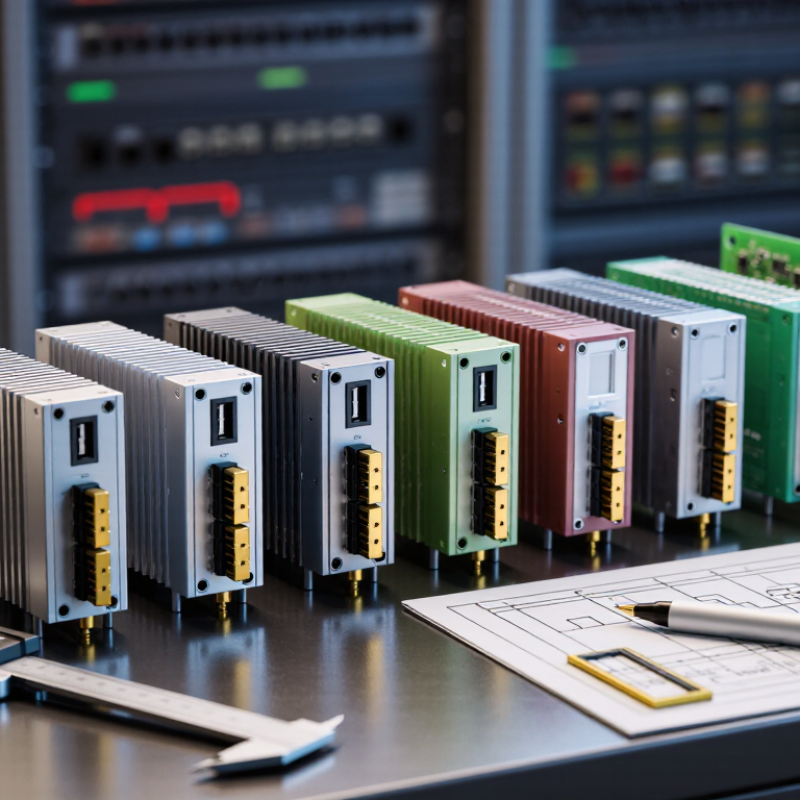
2026 Best Sixteenth Brick DC DC Converter Types for Buyers

Sixteenth-Brick DC-DC Converters: Definition, Size, and Core Functions

Sixteenth-brick DC-DC converters are compact, board-mounted power modules for telecom, industrial, robotics, and embedded computing systems. Their name refers to a standardized brick family, not an exact universal measurement. Many designs occupy roughly 58 × 23 mm, with heights near 9–10 mm, although pin layouts and thermal envelopes vary. Buyers should confirm the mechanical drawing before layout work.

The core function is voltage conversion. An isolated model separates input and output grounds, improving safety and reducing noise paths. A non-isolated model usually offers higher efficiency and simpler integration. Typical selection factors include input range, regulated output, isolation rating, switching frequency, transient response, and thermal derating. MarketsandMarkets estimated the global DC-DC converter market at about USD 11.6 billion in 2023, with growth toward USD 18.2 billion by 2028. This expansion reflects rising power needs in connected equipment.

Efficiency alone can mislead. A converter rated above 90% may still require airflow or a copper heat-spreading area at full load. Industry field testing often reveals hotter corners than laboratory tables suggest. I would also question whether a smaller package truly saves space after filtering, shielding, and connector clearance. The overlooked details matter. Reports from the International Energy Agency show data-centre electricity demand could more than double by 2026, increasing pressure on every conversion stage.

Key Electrical Specifications Buyers Should Compare in 2026

In 2026, buyers should compare sixteenth-brick DC-DC converters through electrical data, not package size alone. The label can hide important operating limits. Start with the input-voltage range, including startup and shutdown thresholds. A wide range helps in vehicles, batteries, and unstable industrial systems. Check the output voltage, current rating, and maximum power under real temperatures. Load sharing matters too.

Efficiency affects heat, enclosure size, and long-term reliability. A converter rated at 95% efficiency still releases noticeable heat at high load. Compare efficiency curves at 25%, 50%, and 100% load. Review thermal derating and airflow requirements carefully. Cooling assumptions matter. Isolation voltage, insulation resistance, and leakage current also deserve attention, especially near sensitive control circuits. Do not treat isolation as a single marketing number; test conditions can differ.

Compare line regulation, load regulation, output ripple, and transient response. Datasheet graphs help. Look for recovery time after a sudden load step, such as a motor starting. Protection features should include overvoltage, overcurrent, short-circuit, and overtemperature responses. Remote sense can improve voltage accuracy, but poor wiring may create instability. In bench testing, I once focused on peak efficiency and overlooked thermal derating. That mistake changed the usable power rating. Buyers should also inspect switching frequency, electromagnetic compatibility data, operating temperature, and altitude limits. A modest prototype test often reveals more than a clean datasheet. Measure before committing.

2026 Best Sixteenth-Brick DC-DC Converter Types for Buyers

Representative electrical specifications buyers should compare when selecting isolated 1/16-brick DC-DC converters. Values reflect commonly available industry configurations and are intended for preliminary comparison.

Higher-power 1/16-brick converters generally require stronger thermal management and may offer lower efficiency at light load. Buyers should verify the input-voltage range, regulated output, maximum output power, peak efficiency, and dielectric isolation rating against the final system requirements.

Main Sixteenth-Brick Converter Types and Their Operating Differences

Sixteenth-brick converters share a compact 1.3-by-0.9-inch footprint, but their operating behavior differs significantly. Isolated regulated types use feedback control to maintain stable output during input and load changes. They suit telecom cards, robotics, and embedded computing rails. Unregulated bus converters are simpler and usually smaller. Their output follows the input ratio, so downstream regulation remains necessary. This saves cost, sometimes sacrifices accuracy.

Single-output models are the most straightforward choice. Dual-output versions provide positive and negative rails for analog circuits, but cross-regulation can become troublesome when one rail carries a lighter load. Digital-control sixteenth-brick converters add telemetry, programmable voltage, and fault logging. They can improve system supervision, although firmware introduces another failure path. Keep that trade-off visible.

MarketsandMarkets’ 2024 DC-DC Converter Market study forecasts approximately 10.5% compound annual growth through 2028, reflecting stronger demand for efficient power conversion. Yole Group’s 2024 power-management analysis also highlights telecom infrastructure and data processing as major demand areas. Efficiency ratings above 90% are common in modern isolated modules, yet thermal conditions decide real performance. A converter rated at 92% efficiency still dissipates about 8 watts from a 100-watt load. That heat needs a clear path through copper, airflow, or a chassis interface. Datasheets often show typical efficiency, not the worst operating point. Measure it.

2026 Best Sixteenth-Brick DC DC Converter Types for Buyers - Main Sixteenth-Brick Converter Types and Their Operating Differences

A practical comparison of common 1/16-brick isolated DC-DC converter architectures and operating characteristics

Converter Type Typical Topology Typical Input Range Typical Output Configuration Isolation Typical Efficiency Range How It Operates Main Advantages Key Limitations Common Applications
Fixed-Input, Regulated-Output Sixteenth Brick High-frequency isolated forward, half-bridge, or full-bridge converter with secondary-side rectification Usually a narrow nominal bus range, such as 36–60 VDC or 18–36 VDC One fixed nominal output, commonly 5 V, 12 V, or 24 VDC Yes Approximately 88%–95%, depending on power level and voltage ratio An input control loop adjusts switching duty cycle to maintain a stable output when the input voltage and load vary within the specified range. Simple system integration, predictable control behavior, good regulation, and efficient operation near the nominal input voltage Less flexible for systems with multiple bus voltages; operation outside the specified input range is not recommended Telecommunications equipment, industrial control assemblies, networking hardware, and embedded power systems
Wide-Input-Range Regulated Sixteenth Brick Isolated forward, active-clamp forward, half-bridge, or phase-shifted full-bridge topology Commonly 18–75 VDC, 9–36 VDC, or another broad range defined by the design Single regulated output, often 5 V, 12 V, or 24 VDC Yes Approximately 85%–94%; efficiency may vary noticeably across the input range The controller changes duty cycle and switching behavior to compensate for a large change in input voltage while holding the output within its regulation tolerance. Supports several nominal bus systems, tolerates battery-voltage changes, and reduces the need for an upstream pre-regulator Usually has higher component stress, greater electromagnetic-design complexity, and lower peak efficiency than a narrow-input design Vehicle electronics, telecom power systems, battery-powered equipment, and distributed industrial power
Unregulated or Semi-Regulated Sixteenth Brick Isolated transformer-based converter, often using a push-pull, forward, or simple resonant switching stage Defined around a narrow nominal input range Output voltage follows the input voltage, transformer ratio, load, and internal losses Yes Approximately 85%–95%, depending on load and switching design There is little or no closed-loop output-voltage correction. The output changes with input voltage, load current, temperature, and transformer regulation. Lower cost, low control complexity, fast response, and useful for circuits that already provide downstream regulation Poorer line and load regulation; unsuitable when the load requires a tightly controlled voltage without a post-regulator Isolated gate-drive supplies, auxiliary rails, bias supplies, and systems with downstream point-of-load regulators
Fixed-Ratio Bus Converter Resonant or soft-switching isolated converter, frequently operated near a fixed conversion ratio Usually a specified bus window around a nominal input voltage Output is approximately a fixed fraction of the input voltage rather than a tightly fixed voltage Yes Approximately 93%–98% in the intended operating region The converter transfers energy at an approximately fixed transformer ratio. A downstream regulator performs the fine voltage adjustment. Very high efficiency, low switching loss, high power density, and suitability for two-stage power architectures Requires a downstream point-of-load regulator; output voltage varies with the input bus Intermediate bus architectures, high-density computing power, telecom systems, and modular power distribution
Synchronous-Rectified Sixteenth Brick Isolated primary switching stage with MOSFET synchronous rectifiers replacing secondary diodes Available in narrow- and wide-input versions Regulated single output, especially useful at low output voltages and high current Yes Approximately 90%–97%, with the greatest benefit at low output voltage and high current Controlled MOSFETs conduct in place of rectifier diodes, reducing the forward-voltage loss on the isolated secondary side. Lower conduction loss, improved thermal performance, and better efficiency for high-current 3.3 V, 5 V, and low-voltage outputs More complex timing and dead-time control; incorrect operation can cause cross-conduction or increased switching loss Servers, communication equipment, FPGA power systems, and low-voltage high-current electronics
Digital-Controlled Sixteenth Brick Isolated switching topology with a digital signal processor or microcontroller-based control loop Available in multiple input-range classes, including wide-input designs Programmable or tightly regulated single output; some designs support telemetry and configuration Yes Approximately 88%–96%, depending on control settings and switching frequency Digital control measures voltage, current, temperature, and fault conditions, then adjusts switching parameters through firmware or digital control algorithms. Configurable voltage trim, monitoring, fault logging, current sharing, and system-level communication Requires firmware validation, can introduce sampling and processing delays, and may have greater design and integration complexity Advanced telecom systems, data-center power shelves, test equipment, and monitored industrial platforms
Current-Shareable Sixteenth Brick Regulated isolated converter with droop sharing, active current-share control, or share-bus circuitry Commonly designed for a defined telecom or industrial DC bus range One regulated output per module, with several modules connected in parallel Yes Approximately 88%–96% Parallel modules coordinate their output currents or use controlled voltage droop so that the load is distributed across multiple converters. Higher total system power, improved redundancy, easier serviceability, and better thermal distribution Needs compatible sharing behavior, careful wiring, startup coordination, and attention to circulating-current control High-availability telecom racks, industrial automation, networking systems, and redundant power shelves
Bidirectional Sixteenth-Brick Converter Dual-active-bridge or other actively controlled isolated bridge topology Designed for two specified DC voltage ranges rather than a single input-only range Power can flow between the two isolated DC ports; output voltage depends on the control mode and connected system Yes Approximately 90%–97% in the designed power-flow range Active switches on both sides control the phase shift, duty cycle, or resonant operation to transfer energy in either direction. Energy recovery, battery charging and discharging, regenerative operation, and flexible DC-bus management Higher switch count, more demanding control, greater electromagnetic compatibility challenges, and stricter system-level protection requirements Battery systems, renewable-energy storage, vehicle power systems, and regenerative industrial equipment
Multi-Output Sixteenth Brick One isolated transformer with multiple secondary windings and independent or cross-regulated output stages Usually a specified narrow or wide DC input range Two or more isolated or non-isolated outputs, such as 5 V and 12 V combinations Yes Approximately 82%–94%, depending on the number of outputs and regulation method Multiple secondary windings provide several rails. One rail may be tightly regulated while additional rails rely on cross-regulation or separate post-regulators. Reduces component count and board area when several supply rails are needed from one isolated module Cross-regulation can change with load balance; independent regulation may reduce efficiency and available power density Control boards, instrumentation, industrial interfaces, and systems requiring analog, digital, or gate-drive rails
High-Temperature Sixteenth Brick Thermally optimized isolated switching converter using components and construction rated for elevated temperatures Usually a standard bus range, with performance specified over an extended temperature range Regulated single output or fixed-ratio output Yes Approximately 85%–95%; maximum power normally decreases as ambient temperature rises The converter uses temperature-rated components, controlled switching, thermal monitoring, and derating to remain within safe operating limits. Improved operation in hot environments, higher reliability in enclosed systems, and reduced dependence on forced-air cooling Higher cost, reduced maximum output power at high temperature, and more demanding mechanical and thermal design Transportation electronics, outdoor equipment, industrial enclosures, and aerospace or ruggedized systems
Constant-Current or LED-Drive Sixteenth Brick Isolated switching converter with a current-regulation loop and, in some designs, output-voltage limiting Specified according to the upstream DC bus and required LED or load operating range Controlled output current with a compliance-voltage range rather than only a fixed voltage Yes Approximately 85%–94% The control loop adjusts switching energy to maintain a target load current while the output voltage changes within its compliance range. Stable current regulation, protection for current-driven loads, and compatibility with variable forward-voltage loads Not suitable for ordinary constant-voltage loads unless the load and control requirements are compatible LED lighting, isolated sensor excitation, battery charging stages, and specialized current-driven actuators

Note: Electrical ranges, efficiency values, power ratings, isolation ratings, and thermal limits vary by design. Buyers should verify the individual module datasheet, derating curves, conducted and radiated emissions performance, transient response, protection functions, and mechanical pinout before selection.

How to Select the Right Converter for Voltage, Power, and Efficiency

2026 Best Sixteenth-Brick DC-DC Converter Types for Buyers

Selecting a sixteenth-brick DC-DC converter starts with voltage, not brand preference. Confirm the input range, output voltage, isolation rating, and transient behavior. A 48 V telecom bus may require a converter accepting 36–75 V, while a 24 V industrial rail needs a different window. Measure startup surges, not only steady current. A laboratory load often hides real cabinet conditions.

Power calculations should include headroom. If the load consumes 180 W, a 200 W converter may be uncomfortable during fan startup or processor bursts. I usually allow 20–30% spare capacity, then check derating above 55°C. The IEA’s Electricity 2024 report estimates data-center electricity use could exceed 1,000 TWh by 2026. Small conversion losses now matter. They become cabinet heat later.

Efficiency must be compared at the actual load curve. A converter rated at 95% efficiency may perform differently at 10% load. Review efficiency graphs, ripple measurements, thermal resistance, and remote-sense accuracy. The Uptime Institute’s 2024 Global Data Center Survey reported an average PUE of about 1.56, showing that supporting energy remains significant. Datasheets are useful, but field testing is safer. I would also question whether the highest-rated model is necessary; higher power can mean more cost, noise, and wasted standby energy.

Safety, Thermal Performance, Reliability, and Application Requirements

2026 Best Sixteenth Brick DC DC Converter Types for Buyers

Sixteenth-brick converters suit compact telecom, industrial, and edge-computing equipment. Their small footprint creates difficult thermal trade-offs. A 100 W module may fit easily, yet its hot surface can exceed 90°C inside a sealed enclosure. The U.S. Department of Energy and Lawrence Berkeley National Laboratory reported that data centers used about 176 TWh in 2023. This rising demand makes efficient power conversion more important. Buyers should compare efficiency at actual load, not only the headline peak value.

Safety requires reinforced isolation, controlled startup, short-circuit protection, and verified creepage distances. IEC 62368-1 remains a practical reference for audio, video, information, and communication equipment. Thermal tests should use the real airflow path, connector layout, and mounting surface. Reliability improves with input derating, stable control loops, and capacitors rated above expected temperatures. Telcordia reliability methods can support lifecycle estimates, but field conditions often differ. That gap deserves honest review.

Tips: Measure the converter case temperature after one hour at full load. Leave airflow around the module. Check ripple during startup and sudden load changes. For harsh environments, select wider temperature ratings and conformal protection. A converter rated for 100 W may deliver less in still air. This is easy to overlook. Also, test abnormal input conditions before approval, because laboratory results can appear reassuringly perfect.

FAQS

Which electrical specifications should buyers compare in 2026?

Compare input range, startup thresholds, output voltage, current, and maximum power. Check actual temperature limits. Package size alone is not enough.

How much spare capacity should a converter have?

Leave about 20–30% spare capacity for startup surges and short processor bursts. A 200-watt unit may struggle with a 180-watt load. That margin is not excessive.

Why does efficiency matter beyond electricity savings?

Efficiency determines heat, enclosure size, airflow, and reliability. At 92% efficiency, a 100-watt load releases about 8 watts as heat. Heat still needs somewhere to go.

How should efficiency ratings be checked?

Review efficiency curves at 25%, 50%, and 100% load. Also inspect thermal derating above 55°C. Typical results can look better than real operation.

What is the difference between isolated and unregulated converters?

Isolated regulated converters maintain output during input and load changes. Unregulated converters are simpler and often smaller. Their output follows the input ratio, requiring downstream regulation.

When are dual-output converters useful?

Dual-output models provide positive and negative rails for analog circuits. However, cross-regulation may cause trouble when one rail carries little current. Test both rails together.

Which protection and control features deserve attention?

Check overvoltage, overcurrent, short-circuit, and overtemperature responses. Remote sense can improve accuracy, but poor wiring may create instability. Digital control adds telemetry and fault logging. Firmware also adds risk.

What should prototype testing measure before purchase?

Measure startup surges, ripple, recovery time, temperature, and efficiency at real loads. Test sudden events, such as a motor starting. A clean datasheet is not proof. I once missed thermal derating. That mistake changed the usable power rating.

Conclusion

A Sixteenth Brick DC DC Converter is a compact, standardized power module designed to convert one DC voltage level into another while fitting a small board footprint. For buyers in 2026, the most important specifications include input and output voltage ranges, rated power, efficiency, output regulation, switching frequency, isolation, ripple, transient response, and protection features. Comparing these factors helps determine whether a converter can meet the electrical demands of a specific system.

Available types may differ in isolation, control method, input range, output configuration, and power-handling capability. Selecting the right unit requires matching voltage and power requirements while allowing sufficient thermal and efficiency margins. Buyers should also evaluate heat dissipation, operating temperature, overload and short-circuit protection, electromagnetic performance, expected service life, and installation conditions. A reliable choice balances compact size with stable operation, safe performance, and long-term dependability in telecommunications, industrial equipment, transportation systems, and other space-constrained applications.

Clara

Clara

Clara is a dedicated marketing professional with a deep understanding of the company's core offerings and expertise in the industry. With a passion for creating engaging content, she actively updates the company's professional blog, sharing insights that not only highlight the latest trends but......